

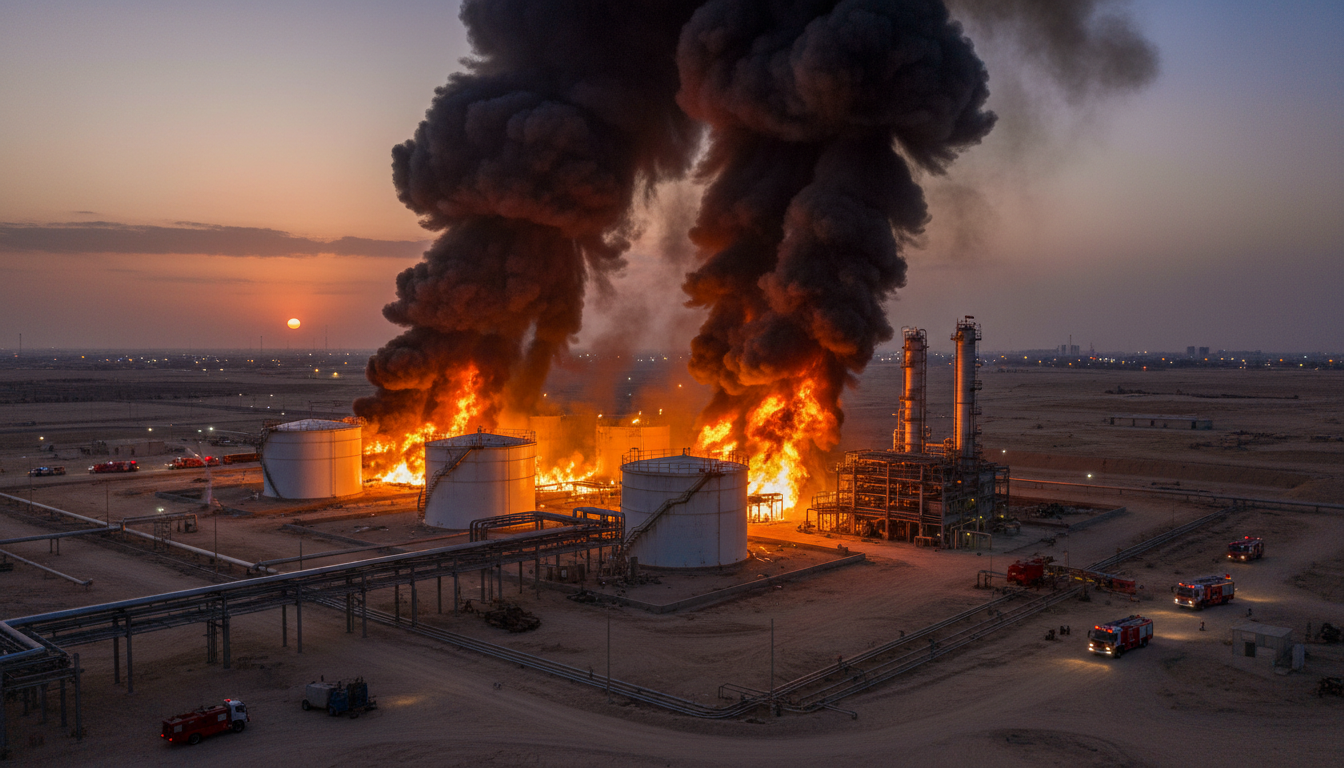
Investors in the global energy complex are closely monitoring developments in Abu Dhabi following an incident at a prominent petrochemical facility. On April 5, 2026, the Borouge petrochemicals plant in Abu Dhabi experienced fires attributed to falling debris. This event occurred after the United Arab Emirates’ advanced air defense systems successfully intercepted incoming aerial threats, including both missiles and drones. Authorities swiftly confirmed the immediate suspension of operations at the facility while damage assessments commenced, fortunately reporting no injuries.
This localized event carries significant weight for the broader oil and gas investing landscape, particularly for stakeholders focused on petrochemical production and regional stability. The Borouge complex, a crucial joint venture between the Abu Dhabi National Oil Company (ADNOC) and Austrian chemical firm Borealis AG, stands as a cornerstone of the Middle East’s petrochemical output. It specializes in producing polyolefins like polyethylene and polypropylene, essential feedstocks for countless industries, ranging from packaging and automotive components to infrastructure projects and advanced plastics. Any disruption to its operations, even temporary, sends ripples through global supply chains and potentially impacts commodity prices, making it a critical point of focus for energy market analysts and investors.
Geopolitical Undercurrents and Market Volatility
The incident unfolds against a backdrop of heightened regional tensions, which analysts have consistently flagged as a significant source of geopolitical risk premium in crude oil and refined product markets. While the immediate target was a petrochemical plant rather than crude export infrastructure, the persistent aerial campaign affecting Gulf neighbors underscores the vulnerability of critical energy infrastructure across the region. Such events inevitably contribute to market jitters, pushing up insurance costs for shipping and operations, and prompting investors to re-evaluate risk exposure in regional assets. The fact that the UAE’s defense systems successfully neutralized the primary threat is a testament to robust security measures, yet the attempt itself highlights an enduring risk profile that investors must integrate into their valuation models.
For energy market participants, understanding the interplay between geopolitical events and commodity prices is paramount. An attack on any major energy facility in a pivotal exporting region like the Gulf sends a clear signal of elevated risk, potentially tightening global supply perceptions and influencing futures contracts for crude oil, natural gas, and their derivatives. Even though Borouge primarily deals with downstream products, the broader context of instability can trigger a flight to safety in energy markets or prompt a reassessment of long-term investment strategies in the region. This dynamic often translates into increased volatility, creating both challenges and opportunities for agile investors.
Impact on Petrochemical Supply Chains and Pricing
The immediate suspension of operations at the Borouge facility means a temporary reduction in the global supply of specific polyolefin grades. Depending on the extent of the damage and the duration of the shutdown, this could lead to upward pressure on prices for these chemicals. Industries relying heavily on these materials, such as manufacturing, construction, and consumer goods, might face increased input costs, potentially affecting their profit margins and ultimately consumer prices. Investors with exposure to these sectors, or to companies with substantial procurement from Borouge, will be watching closely for updates on the plant’s operational restart timeline and the broader market’s response to any supply gaps. Diversification strategies and robust supply chain management become even more critical for businesses navigating such disruptions.
Moreover, major facilities like Borouge represent significant capital investments and are integral to national economic strategies. The assessment of damage will determine the financial impact on the joint venture partners, ADNOC and Borealis, and by extension, their respective shareholders. While no injuries were reported, the cost of repairs, potential lost production, and the need for enhanced security measures will factor into future operational expenses and investor outlooks. This underscores the need for thorough due diligence and risk assessment when allocating capital to energy infrastructure projects in politically sensitive areas.
Investor Strategy Amidst Regional Tensions
For those engaged in oil and gas investing, incidents like the one at Borouge reinforce the imperative of maintaining a comprehensive understanding of regional geopolitics. While the UAE remains a highly secure and reliable energy producer, the persistent threat environment demands a nuanced approach to investment. Investors should consider the resilience of companies operating in the region, their security protocols, and their capacity to manage disruptions. Furthermore, evaluating the long-term fundamentals of energy demand against short-term geopolitical shocks allows for a more balanced perspective. Diversifying portfolios across different energy sub-sectors and geographical regions can help mitigate the impact of localized incidents.
The UAE government and its energy entities, including ADNOC, consistently demonstrate a commitment to safeguarding their vital infrastructure and ensuring the stability of global energy markets. Their proactive defense measures, as evidenced by the successful interception, reflect ongoing efforts to mitigate risks. Nevertheless, the recent events serve as a potent reminder that the energy sector’s fortunes are inextricably linked to geopolitical stability. Savvy oil and gas investors will continue to prioritize robust risk management frameworks, staying informed on both technological advancements in energy production and the complex geopolitical dynamics shaping the global energy landscape.
