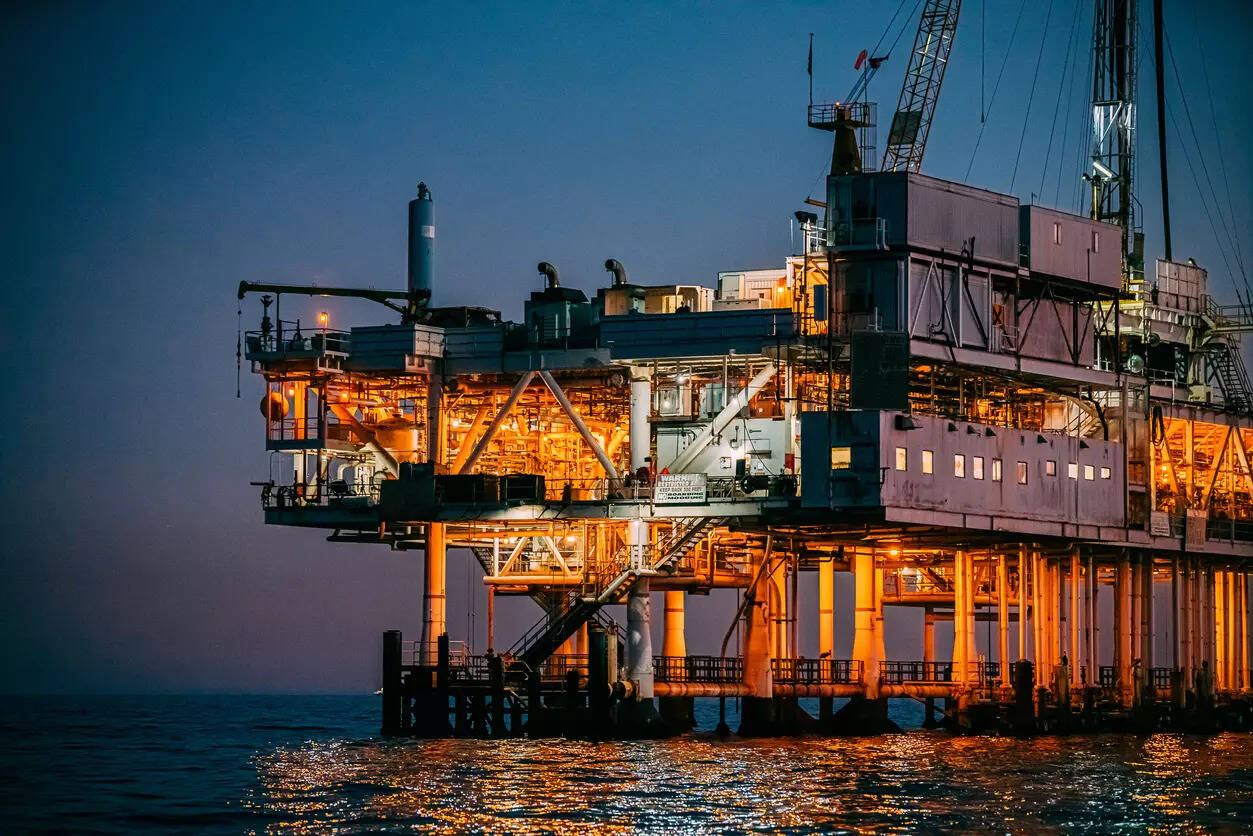
India has launched a renewed push to tap oil and gas resources hidden deep beneath the seas as it looks to reduce its heavy dependence on energy imports. The National Deep Water Exploration Mission, announced by Prime Minister Narendra Modi on the last Independence Day, places offshore and ultra-deepwater drilling at the centre of the country’s long-term energy security strategy, even as India continues to expand clean and renewable energy capacity.
The mission comes at a time when nearly 88 percent of India’s crude oil requirement is met through imports, exposing the economy to global price shocks and geopolitical risks. Policymakers believe that unlocking domestic offshore reserves could ease this pressure, support economic growth and provide a stable energy bridge during the transition to cleaner fuels.
What is the National Deep Water Exploration Mission?
The National Deep Water Exploration Mission is a government-led initiative aimed at accelerating exploration and production of oil and gas from deepwater and ultra-deepwater blocks along India’s east and west coasts. It focuses on frontier basins that have remained underexplored due to high costs, complex geology and technological challenges.
Prime Minister Modi, in his Independence Day address, described the effort as a modern-day “Samudra Manthan”, a reference to the churning of the ocean in Indian mythology to extract hidden treasures. The mission seeks to discover and develop hydrocarbon reserves lying thousands of metres below the seabed, using advanced technology and global partnerships.Energy expert Krishan G Insan said the initiative reflects a strategic shift in India’s energy planning. “India has made steady progress in clean energy, but hydrocarbons will continue to play a role in meeting base demand. Deepwater exploration is about reducing vulnerability, not reversing the energy transition,” Krishan G Insan, a Chevening scholar and GEM Fellow of European University Institute (Italy) said.
Why offshore oil and gas matter
India has a coastline of over 11,000 kilometres and several offshore sedimentary basins with proven hydrocarbon potential. According to estimates, around 38 percent of India’s recoverable crude oil reserves are located offshore.
Over the past decade, India has reported more than 170 hydrocarbon discoveries, including over 60 in offshore areas. Proven petroleum resources stand at around 12 billion tonnes of oil equivalent, with a similar volume still untapped.
Basins such as Krishna-Godavari on the east coast, Mumbai Offshore on the west coast, and the Andaman offshore region have emerged as key focus areas. Recent discoveries in these basins have reinforced the view that domestic offshore production can meaningfully contribute to India’s energy basket. “Offshore resources are not a distant dream anymore,” Insan said. “What we are seeing now is the outcome of better data, improved seismic imaging and a more stable policy environment.”
Recent momentum in deepwater drilling
Last month, Oil India began offshore drilling in the Kerala–Konkan Basin, spudding one of the deepest wells ever attempted in Indian waters. The well falls under a frontier exploration category, signalling the government’s intent to push into technologically challenging but high-potential regions.
At the same time, discoveries in the Krishna-Godavari Basin and gas finds in offshore Andaman blocks have strengthened confidence in India’s deepwater potential. Public sector firms and private operators are both active, supported by licensing rounds under the Open Acreage Licensing Policy.
Union Petroleum and Natural Gas Minister Hardeep Singh Puri has repeatedly underlined that deepwater drilling is critical for reducing import dependence. Earlier this year, he expressed confidence that India is on the brink of a major discovery in Andaman comparable in scale to the 11.6 billion barrels found off the coast of Guyana. Industry assessments suggest that even partial success in these basins could lower India’s crude and gas import bill over time.
Policy changes to attract investment
Deepwater exploration is capital-intensive and high-risk. A single deepwater well can cost tens of millions of dollars, while ultra-deepwater projects are even more expensive. To address these challenges, the government has amended oilfield regulations and simplified policy frameworks to make exploration more investor-friendly.
Recent licensing rounds have opened up blocks that were earlier classified as restricted or “No-Go” zones. Fiscal incentives, data access reforms and faster clearances are part of the broader push to attract long-term capital.
“The government has recognised that deepwater projects need patience and predictability,” Insan said. “Policy stability is as important as geology when it comes to attracting long-term capital.”
Technology and global partnerships
India’s offshore ambitions rely heavily on advanced technology and international collaboration. Tools such as 3D seismic surveys and controlled-source electromagnetic studies are increasingly being deployed to improve drilling success rates by identifying hydrocarbon-bearing structures with greater precision.
Strategic partnerships have emerged as a key enabler. Oil India has entered into a Technology Service Agreement with TotalEnergies to collaborate on deepwater and ultra-deepwater exploration across Indian sedimentary basins, including appraisal activities in the Andaman Basin and ultra-deepwater blocks in the Mahanadi and Krishna-Godavari basins. Private operators are also investing in offshore capability. Cairn’s partnership with 2H Offshore for end-to-end execution of offshore platforms represents the largest development under the offshore Discovered Small Fields block on the west coast. The company has also conducted one of India’s first 3D Controlled Source Electro-Magnetic surveys in the deepwater KG Basin, enhancing subsurface understanding and exploration accuracy.
“Deepwater exploration is not just about drilling deeper,” Insan said. “It is about smarter exploration, better data and partnerships that bring global experience into Indian basins.”
Can offshore drilling cut import dependence?
Experts caution that offshore oil and gas will not eliminate imports overnight. Deepwater projects have long gestation periods, and production ramps up gradually. However, even incremental increases in domestic output can have a stabilising effect on India’s energy system. Gas discoveries are particularly significant, as natural gas is seen as a transition fuel supporting cleaner power generation and industrial use. Offshore gas production can also reduce reliance on liquefied natural gas imports, which are exposed to volatile global prices.
“Every barrel produced domestically is one less barrel exposed to external shocks,” Insan said. “Deepwater exploration strengthens India’s negotiating position in global energy markets.”
Balancing energy security and transition
India continues to expand solar, wind and green hydrogen capacity, but policymakers acknowledge that hydrocarbons will remain part of the energy mix for decades. The National Deep Water Exploration Mission is positioned as a complement to clean energy goals, not a contradiction.
By focusing on domestic offshore resources, India aims to secure affordable energy while managing a gradual transition to lower-carbon sources.
As Insan summed up, “Samudra Manthan is not about choosing between clean energy and hydrocarbons. It is about ensuring India’s energy security while the transition unfolds.” If successful, the mission could mark a decisive step towards reducing import dependence and reshaping India’s offshore energy landscape.