

ROBERT CURRAN, Contributing Editor
OVERVIEW
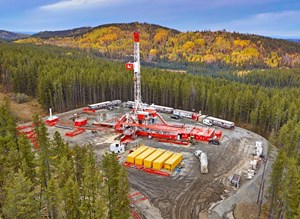
Fig. 1. The trend toward equilibrium among various market factors should encourage a modest increase in Canadian drilling this year. Image: DC Drilling.
It seems unlikely that Canada’s oil and gas industry will ever see the type of boom that it enjoyed at the zenith of activity and high prices. But on the flip side, it appears that the inverse bust cycle has also become more unlikely, as better cost controls, discipline during high-price cycles, flexibility to shut in (or bring on) otherwise marginal wells and facilities, and a growing understanding that hydrocarbons will drive the global economy for decades to come have combined to provide an uneasy equilibrium and even some long-term planning, Fig. 1.
Global oil and gas prices, driven by geopolitical issues, the ongoing war in Ukraine, and Middle East tensions, remain the biggest wild card for producers. In February, the AECO-C spot natural gas price was hovering around C$1.50 per gigajoule as Western Canada continues to experience an extremely mild winter. Meanwhile, the WTI crude benchmark remained strong at US$75/bbl, with a price differential of just under $15/bbl for Canadian crude.
But the outlook for crude prices is somewhat bearish, according to the U.S. Energy Information Administration (EIA)’s latest Short-Term Energy Outlook. In that outlook, EIA is forecasting oil price declines over the next two years, as production growth is expected to exceed demand, resulting in increased inventories globally.
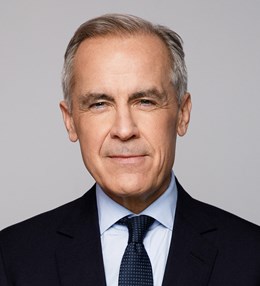
Fig. 2. Prime Minister Mark Carney is taking a more helpful attitude toward oil and gas policy. Image: Official portrait.
REGULATIONS/POLITICS
Politically, with Alberta leading the charge to recognize the importance of the national energy sector, and Ottawa eliminating or backing away from the hardline, anti-hydrocarbon stance it’s taken for the previous decade, there’s a little optimism, as well.
Since the Canadian federal election in April 2025, Prime Minister Mark Carney (Fig. 2) has outlined several commitments regarding hydrocarbon development. He has emphasized a balanced approach and pledged to encourage responsible resource extraction, ensuring that new hydrocarbon projects meet strict environmental standards and contribute to indigenous and local community benefits.
One example is Ottawa’s new methane rules. The government says they will cost industry an average of $48 per tonne of CO2 equivalent and impact oil and gas production by less than 1%. The Enhanced Methane Regulations will be phased in, with a start date of Jan. 1, 2028, and are expected to reduce carbon dioxide equivalent emissions by 304 megatonnes through 2040.
Carney also committed to increasing transparency and consultation in regulatory processes, reaffirming the government’s intent to transition toward cleaner energy sources without abrupt disruptions to the sector, a significant departure from the previous administration’s forced green policies that would have significantly damaged the Canadian economy. Investments in research, innovation, and emissions reduction technologies have also been promised, with the goal of making Canada a leader in sustainable hydrocarbon production.
PIPELINES
At the same time, he has met with Alberta Premier Danielle Smith to discuss fast-tracking a pipeline—as one of his so-called nation-building projects—that would provide Alberta with increased access to tidewater for its oil and gas resources, reducing Canada’s dependency on the United States as an energy consumer and open up new markets overseas. Carney and Smith reached a memorandum of understanding towards building an oil pipeline from Alberta to Canada’s West Coast in late 2025.
Carney has also met with Coastal First Nations in British Columbia, to discuss partnering with the federal government on projects that will boost the Canadian economy, such as pipelines and Liquified Natural Gas (LNG) projects.
The barrage of tariffs, economic threats, and increasingly erratic behavior from U.S. President Donald Trump has furthered underscored Canada’s need to diversify its international customer base. However, significant opposition to any further pipeline projects, national or international, from B.C. and Quebec cast substantial doubt on whether another major pipeline project will ever be built again in Canada. Another major obstacle is the federal moratorium on oil tanker traffic on the west coast. Until that is lifted, a move vehemently opposed by the current administration in B.C., any thoughts of moving crude to the west coast remains a “pipe dream.”
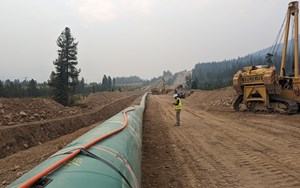
Fig. 3. A state-of-the-art fibre optic system is deployed on the Trans Mountain Expansion Project pipeline. Image: Trans Mountain.
The Canadian energy sector is also keeping a wary eye on developments in Venezuela, with some concern that the Trump administration may look to supplant Canadian heavy crude or possibly target Canadian oil imports with tariffs or other measures. Planning will remain difficult, as North American market chaos continues amid escalating American economic and military threats, which in turn may impact spending plans, drilling levels and production growth.
Meanwhile, the Canadian-government-owned TransMountain Pipeline (Fig. 3), currently operating at about 80% of its 890,000-bpd capacity, is considering two operational upgrades that could further increase its capacity. Using drag-reducing chemicals could increase the amount of oil that can be transported by 5% to 10%, about 50,000 to 85,000 extra bopd. Adding additional pumping stations is a longer-term option that could cost up to $4 billion and take several years to complete.
The Canadian government has also spent considerable time courting Asian customers recently, with trade delegations to India and China. In January, PM Carney signed several agreements to look at opportunities with oil, gas, nuclear and clean technology. As testament to Canada’s market diversification efforts, crude oil exports were up about 5% at the end of 2025, driven by a massive 290% increase to Asian trading partners, with a corresponding 5% decrease in shipments to the U.S.
Canadian crude oil shipments by rail were also down year-over-year in late 2025, although the numbers fluctuated substantially over the course of the year. From a safety standpoint, any shift away from rail shipments is positive, given the superior safety record of pipelines.
CAPITAL SPENDING
Spending forecasts are somewhat bearish for 2026, as increasing production and inventories will more than offset global oil demand, which is widely expected to continue increasing over the foreseeable future. Enserva, which represents Canadian service companies, is forecasting a 5% decrease in spending in 2026, driven in part by low natural gas prices, but the association notes that this could change later this year with increased LNG market access.
So far, spending plans for Canadian producers seem to support that projection. Canadian Natural Resources Limited projects spending to be C$6.43 billion, down 2.6% from C$6.68 billion in 2025; Suncor has announced a budget of C$5.7 billion, a slight decrease of 1.7% from last year’s estimated C$5.8 billion; Cenovus has unveiled the most aggressive year-over-year spending, at C$5.15 billion, up 7.5% from last year’s C$4.8 billion; Tourmaline Oil Corp. has announced spending of C$3.01 billion, up 2.7% from C$2.98 billion in 2025; Imperial Oil has announced it will spend C$2.1 billion this year, an increase of 5% over C$2.0 billion last year, and Whitecap Resources Inc. will increase spending by 5% to C$2.05 billion, compared to C2.0 billion in 2025.
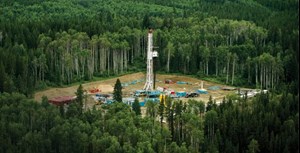
Fig. 4. Canadian drilling should rebound about 3%, compared to a 2.3% decline during 2025. Image: Tourmaline Oil.
M&A ACTIVITY
Mergers and acquisitions activity is expected to decrease in 2026, although predictions are often wrong in this space. For example, 2025 ended up as a major surprise, vastly exceeding projected activity. According to Calgary-based Sayer Energy Advisors, the total value of M&A activity last year in the Canadian oil patch was approximately C$31.2 billion, a 60.8% increase from C$19.4 billion in 2024, the highest value recorded since 2017.
Four corporate deals in 2025 represented C$23.5 billion of the total M&A value. In the first quarter, Whitecap Resources Inc. acquired Veren Inc. for C$9.9 billion; Cenovus Energy Inc. closed its C$8.4 billion purchase of MEG Energy Corp. in November; Ovintiv Inc.’s acquisition of NuVista Energy Ltd. for approximately C$3.8 billion was announced late last year, closing in February, and in December, Cygnet Energy Ltd. closed its C$1.4 billion acquisition of Kiwetinohk Energy Corp.
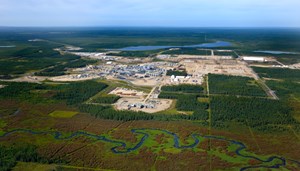
Fig. 5. Canadian oil sands operations achieved a record rate of 3.5 MMbpd during 2025. Image: Cenovus Energy.
On the asset side, ARC Resources Ltd. acquired Montney assets in the Kakwa area of Alberta from Strathcona Resources Ltd. for approximately C$1.7 billion. Strathcona subsequently completed the sale of its Montney business for aggregate proceeds of approximately C$2.8 billion in two other transactions in the second quarter. These included its Montney assets in the Grande Prairie, Alberta, area to Canadian Natural Resources Limited for C$850 million, and its Montney assets in B.C.’s Groundbirch area to Tourmaline Oil Corp. for C$291.5 million.
DRILLING
Drilling was down slightly in 2025, with 5,638 wells drilled, compared to 5,769 in 2024, a decrease of 2.3%, Fig. 4. Approximately 75% of the wells targeted oil.
In Alberta, there were 3,900 wells drilled, up 6.8% from 3,652 in 2024. In Saskatchewan, drilling was down 11.2% to 1,169 wells versus 1,317 the previous year. British Columbia activity fell back 32.9% to 400 wells drilled, compared to 596 in 2024. And in Manitoba, 169 wells were drilled, a decrease of 12.4% from 193 the previous year.
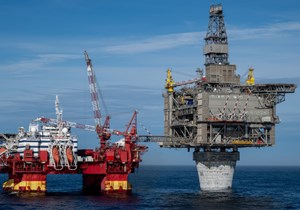
Fig. 6. The Cenovus-operated West White Rose platform was installed at the field on July 16, 2025. It has been undergoing hook-up and commissioning since then, and is due to go onstream sometime during second-quarter 2026. Image: Cenovus Energy.
For the year ahead, the Canadian Association of Energy Drilling Contractors is predicting that drilling will increase 2.9%, to 5,709 wells, with similar increases in employment levels and drilling hours. CAOEC also notes that each active drilling rig supports 21 direct and 226 indirect jobs, and each service rig supports six direct and 64 indirect jobs.
PRODUCTION
It was a banner year for Canadian oil production in 2025. Oil output, overall, hit a record-high 4.9 MMbpd, including 3.5 MMbpd from oil sands (Fig. 5), which was also another record. Production growth in western Canada shows no signs of slowing despite uncertain oil prices. On the East Coast, production offshore Newfoundland & Labrador totaled 87.6 MMbbl of oil, equal to 240,000 bpd. This rate was 14.6% higher than 2024’s rate of 209,425 bopd. In addition, Cenovus-operated West White Rose field is due to go onstream offshore Newfoundland during second-quarter 2026, Fig. 6. At peak, it will produce 80,000 bopd.
LAND SALES

Fig. 7. Land sales totals across Canada were down slightly in 2025, as industry spent C$504.8 million (C$642.80/hectare), down 5.5 % from 2024’s level. Image: Cenovus Energy.
Land sales totals were down slightly in 2025, as industry spent C$504.8 million (C$642.80/hectare), down 5.5 % compared to C$534.4 million (C$655.17/hectare) collected in 2024, Fig. 7. Alberta was mainly responsible for the decrease, as spending was down 13.9% last year, with C$408.7 million collected (C$596.48/hectare), versus C$474.6 million collected (C$653.70/hectare) in 2024. Saskatchewan recorded an increase of 19.8%, to C$63.29 million (C$793.83/hectare), compared to C$52.82 million (C$681.05/hectare) in 2024. B.C., in its first full year of land sales since 2020, took in C$31.88 million (C$3,050.47/hectare), after collecting just over C$128,000 (C$162.53/hectare) in its only land sale of 2024, and Manitoba collected C$846,150 last year (C$86.23/hectare), down marginally from C$876,479 (C$347.09/hectare) in 2024.
Mr. Curran is a Calgary-based freelance writer.
Related Articles
FROM THE ARCHIVE
