BP Faces Investor Scrutiny Amid Pivotal Strategic Shift
BP, a titan in the integrated energy sector, recently navigated a contentious Annual General Meeting (AGM) marked by a significant investor repudiation against its leadership. Preliminary results reveal that a substantial 24.3 percent of shareholders voted against the re-election of outgoing chair Helge Lund, signifying the most considerable protest directed at the head of a FTSE 100 board in half a decade. This unprecedented level of dissent underscores profound investor dissatisfaction and intensifies pressure on BP to articulate a clearer path toward enhanced shareholder value amidst a highly volatile global energy landscape.
While the vote against Mr. Lund holds largely symbolic weight, given his stated intention to step down “most likely during 2026,” its magnitude sends an unmistakable message about the brewing frustration within BP’s investor base. In contrast, CEO Murray Auchincloss secured a robust re-election with over 97 percent of the votes cast, signaling strong confidence in his executive leadership. Similarly, the company’s remuneration proposals garnered solid approval from 95.5 percent of shareholders. The highly targeted nature of the protest against Mr. Lund points to specific concerns regarding board oversight and accountability for BP’s recent operational and financial performance.
Share Price Underperformance Fuels Investor Ire
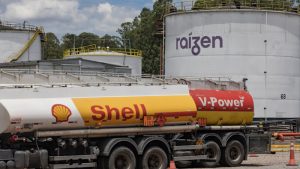
The investor revolt is inextricably linked to BP’s persistently lackluster share price trajectory. Year-to-date, BP’s stock has depreciated by nearly 13 percent, a stark underperformance when compared to its key peer, Shell, which experienced a more modest 5 percent decline over the identical period. This widening performance gap has triggered pointed questions from individual and institutional investors alike, with some openly challenging the board on its perceived failure to prioritize and vigorously advance the company’s stock valuation.
This sentiment reflects a pervasive concern within the investment community regarding BP’s capacity to generate competitive returns. For investors primarily focused on oil and gas investments, the consistent creation of shareholder value remains paramount. The pronounced disparity in share performance between BP and Shell has amplified calls for greater strategic clarity, more disciplined capital allocation, and a more aggressive pursuit of measures designed to boost investor returns and close the valuation gap with its rivals.
The Strategic Schism: Navigating the Energy Transition
At the core of the escalating investor discontent lies BP’s evolving and often controversial energy transition strategy. Legal & General (L&G), a prominent top 10 investor holding a 1.8 percent stake in BP, publicly declared its intention to vote against Mr. Lund’s re-election. L&G articulated “deep concern” over BP’s recent strategic recalibration, which has seen the company pivot back towards traditional oil and gas exploration and production, diverging from a prior, more ambitious commitment to renewable energy investments.
L&G further highlighted its apprehension regarding the perceived absence of a formal shareholder vote on this significant strategic reversal. For investors prioritizing long-term sustainability and the management of transition risks, this shift raises questions about BP’s commitment to decarbonization targets and its ability to thrive in a low-carbon future. Such a substantial directional change, particularly without explicit shareholder endorsement, inevitably invites heightened scrutiny over governance and long-term value creation.
This stance from L&G, representing a segment of the investor base pushing for accelerated decarbonization, contrasts sharply with the views espoused by other influential investors, notably activist fund Elliott Investment Management. Elliott has actively campaigned for BP to curtail its capital expenditure on renewable energy projects, advocating instead for a stronger, more focused commitment to its high-margin fossil fuel assets. This perspective emphasizes maximizing immediate returns from established hydrocarbon operations, arguing that a rapid pivot to renewables dilutes profitability and misallocates capital away from BP’s core competencies.
The fundamental divergence between these powerful investor factions places BP at a critical juncture. On one side, shareholders like L&G demand a clear, consistent commitment to the energy transition, viewing it as essential for long-term resilience and value. On the other, investors such as Elliott advocate for prioritizing robust returns from conventional oil and gas, arguing for a more pragmatic, profit-driven approach to capital allocation. This strategic schism creates a complex challenge for BP’s board and management, forcing them to balance conflicting demands while attempting to forge a coherent and compelling strategy that satisfies a broad spectrum of stakeholders.
Implications for Governance and Future Direction
The substantial protest vote against Helge Lund serves as a potent reminder that BP’s governance and strategic direction remain under intense investor scrutiny. While Mr. Lund’s eventual departure is planned, the scale of dissent highlights a broader call for increased accountability and a more decisive approach to navigating the energy sector’s inherent complexities. The challenge for BP’s leadership, under CEO Murray Auchincloss, is to articulate a compelling narrative that bridges the gap between these divergent investor expectations.
Moving forward, BP must demonstrate a clear and executable strategy for capital allocation that either delivers competitive returns from its oil and gas portfolio or convincingly outlines how its renewable investments will generate superior, long-term shareholder value. The company’s ability to regain investor confidence will hinge on its capacity to improve share price performance, maintain financial discipline, and clearly communicate its strategic rationale. The recent AGM has undeniably reset the bar for investor engagement, signaling that shareholders demand not just performance, but also transparency and a well-defined vision for BP’s future in the evolving energy landscape.