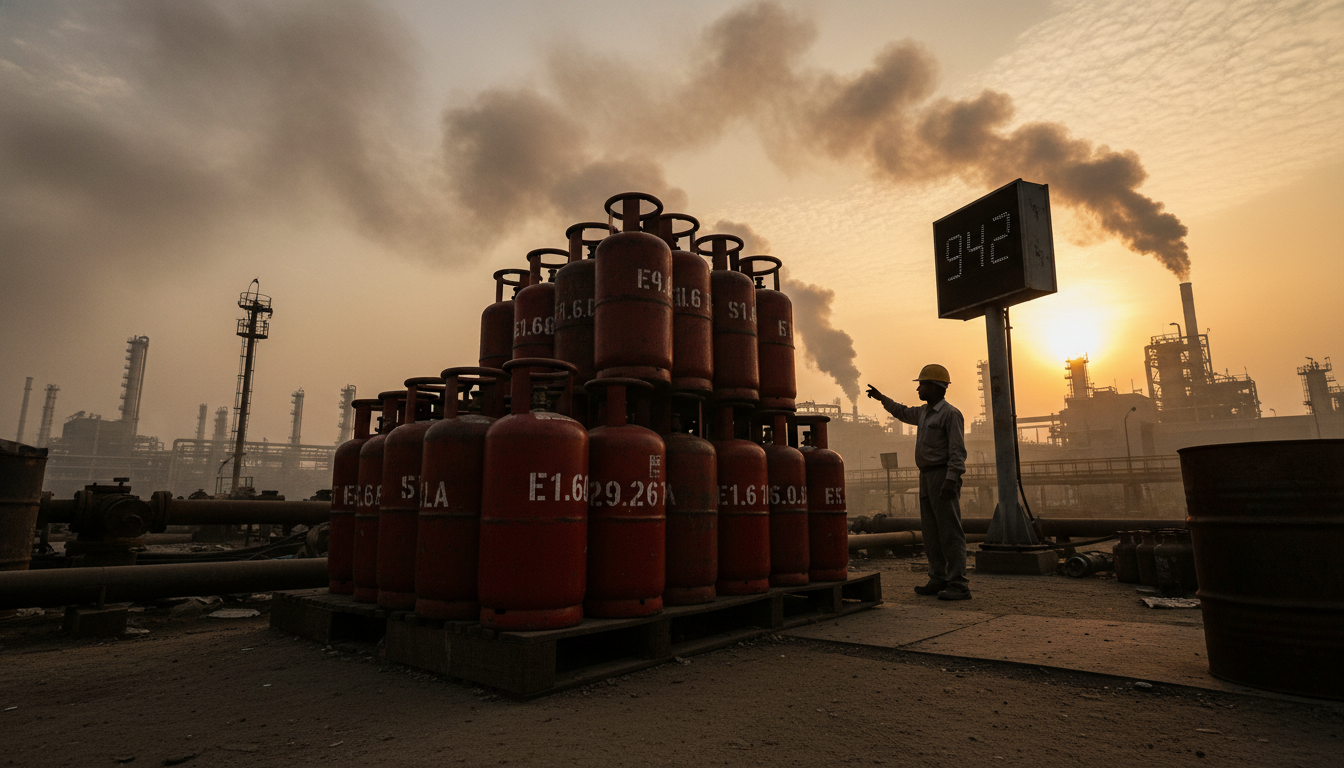
Investors in India’s dynamic energy sector are closely monitoring significant shifts in domestic fuel pricing, as state-owned oil marketing companies (OMCs) continue to grapple with the persistent challenge of elevated global energy costs. The latest adjustment saw the price of domestic liquefied petroleum gas (LPG) cylinders increase by ₹29, pushing the retail price for a standard 14.2-kg cylinder in Delhi from ₹913 to ₹942, effective June 7. This move, while necessary for OMCs, signals ongoing pressure on the profitability of these critical public sector enterprises.
OMCs Navigate Persistent Losses on LPG Sales
The recent ₹29 hike in LPG prices marks the latest in a series of adjustments aimed at mitigating the substantial financial burden faced by Indian OMCs. This follows a more significant ₹60 per cylinder increase implemented on March 7, a period when geopolitical tensions in West Asia had already begun to exert upward pressure on international fuel markets. Industry intelligence indicates that despite these revisions, OMCs were reportedly absorbing losses of approximately ₹703 on every domestic LPG cylinder sold prior to the most recent increase. While the price hike offers some relief, it appears insufficient to fully offset these deep-seated losses, suggesting that OMCs are still distributing LPG below their cost of acquisition and delivery.
The core issue stems from consistently high international crude oil and refined product prices, which directly impact the procurement costs for domestic fuels. As these global benchmarks remain elevated, the financial strain on fuel retailers intensifies, necessitating periodic price revisions to maintain some semblance of commercial viability. However, the sensitive nature of domestic fuel prices in India often means that OMCs bear a significant portion of this burden, acting as a crucial buffer for consumers.
Broader Fuel Market Under Strain: Petrol, Diesel, and CNG See Hikes
The challenges extend beyond LPG, impacting the entire spectrum of retail fuels across the nation. Since mid-May, both petrol and diesel prices have climbed by a cumulative ₹7.50 per litre. Similarly, compressed natural gas (CNG) rates have experienced an increase of approximately ₹6 per kilogram. These cumulative adjustments reflect the sustained pressure from the global energy complex and the imperative for fuel retailers to adjust to their rising input costs.
For investors, a critical point of concern is the ongoing absorption of losses by state-run fuel retailers on transport fuels. Market reports suggest that OMCs are currently losing around ₹11 on every litre of petrol sold, with diesel sales proving even more detrimental, incurring an estimated loss of ₹33.6 per litre. This substantial gap between cost and retail price for the most widely consumed fuels highlights a significant drag on the balance sheets and profitability of these OMCs. This situation directly impacts the financial performance of these companies, making their shares a complex proposition for investors seeking stable returns within the Indian energy sector.
Government’s Balancing Act and Investor Implications
The Indian government has historically played a crucial role in managing the impact of global energy price volatility on domestic consumers. By allowing state-owned fuel retailers to absorb a portion of the higher international costs, the government aims to cushion households and businesses from sharper, more immediate price increases. While this policy provides relief to the public, it comes at a direct cost to the OMCs, impacting their operational efficiencies, investment capabilities, and ultimately, their shareholder value.
For investors scrutinizing the Indian energy landscape, this dynamic presents a complex risk-reward profile. The ongoing under-recovery phenomenon means that the profitability of major OMCs remains susceptible to both global crude price fluctuations and domestic pricing policy decisions. While the government’s intervention helps to stabilize the broader economy, it can introduce unpredictability into the earnings of these energy behemoths. Investors must closely monitor not only international crude trends but also the evolving government stance on fuel subsidies and pricing mechanisms. Any shift towards a more market-aligned pricing structure could significantly enhance OMC profitability, while continued interventions will sustain the pressure on their margins.
Global Volatility Dictates Domestic Realities
The fundamental driver behind these domestic pricing challenges remains the persistent volatility and elevated levels in global crude oil and refined product markets. Factors such as geopolitical tensions, supply chain disruptions, and fluctuating demand patterns continue to dictate international benchmarks. The ripple effect is acutely felt in import-dependent economies like India, where OMCs procure a substantial portion of their crude and refined products from the global market. Consequently, the financial health of Indian energy companies is inextricably linked to these international forces, demanding vigilance from the investment community.
Looking ahead, the outlook for India’s oil and gas sector remains highly sensitive to both global energy market dynamics and domestic policy interventions. While the government strives to balance consumer welfare with the commercial interests of its OMCs, the current scenario of sustained under-recoveries poses significant questions about long-term financial sustainability. Investors need to assess the resilience of these companies, their diversification strategies, and the potential for regulatory reforms that could impact their pricing power and profitability. The path forward for Indian OMCs will undoubtedly involve a careful navigation of these intricate domestic and international pressures.


