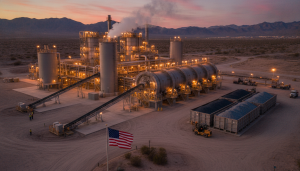
The global energy landscape continues its rapid transformation, driving significant shifts in investment priorities across the resource sector. While traditional oil and gas remains a cornerstone, the burgeoning demand for critical minerals, essential for the battery revolution, presents compelling new avenues for capital deployment. In a notable development underscoring this trend, Australian miner Lithium Energy Limited has strategically divested a trio of its graphite projects to M Battery Materials Pty Ltd. (MBM), signaling a focused aggregation of assets poised to capitalize on the insatiable appetite for battery-grade materials.
This transaction, valued at a substantial $20 million, is structured to enhance shareholder value while consolidating key graphite resources. The financial consideration includes a $5 million cash component, complemented by $15 million in MBM shares. This blend of immediate liquidity and equity participation provides Lithium Energy shareholders direct exposure to the future growth trajectory of the combined entity. Furthermore, a distinct agreement ensures Lithium Energy’s existing shareholders will acquire a significant 33.33% stake in the newly formed, merged enterprise. This strategic move paves the way for the combined company to pursue a listing on the Australian Stock Exchange (ASX), positioning itself as a dominant force in the critical minerals sector, specifically targeting the battery materials supply chain.
Strategic Resource Aggregation for Battery Production
The divested assets — the Burke, Mt Dromedary, and Corella graphite projects, all located in Queensland — collectively boast an impressive resource base of 4.42 million metric tons of graphite. Graphite is an indispensable component in lithium-ion battery anodes, making these projects vital for scaling up global battery manufacturing capacity. Lithium Energy’s management emphasizes the profound strategic value of this consolidation, noting that integrating these substantial graphite deposits with M Battery Materials’ existing neighboring graphite and vanadium assets creates a formidable foundation for battery production. This synergy is critical in a market increasingly sensitive to secure, diversified, and ethically sourced supply chains for key industrial minerals.
This strategic transaction reflects a broader industry movement towards optimizing resource allocation in the critical minerals space. Lithium Energy Limited, headquartered in West Perth, Western Australia, has been actively engaged in the exploration and development of both lithium and graphite deposits. Its focus on battery materials positions it at the forefront of the energy transition. Meanwhile, Brisbane-based M Battery Materials Pty Ltd., a private Australian entity specializing in battery manufacturing, clearly benefits from this acquisition by strengthening its upstream supply capabilities. This integration promises enhanced vertical alignment, offering a more robust and resilient supply chain for future battery production.
Investor Outlook: Tapping into the Energy Transition
For investors accustomed to the dynamics of oil and gas markets, this deal highlights the growing attractiveness of adjacent energy sectors. The global push for decarbonization and the electrification of transport are creating unprecedented demand for battery raw materials, making critical mineral plays increasingly compelling. The proposed ASX listing of the combined entity presents a fresh opportunity for institutional and retail investors to gain exposure to a diversified portfolio of key battery minerals, including graphite and vanadium. The substantial 33.33% shareholder stake distributed to Lithium Energy shareholders underscores a commitment to delivering tangible value through strategic consolidations.
The market for graphite, in particular, is forecast to experience exponential growth, driven by electric vehicle (EV) adoption and grid-scale energy storage solutions. Securing significant domestic resources, as demonstrated by this transaction in Australia, mitigates geopolitical supply risks and strengthens national industrial capabilities. As commodity prices for these critical materials continue to reflect the escalating demand, strategic acquisitions and resource development initiatives like this become pivotal. Investors seeking to diversify their portfolios beyond traditional fossil fuels are increasingly eyeing opportunities in the upstream critical minerals sector, recognizing its long-term growth potential within the overarching energy transition narrative. This deal serves as a tangible example of how companies are adapting to, and capitalizing on, these profound market shifts.