New South Wales, Australia, is rapidly recalibrating its energy infrastructure, aggressively deploying capital to bolster grid reliability as the state phases out its legacy coal-fired generation. The latest tender from Accreditation Scheme Limited (ASL) has successfully secured an additional tranche of firming capacity, pushing the state’s total contracted capacity to over 1.5 gigawatts (GW). This strategic build-out presents a critical case study for global investors eyeing the evolving landscape of energy transition, where traditional fossil fuel assets converge with, or are supplanted by, new technologies.
The tender, launched in October 2025, cast a wide net, inviting proposals from a diverse array of solutions. Market participants included large-scale battery storage facilities, natural gas generation projects, demand response initiatives, and aggregated portfolios comprising smaller distributed energy resources. The core requirement for all bidding projects was a demonstrated capability for continuous dispatch at maximum capacity for a minimum duration of approximately two hours. Significantly, ASL prioritized projects strategically positioned to support the critical Sydney-Newcastle-Wollongong region, reflecting a targeted approach to address specific grid vulnerabilities.
Nevenka Codevelle, CEO of ASL, highlighted the robust market response to the tender, noting intense competition among proposals geared towards strengthening the state’s most populous and industrially significant corridor. “The tender attracted strong competition from projects capable of supporting the Sydney-Newcastle-Wollongong region, with two projects ultimately successful in demonstrating value for NSW electricity customers,” Codevelle affirmed. These successful bids now augment the state’s firming portfolio, elevating the total under contract from approximately 1 GW to beyond 1.5 GW, signaling a substantial increase in financial commitments towards grid stabilization.
Navigating Contractual Mandates and Grid Resilience
The financial bedrock of these firming projects rests on the Long-Term Energy Service Agreements (LTESA). These agreements are not merely capacity contracts; they embed stringent performance obligations designed to ensure grid resilience during periods of extreme stress. Specifically, all firming projects are mandated to inject power into the grid during “Lack of Reserve” (LOR) events. These are critical moments when the available electricity supply is at high risk of falling short of, or actively failing to meet, consumer demand. The contractual architecture ensures these assets deliver essential electricity when the system requires it most, thereby fortifying overall reliability and safeguarding consumers from price volatility and outages.
Codevelle underscored the strategic importance of these performance mandates. “A key benefit of these contracts is that they require projects to support the system when consumers need them most, with performance obligations that require projects to make capacity available during Lack of Reserve 2 and 3 events,” she explained. The ability of each project to reliably deliver during these specific LOR events was a paramount factor in the tender’s evaluation process, emphasizing a ‘performance-first’ approach to investment in grid infrastructure. For investors, these structured contracts mitigate revenue uncertainty, linking payouts directly to critical grid support rather than simple availability.
The intense focus on the Sydney-Newcastle-Wollongong region is not arbitrary. This corridor encompasses the state’s largest demand centers and critical transmission infrastructure, making it a pivotal area for interventions aimed at bolstering grid reliability. The escalating electricity demand, driven by widespread electrification initiatives and the emergence of new industrial loads, necessitates proactive measures. This urgency is further amplified as New South Wales prepares for the imminent closure of the 2.8 GW Eraring coal-fired power station, slated for August 2027. The retirement of such a significant baseload asset necessitates substantial new firming and generation capacity to prevent market dislocation and ensure continuous supply.
Strategic Energy Transition: Origin Energy’s Pivot
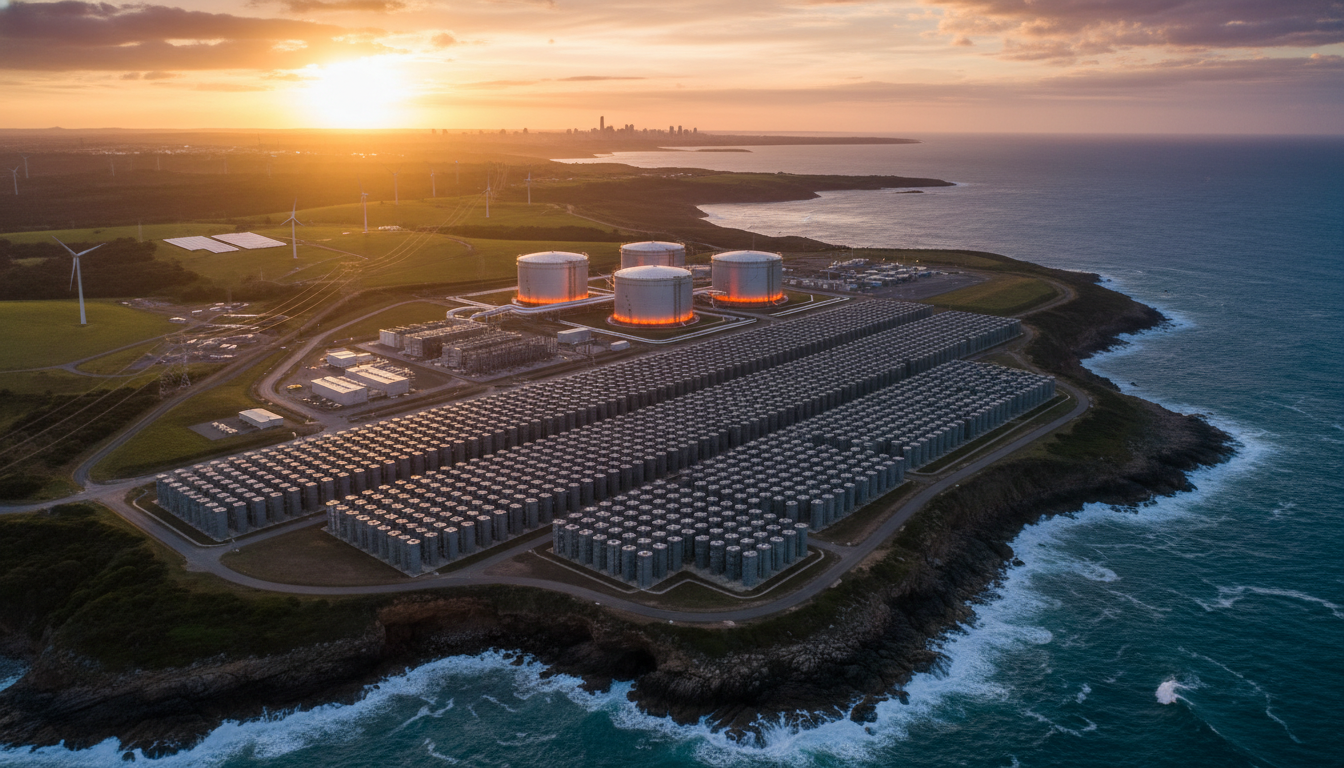
The transition away from coal is visibly underway, exemplified by Origin Energy, the current owner and operator of the Eraring facility. Origin is embarking on a significant transformation of the site, converting it into a utility-scale battery storage system. This ambitious project plans for a total capacity of 700 MW and an impressive 3,160 MWh of storage. The first phase of this conversion, delivering 460 MW and 1,770 MWh, already commenced commercial operations at the start of the year, showcasing a tangible commitment to the energy transition. Wärtsilä has played a crucial role as the primary technology provider for this substantial battery storage deployment, highlighting opportunities for technology providers in this rapidly expanding market.
For oil and gas investors, Origin’s strategic pivot offers a clear illustration of how incumbent energy majors are reallocating capital. Instead of new fossil fuel generation, investment is flowing into large-scale, long-duration storage solutions. This shift indicates a recognition of both regulatory imperatives and market opportunities in the decarbonization pathway. It also poses questions for gas producers: while gas generation was invited to the tender, the success of battery storage suggests increasing competition for firming roles, potentially narrowing the market for new gas peaker plants in favor of more flexible, zero-emission alternatives, especially with declining battery costs.
Accelerated Delivery and Future Investment Horizons
ASL streamlined its latest firming tender by adopting a single-stage process, a design choice specifically intended to accelerate project delivery. Contract terms offered up to 15 years, providing long-term revenue visibility for successful bidders. This simplified approach reduces the administrative burden on participants while simultaneously maintaining competitive tension to ensure optimal value for electricity consumers. This framework closely mirrors the federal government’s Capacity Investment Scheme, indicating a harmonized national strategy for securing future energy supply and stability. Such streamlined processes are beneficial for investors seeking to deploy capital efficiently into the energy market.
The investment pipeline in New South Wales remains robust and expansive. ASL is already preparing for its next firming tender, projected for late 2026 or early 2027. This upcoming tender will target projects capable of becoming operational by 2033-34, signaling a long-term horizon for energy infrastructure development. Furthermore, two additional NSW Roadmap tenders are scheduled to commence in May 2026. These tenders will seek substantial new capacity: 2.5 GW of generation projects and a massive 12 GWh of long-duration storage projects. This continuous procurement schedule underscores NSW’s aggressive commitment to building out a future-proof energy system, presenting persistent opportunities for financial deployment across the energy value chain.
In conclusion, New South Wales is at the forefront of a profound energy transition, characterized by significant capital deployment in firming capacity and advanced energy storage solutions. For savvy investors in the oil and gas sector, this presents both challenges and unparalleled opportunities. While new gas generation might face stiffer competition from battery storage in certain firming roles, the scale of investment by companies like Origin Energy into battery technology showcases a critical pathway for diversification and growth within the broader energy complex. The continued stream of tenders for generation and long-duration storage ensures a dynamic and financially compelling market for years to come, urging a close examination of how these shifting energy landscapes impact traditional portfolios and create new avenues for robust returns.