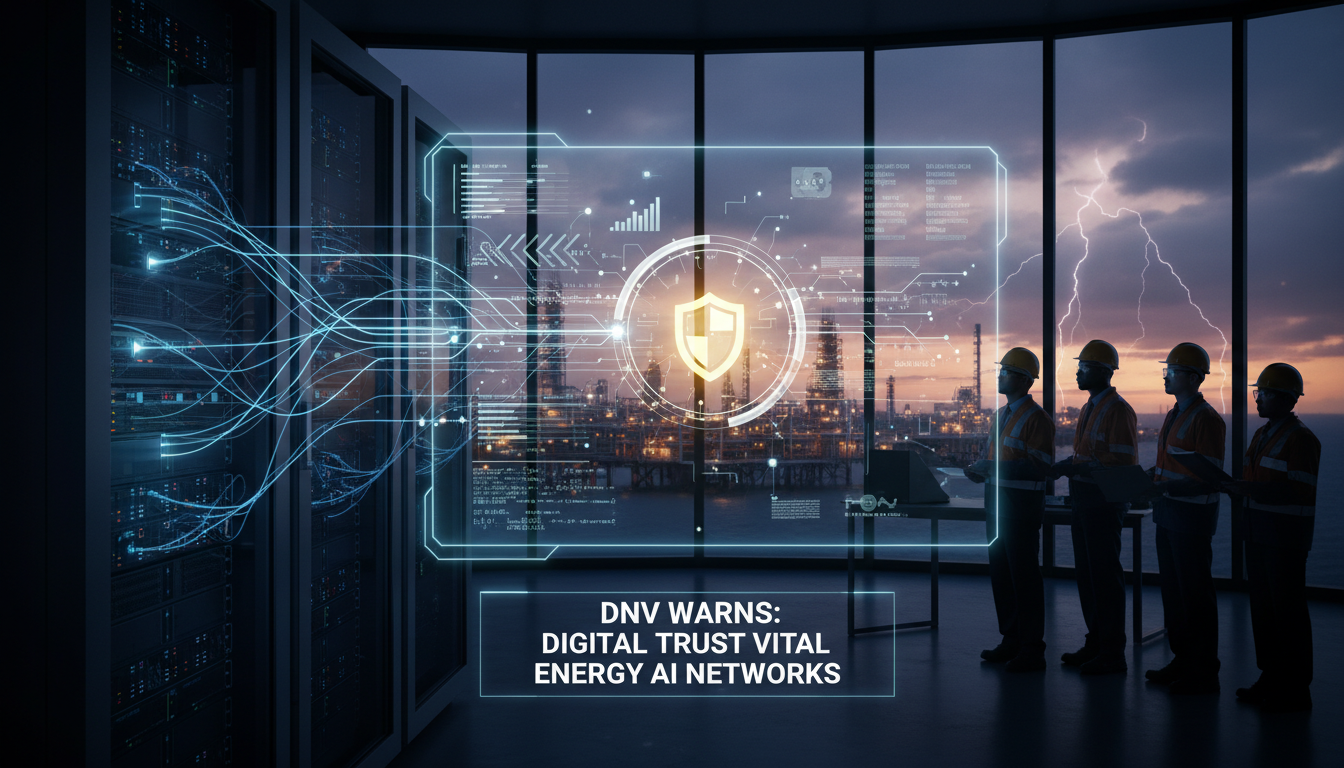
The Imperative of Digital Trust: Securing AI Investments in Energy Infrastructure
As the energy landscape undergoes an unprecedented digital transformation, artificial intelligence (AI) stands poised to revolutionize operational efficiency, grid management, and sustainability across the oil and gas sector and broader energy networks. However, for investors keenly watching this evolution, a critical new report from DNV underscores a fundamental prerequisite for successful AI integration: the establishment of robust “digital trust” frameworks. This imperative ensures that the widespread deployment of AI-driven systems, while promising immense upside, does not inadvertently introduce unforeseen operational risks that could jeopardize asset integrity and shareholder value.
Navigating Complexity: AI’s Growing Role in Energy Management
The energy industry, particularly utilities and network operators, is increasingly leveraging AI, advanced analytics, and automated decision-making tools to manage escalating system complexity. Factors such as the global drive towards electrification, the proliferation of decentralized power generation, and the intricate integration of diverse renewable energy sources demand sophisticated, real-time management capabilities. AI offers a powerful solution, enabling predictive maintenance, optimized resource allocation, and enhanced grid stability. For investors, understanding a company’s capacity to harness these technologies is crucial, as it directly impacts long-term operational costs and revenue streams.
Mitigating Risk: The Consequences of Unchecked AI Deployment
While the benefits of AI are undeniable, DNV’s analysis highlights a significant concern: the absence of stringent governance, comprehensive monitoring, and solid assurance frameworks could expose energy operators—and their investors—to substantial risks. Without these safeguards, a broader deployment of AI could lead to critical issues in operational control, undermine system resilience, compromise data quality, and complicate regulatory oversight. Such vulnerabilities can translate directly into operational disruptions, potential fines, and a significant erosion of investor confidence, making robust risk management strategies paramount for any energy investment portfolio.
Defining Digital Trust: A Foundation for Confident Investment
DNV’s position paper clearly defines digital trust as the unequivocal confidence that AI-enabled systems will consistently operate predictably, remain firmly under human control, and continuously align with both operational imperatives and broader public-interest objectives throughout their entire lifecycle. For sophisticated investors, this definition provides a critical lens through which to evaluate energy companies’ digital strategies. A commitment to fostering digital trust signals a mature approach to technological adoption, one that prioritizes stability and long-term value creation over short-term gains, thereby safeguarding invested capital in an increasingly automated environment.
Enabling Scalability: From Pilot Projects to Pervasive Operations
Hari Vamadevan, Senior Vice President and Regional Director for UK and Ireland energy systems at DNV, stresses the urgency of this challenge. “AI is becoming integral to how energy networks run, but scaling it without assurance creates new and very real risks,” Vamadevan states. “Digital trust is what allows operators to deploy AI with confidence.” This perspective is vital for investors. The transition of AI technologies from isolated pilot projects into full-scale operational deployment across critical infrastructure demands rigorous assurance and governance. Companies demonstrating strong frameworks in this area are better positioned to achieve significant operational efficiencies and deliver sustainable returns as AI integration accelerates.
Lessons from the Field: Intelligent Gas Grids and Investor Confidence
The report draws valuable insights from DNV’s involvement in initiatives like the UK government-backed Intelligent Gas Grid program. This program focuses on leveraging digital technologies and AI-enabled systems to significantly enhance efficiency, safety, and operational performance across gas distribution networks. Such real-world applications underscore how digital trust principles are not confined to emerging renewable sectors but are equally critical for modernizing traditional oil and gas infrastructure. Investors should seek companies actively engaged in these types of programs, as they demonstrate a proactive stance towards leveraging technology responsibly within their existing asset base, thereby improving long-term value and resilience.
Overcoming Adoption Barriers: The Path to Widespread AI Integration
Despite significant industry interest in automation and real-time operational analytics, DNV notes that concerns surrounding model transparency, robust governance, and general confidence in AI-generated outputs continue to impede the widespread adoption of AI technologies across various segments of the energy sector. These reservations highlight an underlying challenge that investors must consider: a company’s ability to instill trust in its AI systems directly correlates with its capacity to fully realize the transformative potential of these technologies. Overcoming these barriers through transparent and accountable AI practices will be a key differentiator for industry leaders.
The Future is Digital, and It Must Be Trusted
As the energy transition gathers momentum, its success is inextricably linked to digital innovation. Graham Faiz, Head of Digital Energy for UK and Ireland energy systems at DNV, succinctly captures this sentiment: “Ultimately, the energy transition will have to be digital, but it will only succeed if it is trusted.” For investors, this statement serves as a powerful reminder. Investing in the energy sector today means investing in companies that not only embrace digital transformation but also demonstrate an unwavering commitment to digital trust. This commitment ensures not only the safe and efficient operation of critical infrastructure but also the long-term sustainability and profitability of investments in the dynamic global energy market.


