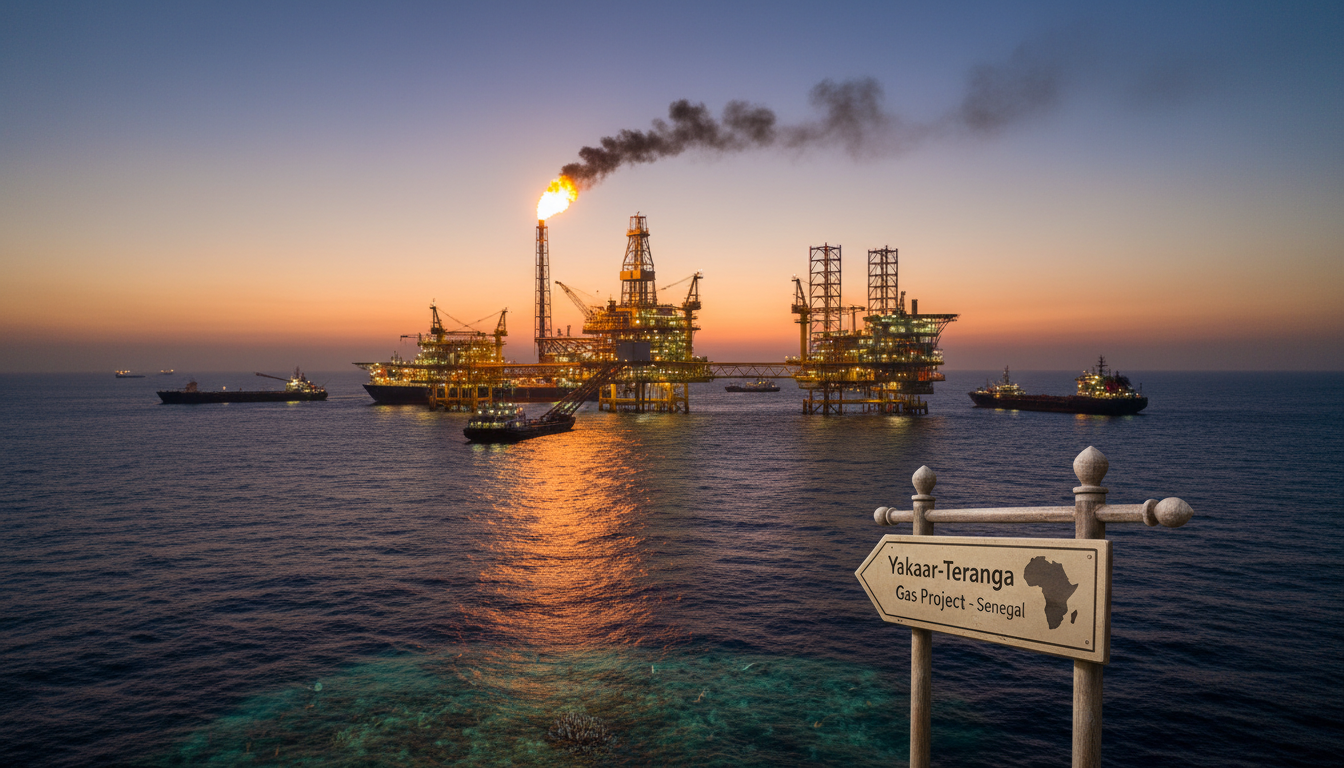
Senegal’s Yakaar-Teranga Gas: A $7.5 Billion Bet on Energy Sovereignty and Economic Transformation
Dakar is actively positioning Senegal at the forefront of West Africa’s energy future, unveiling a substantial $7.5 billion development plan for the Yakaar-Teranga gas discovery. This ambitious endeavor, spearheaded by the nation’s state-owned oil company, Petrosen, promises to fundamentally reshape Senegal’s energy landscape, drastically reducing its reliance on imported fuels and delivering significant relief to its national budget.
The strategic importance of Yakaar-Teranga extends far beyond mere gas production. Mouhamadou Diop, chief executive officer of Petrosen’s trading arm, highlighted its potential to slash Senegal’s current annual energy subsidy bill, which currently stands at a hefty $1 billion. This substantial saving will free up critical capital for other national development priorities, marking a pivotal moment for the country’s fiscal health and energy independence.
Unlocking West African Gas Potential: A Decade in the Making
The Yakaar-Teranga offshore field initially captivated international attention a decade ago following its discovery by Kosmos Energy Ltd. This significant find, coupled with the neighboring Grand Tortue Ahmeyim (GTA) gas deposit, swiftly elevated Senegal’s profile as a burgeoning new producer within the global energy markets. The nation harbors clear strategic objectives for its newfound gas wealth: fueling domestic electricity generation, and laying the groundwork for robust petrochemical and fertilizer industries, thereby adding substantial value to its natural resources.
While BP Plc initially played a role as an early partner in the Yakaar-Teranga development, the global energy major strategically exited the project in 2023. This departure paved the way for a crucial shift in ownership dynamics. Kosmos Energy’s contract is set to expire in July, a juncture that will likely see Senegal emerge as the sole shareholder. This move mirrors a broader trend across the African continent, where nations are increasingly asserting tighter control and greater ownership over their strategic natural resources, aiming to maximize local value creation and direct economic benefits.
From Importer to Operator: Senegal’s Strategic Energy Ascent
Senegal’s proactive approach to developing its own natural gas resources follows a successful trajectory in establishing a domestic oil industry. The offshore Sangomar field, a landmark project, commenced oil output in 2024, signaling the nation’s growing operational capabilities and its commitment to harnessing its hydrocarbon wealth. Despite producing oil, Senegal has historically remained a net importer of refined petroleum products, a vulnerability that Yakaar-Teranga is designed to address directly.
Mouhamadou Diop articulated a clear strategic vision for this transition: “We produce oil, but we remain a net importer of refined petroleum products. The goal is to use revenues that you get from the oil and gas to actually invest it in exploration, to be an operator and develop the project ourselves.” This statement underscores Senegal’s long-term ambition to move beyond merely hosting production to becoming a fully integrated operator across the upstream and downstream value chains, a significant indicator for investors assessing the country’s long-term stability and growth.
A Phased Investment for Comprehensive Growth
The $7.5 billion Yakaar-Teranga development is envisioned as a multi-phased investment, meticulously designed to cater to both immediate domestic energy needs and long-term industrial expansion. The initial phase will command an investment of approximately $2.5 billion. This crucial first stage will focus on producing around 300 million cubic feet of gas per day, earmarked specifically for the domestic market. This targeted supply will be instrumental in powering Senegal’s grid and supporting local industries.
The subsequent phase, requiring a more substantial investment of approximately $5 billion, will unlock significant downstream potential. This capital will be directed towards establishing and developing industries centered around fertilizer production, petrochemicals, steel manufacturing, and cement production. Such an integrated approach highlights Senegal’s commitment to industrial diversification and job creation, moving beyond raw material extraction to create higher-value products for both domestic consumption and export.
Innovative Financing for a National Imperative
Funding a project of this scale requires innovative financial strategies. Diop outlined a multi-pronged approach, leveraging a combination of regional bond markets, support from development finance institutions, and tapping into diaspora-linked capital. This diversified funding model aims to de-risk the investment and attract a broad spectrum of financial partners.
Crucially, Diop emphasized the role of robust, long-term offtake contracts as a cornerstone for securing project finance. He noted that “Properly structured offtake contracts, often 15 to 20 years, can support project debt of investment-grade quality.” Such long-term agreements provide critical revenue certainty for investors and lenders, making the Yakaar-Teranga project an attractive proposition for those seeking stable, infrastructure-backed returns in emerging markets.
As Senegal embarks on this ambitious journey, the Yakaar-Teranga project stands as a testament to the nation’s resolve to harness its natural wealth for broad-based economic development and energy independence. For investors eyeing strategic opportunities in the evolving African energy landscape, Senegal presents a compelling case, demonstrating both the resource potential and the political will to execute large-scale, transformative projects.


