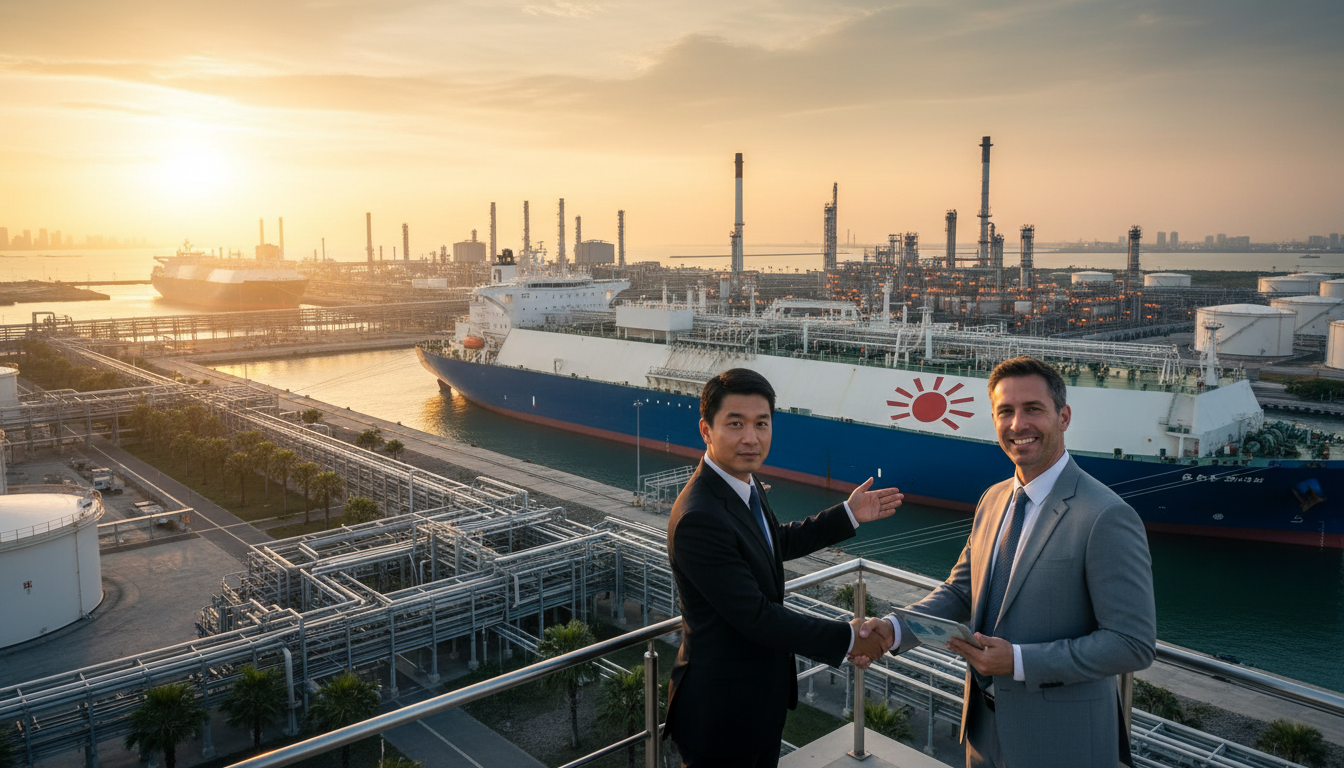
In a significant strategic maneuver poised to reshape Asia’s downstream energy landscape, Japanese refining giant Eneos Holdings Inc. has finalized an agreement to acquire a substantial portfolio of Chevron Corp.’s refining and retail assets across the Asia-Pacific region. This ambitious $2.17 billion all-cash transaction marks a decisive step for Eneos to dramatically broaden its operational footprint and solidify its position in one of the world’s most dynamic energy markets.
The comprehensive deal encompasses Chevron’s pivotal 50 percent ownership stake in a key oil refinery situated in Singapore. Beyond this crucial refining infrastructure, the acquisition also includes a robust network of retail fuel and lubricant marketing businesses spanning Singapore, Malaysia, Indonesia, the Philippines, Australia, and Vietnam. This extensive geographical reach underscores Eneos’ intent to capture growth across diverse and rapidly developing economies. While the financial agreement is in place, the complex transaction is anticipated to reach its full closure in 2027, allowing for an orderly transition of assets and operations.
Strategic Imperative: Eneos’ Growth Pivot to Southeast Asia
Eneos’ rationale behind this colossal investment is clear and strategically sound. The company openly acknowledges the structural decline in petroleum demand within its home market of Japan, a trend expected to persist over the medium to long term. Conversely, Southeast Asia presents a compelling growth narrative, with robust economic development fueling an expanding appetite for refined products and energy services. This acquisition provides Eneos with a critical avenue to pivot its growth strategy, tapping directly into the vibrant demand centers of the Asia-Pacific.
This transaction is particularly monumental as it grants Eneos its very first ownership stake in a refinery facility outside of Japan. This international refining capacity is not merely an expansion but a fundamental shift in the company’s operational model, enhancing its supply chain resilience and global market reach. Furthermore, gaining a direct stake in Singapore’s refining sector significantly bolsters Eneos’ presence in a city-state recognized globally as Asia’s premier oil-trading and supply hub. The Japanese refiner has already been proactively expanding its trading team within Singapore, focusing on sophisticated paper-market instruments, including derivatives, signifying a broader ambition to enhance its trading capabilities and market intelligence in the region.
Financial Framework and Funding Outlook
The substantial $2.17 billion purchase price will be financed through Eneos’ existing cash reserves, as confirmed by Chief Financial Officer Soichiro Tanaka during a recent Tokyo press briefing outlining the company’s full-year earnings. This funding approach highlights Eneos’ strong balance sheet and its confidence in the long-term value proposition of these acquired assets. For investors, the use of existing cash minimizes immediate debt burden, potentially enhancing the deal’s accretive impact and demonstrating prudent financial management in pursuing strategic growth.
Chevron’s Strategic Realignment and Portfolio Optimization
From Chevron’s perspective, this divestment represents a continuation of its broader strategy to optimize its global portfolio, focusing on core upstream strengths and high-value downstream operations. Andy Walz, President of Chevron’s downstream, midstream, and chemicals division, affirmed the company’s commitment to facilitating an “orderly transition,” recognizing Eneos as a “valued partner with whom we have a long-standing commercial relationship.” This indicates a mutually beneficial transaction executed between trusted entities in the energy sector.
This sale follows other recent moves by Chevron to streamline its non-core assets. Earlier in the year, the oil major divested its Hong Kong fuel business to Thailand’s Bangchak Corp. for $270 million. Such divestments are not isolated incidents but reflect a broader trend among major international oil companies. Industry peers like Exxon Mobil Corp. have also been offloading assets in Southeast Asia over recent years as part of their own portfolio rationalization efforts. Notably, Shell Plc recently sold its refining and chemical facilities on Singapore’s Bukom and Jurong islands to a joint venture formed between PT Chandra Asri Pacific and Glencore Plc, further underscoring the dynamic landscape of strategic divestitures and acquisitions in the region’s downstream sector.
Investor Implications and Market Outlook
For investors monitoring the global oil and gas markets, this deal offers several critical insights. Eneos’ aggressive expansion into Southeast Asia signals a proactive strategy to counter domestic market headwinds and capitalize on the region’s burgeoning energy demand. This move could translate into enhanced revenue streams and diversified geographical risk for Eneos shareholders. The acquisition of established retail and lubricant networks, alongside refining capacity, positions Eneos to capture integrated value across the downstream value chain, from production to the end-consumer.
Conversely, Chevron’s ongoing divestments highlight a clear strategy of capital reallocation. By shedding these downstream assets, Chevron is freeing up capital that can be deployed into higher-return, growth-oriented projects, likely in its upstream exploration and production segments, or in new energies. This disciplined approach to portfolio management is designed to enhance shareholder returns by focusing resources on areas of strategic competitive advantage.
The consolidation witnessed in the Asia-Pacific downstream sector, characterized by majors divesting and regional players expanding, suggests a maturing market undergoing significant structural changes. Investors should anticipate continued M&A activity as companies reposition themselves for the evolving energy transition and regional demand dynamics. Eneos’ acquisition of Chevron’s assets is a bold statement about its future ambitions and a strong indicator of the long-term investment opportunities still present within the robust and growing economies of Southeast Asia.