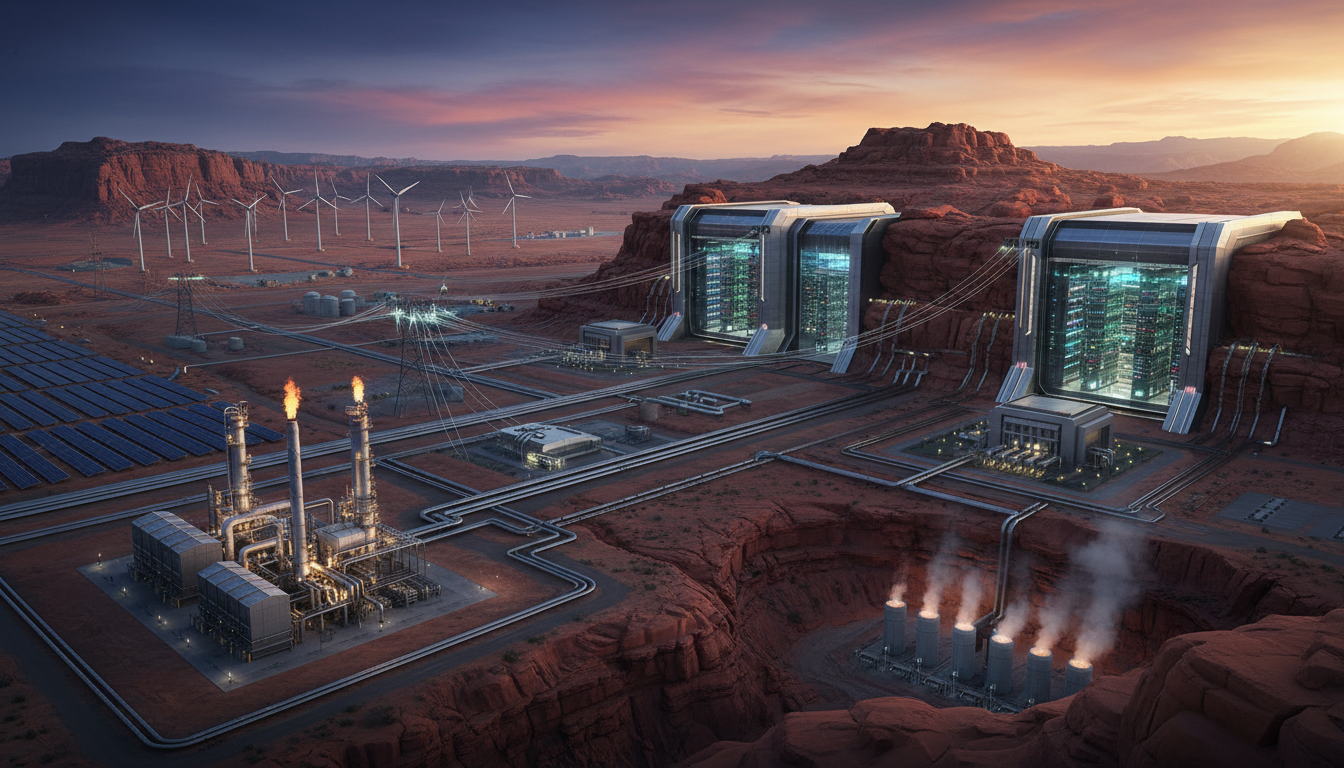
The burgeoning appetite for artificial intelligence is setting the stage for unprecedented energy demand, and a colossal datacenter project in Utah is bringing this reality into sharp focus for energy investors. The proposed Stratos AI datacenter in Box Elder County, Utah, is poised to become one of the world’s largest, yet its staggering power and water requirements have ignited a fierce public debate and present a complex calculus for energy infrastructure and natural gas markets.
AI’s Insatiable Thirst: A 9GW Energy Conundrum
This ambitious Stratos project, planned across three sites encompassing over 40,000 acres – an area more than twice the size of Manhattan – mandates an estimated 9 gigawatts (GW) of power. To put this into perspective, this single facility would consume more electricity than the entire state of Utah currently utilizes. Such an immense load introduces significant implications for grid stability, regional energy supply, and the necessary expansion of generation capacity.
For investors tracking the energy sector, this highlights a critical trend: the exponential growth of AI is translating directly into a massive surge in electricity demand. While the long-term energy transition often focuses on renewables, projects of this scale underscore the immediate need for reliable, dispatchable power, a role natural gas is well-positioned to fill, despite growing environmental scrutiny.
Natural Gas at the Core: O’Leary’s Fueling Strategy
Venture capitalist Kevin O’Leary, a prominent backer of the Stratos initiative, has confidently asserted that new gas-fired generation will power the facility. “We are building power from scratch, from the pipeline,” O’Leary stated, adding, “We are going to burn it with turbines, clean.” This declaration immediately flags a significant opportunity for the natural gas industry, from upstream producers to midstream pipeline operators and gas-fired power plant developers.
Developing 9GW of new generation capacity, especially through natural gas, represents a substantial capital investment and a guaranteed long-term demand off-take. This scenario, if it materializes, could inject considerable activity into regional gas markets, driving demand for new infrastructure, including pipelines and processing facilities, to deliver fuel to Box Elder County. However, O’Leary’s assertion of “clean” gas burning quickly draws criticism from environmental groups, who highlight natural gas as a fossil fuel contributing to climate change, setting up a clash between economic development and environmental stewardship.
Water Scarcity and Environmental Resistance: ESG Risks Emerge
Beyond the energy footprint, the Stratos project faces intense opposition due to its substantial water consumption in a region already grappling with severe drought. Critics warn that the facility’s demand for water could further imperil the Great Salt Lake ecosystem, a critical migratory bird habitat already under immense stress from shrinking water levels. The potential for toxic dust clouds from a drying lake bed further exacerbates public health concerns for nearby Salt Lake City residents.
Franquer Bains, director of the Sierra Club’s Utah chapter, articulated the sentiment, stating, “Approving a project that will consume water and energy at this scale is irresponsible and dangerous.” For energy investors, this environmental and social governance (ESG) backlash translates into concrete risks: potential regulatory delays, increased project costs, and reputational damage. The withdrawal of an initial application to divert 1,900 acre-feet of water, only to announce intentions for a new application that will invalidate existing objections and require a $15 fee for new complaints, illustrates the project’s developers navigating a contentious approval process that opponents allege is designed to circumvent public disapproval.
A Hot Topic: Local Opposition and Planetary Impact
The sheer scale of the Stratos datacenter also raises concerns about its localized environmental impact. An analysis by Rob Davies, a physics professor at Utah State University, suggests the network of industrial-scale fans necessary for cooling could generate so much waste heat that it might elevate daytime temperatures in the surrounding Hansel valley by 2F to 5F (1.1C to 2.7C) and night-time temperatures by 8F to 12F (4.4C to 6.6C). Davies bluntly stated, “The thermal load from the proposed Stratos project is extreme.”
The project is also projected to increase Utah’s planet-heating pollution by approximately 50%, further intensifying the public outcry. Nearly 4,000 residents have formally objected, leading to highly contentious public meetings. These local disturbances, including alleged threats, underscore the significant social license challenges faced by large-scale industrial projects, even those touted for technological advancement and job creation. O’Leary’s assertions that “professional protesters” are paid and bused in have been firmly rejected by local opponents, who have now filed for a referendum, requiring 5,422 signatures in 45 days to put the project’s approval to a vote in November.
Governor’s Intervention: Phased Development and Accountability
The escalating public pressure has prompted Utah Governor Spencer Cox to intervene. On Friday, Governor Cox announced he would require the Stratos project to demonstrate no harm to the Great Salt Lake and no increase in residents’ power bills. He also indicated that the datacenter would proceed in phases, initially covering 2,000 acres, with future expansion contingent on subsequent reviews and adherence to “clear standards and accountability.”
This gubernatorial oversight signals a more cautious path forward, introducing additional regulatory layers and potential delays that investors must factor into their risk assessments. While the state motto is “Industry,” Cox emphasized that development must be “thoughtful and in line with Utah values,” a clear nod to the environmental and community concerns.
Investment Outlook: Powering AI’s Future with Traditional Energy
For investors in the oil and gas sector, the Stratos datacenter saga offers a compelling case study. It starkly illustrates the immense energy requirements of the AI revolution, positioning natural gas as an indispensable, albeit contested, bridge fuel. While environmental opposition and regulatory hurdles present considerable risks, the underlying demand signal for reliable, scalable power remains robust.
The project highlights potential opportunities for investments in new gas-fired power plants, expanded pipeline infrastructure, and technologies aimed at mitigating environmental impacts. However, the fierce local backlash and increased governmental scrutiny underscore the growing importance of ESG considerations in project development and finance. The future of AI’s power needs will undoubtedly be a complex interplay of technological ambition, environmental stewardship, and the enduring role of traditional energy sources in driving the digital age.


