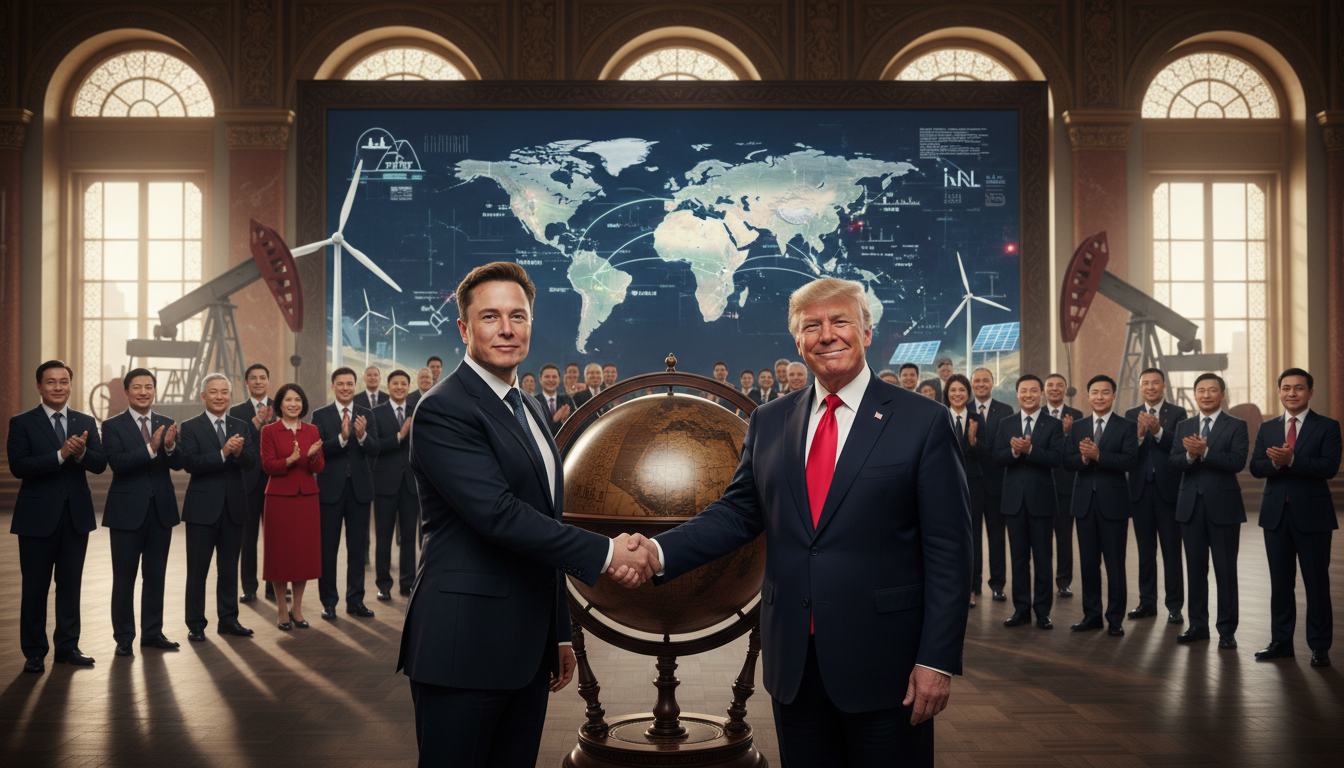
The global energy landscape is bracing for a pivotal week as President Donald Trump embarks on a high-stakes diplomatic mission to Beijing, set to meet with Chinese President Xi Jinping. From Wednesday to Friday, the world’s two largest economies will engage in discussions that, while diverse in their agenda, carry profound implications for the stability of global markets, particularly the critically sensitive oil and gas sector. This significant engagement marks the first time a sitting U.S. President has visited the Chinese capital since Trump’s initial term trip in 2017, underscoring the gravity of the current geopolitical climate.
Accompanying President Trump is a formidable delegation of American business titans, signaling the broad economic scope of these talks. While names like Apple CEO Tim Cook and Tesla and SpaceX CEO Elon Musk highlight discussions around cutting-edge technology and future industries, the undercurrent of energy security and geopolitical risk is undeniably present. For oil and gas investors, understanding the nuanced interplay between these high-level political dialogues and their potential impact on crude prices, supply chains, and international trade dynamics is paramount.
Geopolitical Tensions and the Energy Lifeline
One of the most pressing backdrops to this summit is the ongoing “Iran war,” a phrase that encapsulates the heightened tensions and strategic confrontations in the Middle East. Indeed, the original scheduling of this very summit was reportedly postponed earlier this year due to the escalating situation with Iran. This regional instability directly threatens critical oil shipping lanes, most notably the Strait of Hormuz, through which a significant portion of the world’s seaborne crude supply transits daily. Any further escalation in this conflict has the potential to send shockwaves through global energy markets, manifesting as sharp price spikes and increased supply uncertainty.
For oil and gas companies, the spectre of Middle East conflict translates into tangible risks: higher insurance premiums for tankers, potential disruptions to production facilities, and increased volatility in futures markets. Investors in the energy space must closely monitor how discussions between the U.S. and China might address de-escalation strategies or reinforce international efforts to secure vital trade routes. A stable resolution or even a clear path towards easing tensions could provide a much-needed ballast to an otherwise turbulent market, potentially alleviating some of the geopolitical risk premium currently factored into crude prices.
China’s Insatiable Demand and Strategic Resource Management
China, as the world’s largest importer of crude oil and a burgeoning consumer of natural gas, has an inherent and substantial interest in global energy market stability. Its economic engine relies heavily on consistent and affordable energy supplies. Therefore, any dialogue with the United States that touches upon global trade, regional security, or resource allocation directly impacts China’s energy security strategy.
While the agenda items explicitly mentioned, such as Artificial Intelligence (AI) and rare earth minerals, might seem removed from traditional oil and gas, their broader implications for economic growth and industrial output are undeniable. AI, for instance, drives technological advancement that can both increase energy efficiency and spur new energy demands. Rare earth minerals are crucial for a vast array of high-tech industries, including those vital for the energy transition and advanced drilling technologies. A stable, predictable trade relationship between the U.S. and China facilitates economic growth in both nations, indirectly boosting overall global energy demand and providing a more predictable investment climate for energy producers and infrastructure developers worldwide.
The talks may also implicitly touch upon energy diversification and strategic reserves. Both nations recognize the fragility of over-reliance on single sources or vulnerable transit points. Any agreements or joint statements that promote energy cooperation, even indirectly, could have long-term positive effects on market stability and foster an environment conducive to international energy investments.
U.S. Energy Dominance Meets Global Diplomacy
The United States has cemented its position as a global energy powerhouse, becoming a net exporter of crude oil and natural gas. This newfound energy independence grants President Trump a unique leverage in diplomatic discussions, allowing the U.S. to advocate for market stability from a position of strength rather than dependency. The discussions with President Xi, therefore, are not just about managing current crises but about shaping the future architecture of global trade and resource security.
Investors should consider how potential trade agreements or disagreements emerging from this summit could influence global economic growth forecasts. Slower global growth, often a consequence of trade disputes, directly translates to reduced energy demand, impacting oil prices and the profitability of energy companies. Conversely, progress in resolving trade frictions could inject renewed optimism into the global economy, providing a tailwind for energy consumption and investment.
Investment Implications for Oil & Gas Stakeholders
For investors focused on the oil and gas sector, this U.S.-China summit represents a critical barometer of global risk and opportunity. Market participants will be scrutinizing every official statement and diplomatic gesture for signals regarding trade policy, geopolitical de-escalation, and broader economic cooperation. The immediate aftermath of the summit could see increased volatility in oil futures, depending on the tone and substance of the outcomes.
Long-term strategists in the energy sector should consider how these high-level interactions influence capital allocation, particularly in projects sensitive to geopolitical stability and international trade flows. Companies with significant international operations or those reliant on cross-border supply chains will be particularly attuned to any shifts in U.S.-China relations. The pursuit of stable, predictable international relations is intrinsically linked to the long-term profitability and sustainability of oil and gas investments.
Conclusion: Navigating Uncertainty for Future Growth
As President Trump and President Xi convene, the energy world watches with bated breath. While the explicit agenda includes AI and rare earth minerals, the underlying narrative for oil and gas investors revolves around the crucial themes of geopolitical stability, global trade relations, and the security of vital energy supplies. The “Iran war” remains a significant overhang, amplifying the importance of diplomatic progress between Washington and Beijing.
The outcomes of this summit will not only shape the immediate trajectory of global politics but will also cast a long shadow over the future investment landscape for oil and gas. Astute investors will recognize that while direct energy deals may not be the headline, the broader stability fostered by constructive dialogue between these two economic giants is an indispensable ingredient for sustained growth and profitability in the ever-dynamic energy sector.


