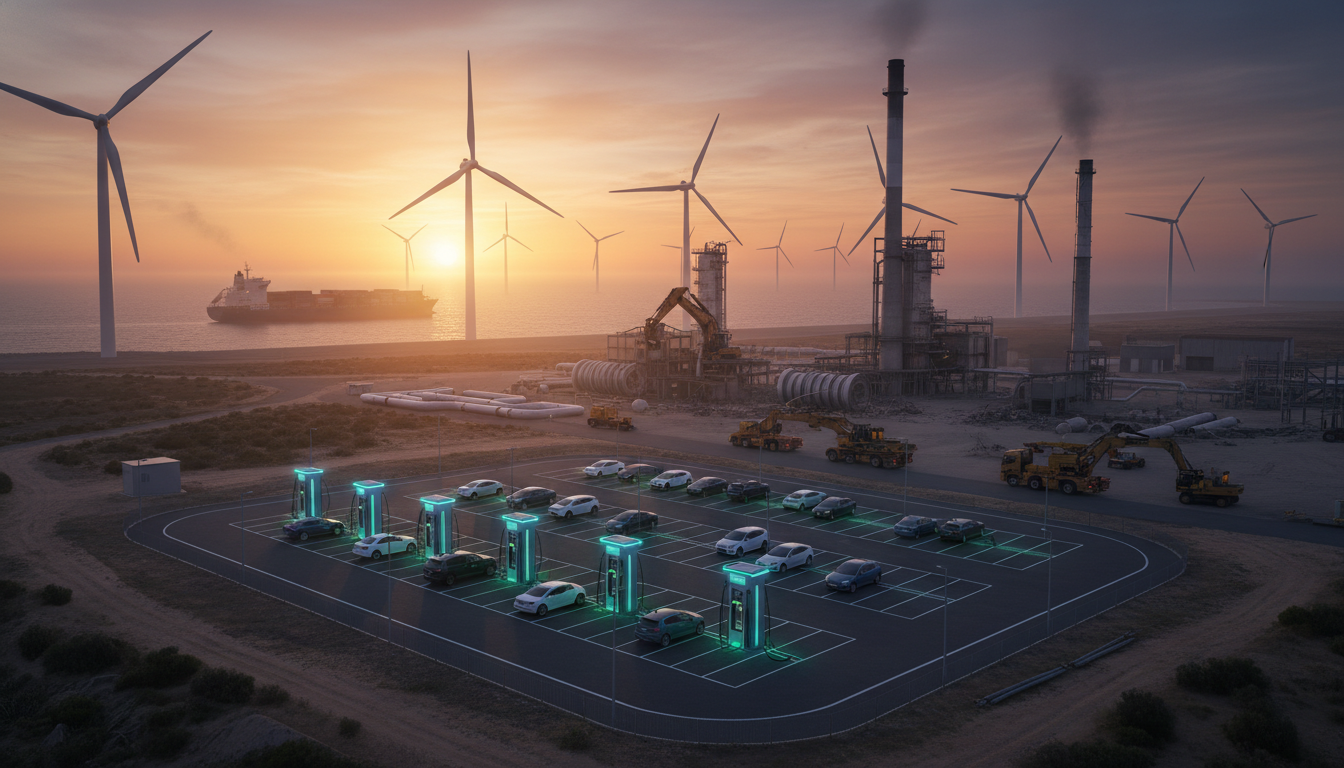
The global energy landscape continues its dramatic shift, and Spain is emerging as a significant player in redirecting capital towards future mobility solutions. Recent announcements from the Spanish government reveal a robust commitment exceeding €100 million dedicated to advancing electromobility, primarily targeting the expansion of charging infrastructure across the nation’s vital traffic corridors. This strategic pivot, while focused on greener transportation, carries profound implications for investors closely monitoring the long-term demand fundamentals for oil and gas.
The ‘Moves Corredores’ funding program stands at the forefront of this initiative, designed to establish nearly 3,000 new charging points. This aggressive build-out signals a clear intent to dismantle adoption barriers for electric vehicles (EVs), thereby accelerating the displacement of internal combustion engines and, consequently, fossil fuel consumption within the transport sector. For oil and gas investors, understanding the velocity and scale of such infrastructure deployment is critical to forecasting future gasoline and diesel demand in key European markets.
Spain’s Multi-Pillar Strategy for Electromobility
Spain is systematically overhauling its electromobility funding framework, aligning it with the ambitious national ‘España Auto 2030’ plan. This comprehensive strategy rests on three distinct yet interconnected pillars, each designed to foster a robust EV ecosystem:
- **’Plan Auto+’ Program:** This pillar focuses on direct consumer purchase incentives for electric vehicles, aimed at making EVs more accessible and affordable to the general public.
- **PERTE Program:** This initiative provides crucial subsidies for electric vehicle and battery manufacturers, bolstering domestic production capabilities and supply chain resilience.
- **’Moves Corredores’ Program:** As highlighted, this pillar is dedicated to the expansive development of the national charging network, a foundational requirement for widespread EV adoption.
These initiatives collectively illustrate a holistic approach to energy transition, addressing both the supply and demand sides of the EV equation. Investors in traditional energy sectors must recognize that this is not merely a patchwork of programs but a carefully orchestrated national strategy to reduce fossil fuel dependency.
Capital Influx: The Recovery, Transformation and Resilience Plan
The Spanish government’s commitment gained tangible form with a provisional allocation of €670 million towards various projects under the national Recovery, Transformation and Resilience Plan (PRTR). This significant investment vehicle, itself a component of broader EU-funded recovery efforts, underscores a pan-European resolve to drive green initiatives. Of this substantial sum, €105 million is specifically earmarked to strengthen electromobility within Spain, demonstrating a clear prioritization of sustainable transport solutions.
Delving deeper into the allocation, approximately €97 million has been channelled into the ‘Moves Corredores’ program. This specific tranche will subsidize 337 projects, with the concrete objective of delivering 2,880 charging points strategically positioned along Spain’s critical transport routes. Furthermore, nearly €8 million is allocated to the ‘Moves Flotas Plus’ program, which supports 20 companies in the procurement of approximately 3,700 electric vehicles and the installation of almost 300 associated charging points. This targeted investment in commercial fleets is particularly noteworthy, as fleet electrification often provides a reliable pathway for accelerated EV adoption and infrastructure utilization.
It’s important for investors to note that the remaining funds from this PRTR allocation round are also directed towards bolstering Spain’s renewable energy infrastructure. These include investments in new energy systems at six ports, encompassing both offshore and hydropower solutions, alongside the development of seven new pumped-storage hydroelectric plants. The Institute for Diversification and Energy Saving (IDAE), operating under the Ministry for Ecological Transition and Demographic Challenge, is tasked with managing all PRTR funding, providing a centralized and coordinated approach to Spain’s energy transition endeavors.
Strategic Shift in Consumer Incentives: Plan Auto+
Spain is set to implement a significant overhaul of its consumer-facing electromobility funding with the introduction of the ‘Plan Auto+’ program. This initiative will channel €400 million in direct subsidies to consumers by 2026, aiming to substantially reduce the purchase price of electric vehicles. The ‘Plan Auto+’ is designed to replace the existing ‘Moves’ program, marking a pivotal shift in how these incentives are administered.
Crucially for investors, from 2026 onwards, these consumer subsidies will transition to central government management, moving away from the previous model where autonomous regions held responsibility under the ‘Moves III’ funding program, which is set to expire at the end of 2025. This centralization could streamline the application process, enhance consistency across the nation, and potentially accelerate EV uptake. However, some delays have been observed; while ‘Plan Auto+’ was initially slated to replace the ‘Moves’ program at the turn of the year, the government has yet to publish the final participation conditions and the definitive list of eligible vehicles. Reports suggest this delay stems from an ongoing evaluation of a carbon dioxide footprint calculation system as a funding criterion, drawing inspiration from the model successfully implemented in France. Such meticulous planning, while causing short-term delays, underscores a long-term commitment to effective and environmentally sound policies, a factor that influences the pace of oil demand erosion.
Navigating Funding Discrepancies and Future Outlook
Despite the ambitious declarations and significant allocations, certain ambiguities within Spain’s electromobility funding landscape warrant careful consideration from investors. For instance, the ‘Moves Corredores’ program was initially announced in December with a robust budget of €300 million. However, the recently publicized allocation amounts to a more modest €97 million. This substantial discrepancy raises questions regarding the potential for additional budget top-ups from alternative sources, a factor that could influence the speed and extent of charging infrastructure deployment.
Furthermore, a considerable €580 million is anticipated to flow into the existing PERTE electromobility funding program in 2026, earmarked for industrial subsidies supporting EV and battery production. As of now, no updated information has been provided regarding this crucial pillar of industrial support. The clarity and consistency of these funding streams are paramount for investors making long-term strategic decisions within the evolving energy sector. Uncertainty surrounding these allocations could impact the attractiveness of Spain as a hub for green manufacturing and, by extension, the overall pace of its transition away from fossil fuels.
In a public statement, Vice-President of the Government and Minister for Ecological Transition and Demographic Challenge, Sara Aagesen, reiterated Spain’s unwavering commitment: “This government’s commitment to the energy transition has always been unwavering. Once again, we face a challenge that reaffirms our commitment and that of Europe. A commitment that positions Spain as an engine for growth, employment, and prosperity. Spain has not only seized this great opportunity in time but also finds itself in a privileged position, which we will continue to leverage.”
For astute oil and gas investors, Spain’s aggressive push into electromobility, backed by significant national and EU funding, represents a clear signal of declining future reliance on traditional fuels. While the immediate impact on global crude demand may seem incremental, the cumulative effect of such national strategies across Europe points towards a sustained erosion of fossil fuel market share in the transportation sector. Monitoring these capital flows, policy evolutions, and infrastructure build-outs in markets like Spain is essential for accurately forecasting the energy future and optimizing investment portfolios in a rapidly transforming world.