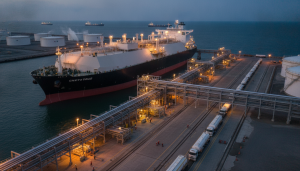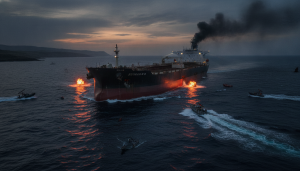
The geopolitical landscape has fundamentally reshaped the global energy narrative, with top oil and gas executives signaling profound, lasting shifts following recent conflicts. Over the past two weeks, during their quarterly earnings calls, leaders from major energy firms across the value chain have emphatically communicated to investors that the ongoing situation, particularly the disruption of the Strait of Hormuz, mandates a comprehensive re-evaluation of energy strategy worldwide.
The strategic maritime choke point’s prolonged closure has already resulted in an estimated loss approaching one billion barrels of crude oil from global supply, a deficit that continues to exacerbate daily. This monumental disruption unequivocally demonstrates the inherent fragility embedded within the current global energy infrastructure, a sentiment echoed by Olivier Le Peuch, CEO of the prominent oilfield services giant, SLB.
“This event will undoubtedly trigger fundamental structural changes across the entire energy landscape,” affirmed Lorenzo Simonelli, CEO of Baker Hughes, a key competitor in the oilfield services sector. The consensus among industry titans is clear: energy security has ascended from a theoretical discussion point to an urgent operational imperative for both governments and private industry. Jeffrey Miller, CEO of Halliburton, the third major oilfield services firm, underscored this shift, stating, “It is no longer simply a talking point.”
Looking ahead, these industry leaders project a significant increase in capital allocation towards oil exploration and production activities. Concurrently, investments in low-carbon solutions such as geothermal energy, nuclear power, and crucial grid modernization projects are expected to maintain their momentum. Simonelli elaborated on this multi-faceted approach, emphasizing that the objective extends beyond merely augmenting energy supply. “It’s about fostering robust and resilient energy infrastructure, enhancing redundancy, diversifying foundational assets, and critically, reducing reliance on any single, large-scale asset,” he explained.
Diversifying Global Energy Pathways
The enforced closure of the Strait of Hormuz has starkly illuminated the profound dependence of major economies, particularly those across Asia, on Middle Eastern crude oil and liquefied natural gas (LNG) imports. This vulnerability is now a primary driver for strategic reorientation. Darren Woods, CEO of Exxon Mobil, articulated the immediate consequence for policymakers and corporations: “People are going to reassess their energy security and how they ensure, going forward, they don’t have the same exposure.”
As a direct response, governments are poised to actively pursue the diversification of their energy supply portfolios. Furthermore, a pressing need to replenish strategic oil stockpiles, which have been drawn down significantly during the conflict, will propel substantial buying activity. Lorenzo Simonelli of Baker Hughes anticipates, “There’s going to be a rebuilding of global inventories above historical levels to ensure that energy security is at the forefront of national policy.”
In this evolving landscape, U.S. crude oil production assumes an even more pivotal role in bolstering global energy security. Kaes Van’t Hof, CEO of Diamondback Energy, a leading U.S. shale producer, highlighted the nation’s increasing importance, especially given that U.S. crude exports have already reached unprecedented highs during the recent period of instability. This demonstrates the critical role American production plays in stabilizing international markets.
Market Rebalancing and Investment Outlook
The supply disruptions have fundamentally tightened the global oil market. Jeffrey Miller from Halliburton noted a dramatic shift from earlier expectations of a market surplus this year to a significant deficit. This rebalancing underscores the underlying strength in commodity prices that investors can anticipate.
This tightened market dynamic, characterized by a persistent supply gap, is expected to sustain elevated oil prices even after the immediate conflict subsides, according to SLB’s Olivier Le Peuch. Such an environment of higher prices will naturally incentivize increased investment in a range of upstream opportunities. Deepwater and offshore projects, particularly in regions like Africa, the Americas, and Asia, are poised to attract substantial capital reallocation.
Africa, in particular, stands out as an exceptionally compelling long-term investment frontier for oil and gas. Le Peuch emphasized that the continent possesses a vast base of underdeveloped hydrocarbon resources. “We expect portfolio allocation to shift more favorably towards this region over time,” he stated, signaling a strategic focus for companies seeking to capitalize on these untapped reserves. For discerning investors, the current geopolitical shifts are not merely temporary market aberrations but herald a new era of investment opportunities driven by an unyielding global demand for robust and diversified energy supplies.