Escalating Strikes Threaten Russian Oil Output, Fuel Market Volatility
Recent audacious aerial attacks by Ukrainian forces have once again rocked Russia’s vital energy infrastructure, striking two major fuel-producing facilities and a critical oil pumping station. These aggressive actions are intensifying pressure on Russia’s refining capacity, pushing its average daily refinery runs to multi-year lows, a trend that began accelerating significantly in April. Investors closely monitoring global oil markets must factor in this escalating operational risk within Russia, as sustained disruptions could have profound implications for global crude and refined product supplies.
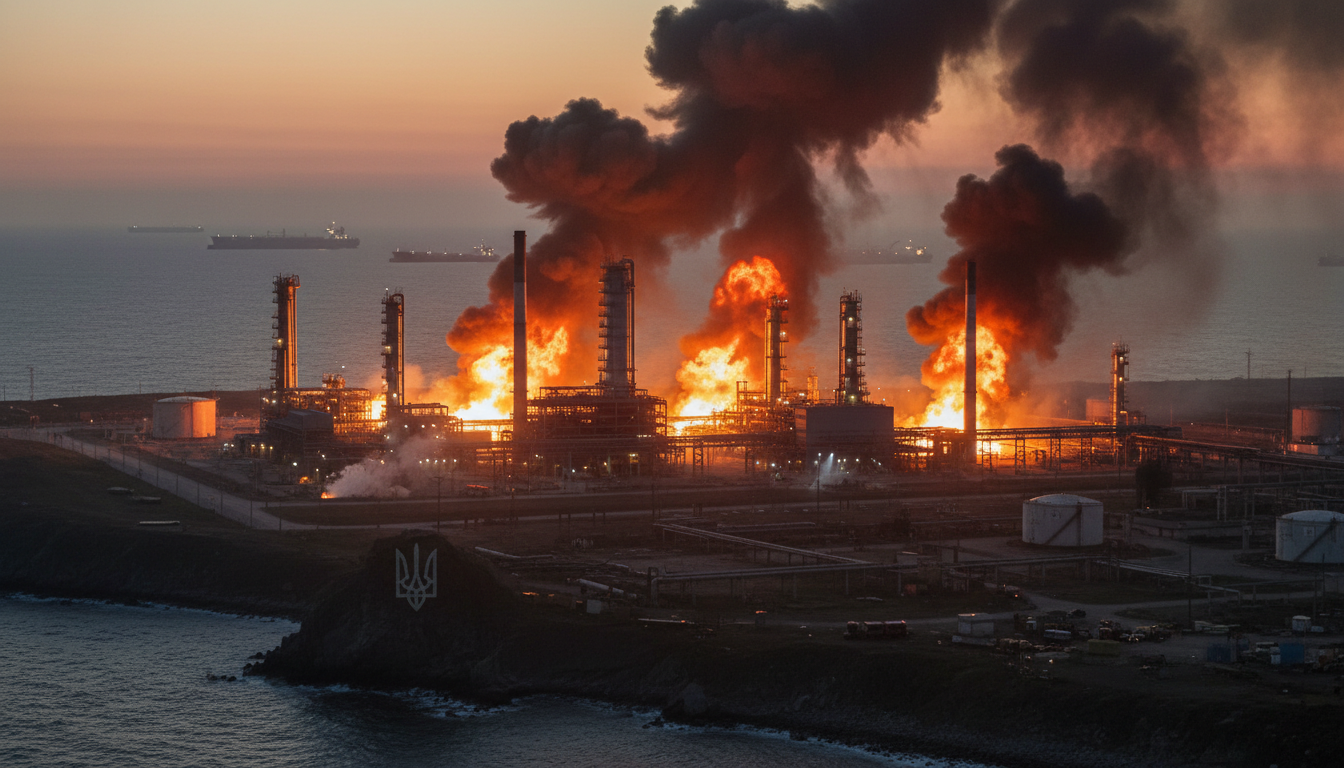
Overnight, drones successfully targeted an oil refinery situated in Yaroslavl, a significant industrial hub approximately 282 kilometers (175 miles) northeast of Moscow. This strike was publicly acknowledged by Ukraine’s President Volodymyr Zelenskiy, signaling a deliberate and strategic targeting effort. Simultaneously, fresh assaults were reported on the Permnefteorgsintez refinery in Perm and a nearby oil pumping station, located approximately 1,500 kilometers east of the Russian capital. These Perm facilities had already sustained hits earlier in the week, indicating a persistent and systematic campaign against key Russian energy assets. Ukraine’s Security Service (SBU) confirmed these operations via their official channels, noting that one crude-processing unit at the Perm refinery suffered a fire, while a reservoir tank at the adjacent pumping station was also struck.
Key Infrastructure Targeted: Capacity and Ownership Impact
The targeted refineries represent cornerstone assets in Russia’s vast energy complex. Both the Yaroslavl and Perm facilities rank among the nation’s ten largest fuel-producing operations, making their disruption particularly impactful. The Yaroslavl plant, jointly owned by energy giants Rosneft PJSC and Gazprom Neft PJSC, boasts a substantial processing capacity of approximately 300,000 barrels per day (bpd). Meanwhile, the Perm refinery, a key asset for Lukoil PJSC, processes around 260,000 barrels daily. The associated Perm pumping station holds immense strategic value, serving as a critical node within Russia’s extensive trunk pipeline network. This network is instrumental in transporting crude oil from the prolific fields of Western Siberia to refineries and distribution points across central Russia, including Lukoil’s own processing facilities. Any damage to such integral infrastructure can create bottlenecks, impacting both crude flow and refined product availability.
The ongoing escalation in strikes marks a deliberate shift in Ukraine’s strategy, with a focus on Russia’s oil infrastructure throughout the spring. Assets ranging from vast refineries to crucial sea terminals have become almost daily targets. The underlying objective is clear: to diminish the significant windfall revenues Moscow has been accruing from the current elevated global oil prices. For investors, this translates into an increased geopolitical risk premium on Russian energy exports. Estimates from reputable analytics firms highlight the severity of these attacks, revealing that the April onslaught pushed average daily runs at Russian refineries to their lowest levels since December 2009. This prolonged disruption directly impacts Russia’s ability to produce refined products for domestic consumption and export, further tightening global supply chains already under pressure.
Market Implications and Corporate Response
The immediate market reaction to these persistent attacks often manifests as upward pressure on crude oil benchmarks and refined product futures, particularly gasoline and diesel. As Russia’s refining capacity is curtailed, the global balance of supply and demand for these vital fuels shifts, potentially leading to higher prices for consumers and increased profitability for alternative suppliers. However, for Russian energy majors like Lukoil, Gazprom Neft, and Rosneft, these incidents pose significant operational and financial challenges. While official statements from Lukoil, Gazprom Neft, and Transneft PJSC, the state-run oil pipeline operator responsible for much of Russia’s crude transport, were not immediately available following the recent strikes, regional authorities offered limited details. Mikhail Yevrayev, governor of the Yaroslavl region, confirmed an unidentified industrial facility was hit by drones, with the resulting fire quickly extinguished. Similarly, Perm region governor Dmitry Makhonin acknowledged Ukrainian drone strikes on unnamed industrial sites. The lack of detailed corporate responses leaves investors to assess the potential long-term operational and financial implications based on satellite imagery, commodity price movements, and third-party analysis.
Navigating Geopolitical Risk in Energy Investing
For energy investors, the ongoing situation in Russia underscores the critical importance of understanding geopolitical risk and its tangible impact on global commodity markets. The repeated targeting of refineries and pipeline infrastructure not only curtails Russia’s ability to process its own crude into higher-value products but also creates uncertainty around its export capabilities. A reduction in refined product exports from Russia, a major supplier to parts of Europe and Asia, can force importing nations to seek alternative sources, driving up global freight costs and product prices. This dynamic benefits refiners in other regions with spare capacity and could incentivize increased production from other major oil-producing nations.
As Ukraine continues to leverage its drone capabilities to inflict economic pain on Russia, the long-term outlook for Russian oil and gas revenues remains a significant concern for the Kremlin and a key factor for market participants. The cumulative effect of these strikes, combined with existing sanctions, could reshape global energy trade flows and accelerate the pivot away from Russian energy dependence in various regions. Investors should meticulously monitor these developments, as they not only dictate short-term price movements but also influence strategic decisions regarding capital allocation within the broader oil and gas sector. The resilience of Russia’s energy infrastructure and its ability to repair and adapt under persistent attack will be a defining narrative in the coming months, directly impacting the stability of global energy markets.


