Iran’s Oil Export Conundrum: A Deep Dive into the Ocean Koi Seizure
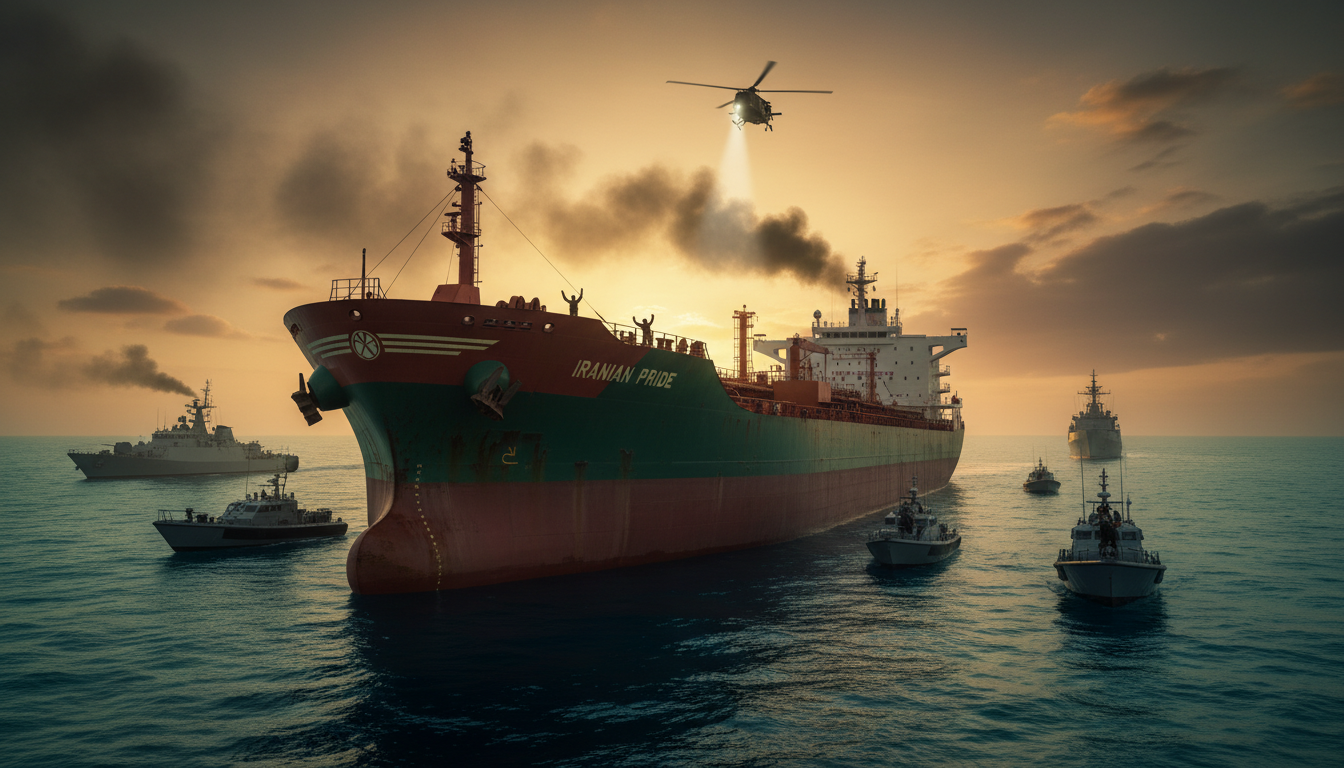
The recent seizure of the tanker Ocean Koi in the Gulf of Oman by Iranian forces sends a potent, albeit complex, signal regarding the precarious state of Iran’s oil export system. This incident, involving a vessel reportedly carrying Iranian crude and already sanctioned by the United States, lays bare the extraordinary tangles and inherent risks within Tehran’s determined efforts to circumvent international blockades. For investors tracking global energy markets, this event offers a critical lens into the operational pressures on a key producer and the intricate dynamics of its shadow trade networks.
Iranian state media confirmed the detention of the Ocean Koi, a vessel previously identified by Washington as an integral part of Iran’s clandestine shipping fleet. This network is meticulously constructed to facilitate the movement of crude outside conventional channels, a necessity born from years of stringent sanctions. While Iranian officials stated the tanker was transporting its own oil and had attempted to “exploit regional conditions,” the specifics of this alleged transgression remain shrouded in ambiguity. This lack of clarity further underscores the opaque nature of a system designed to operate in the shadows, creating a high-risk environment for all participants.
The U.S. Blockade and Iran’s Shadow Fleet Mechanics
The effectiveness of the U.S. naval blockade has undeniably curtailed Iran’s traditional crude export capabilities. This enforcement has resulted in numerous tankers being forced to alter course, leaving an increasing number of oil cargoes adrift at sea. These “limbo” barrels represent a significant financial challenge for Tehran, caught between stringent sanctions, robust enforcement efforts, and a shrinking pool of buyers willing to assume the considerable legal and reputational risks associated with Iranian oil. For investors, this translates into consistent under-utilization of Iran’s vast hydrocarbon potential and persistent supply fragility in the region.
To overcome these formidable hurdles, Iran has cultivated an elaborate and highly adaptable “shadow fleet.” This network relies on a dizzying array of tactics: reflagging vessels under new jurisdictions, employing complex ownership structures that obscure beneficial owners, and routing cargoes through multiple intermediaries. It is not uncommon for a single Iranian oil shipment to undergo several paper transactions, changing hands on documentation numerous times before it ultimately reaches its final destination. This multi-layered approach makes tracing and interdicting these shipments incredibly difficult, yet the Ocean Koi incident highlights the vulnerabilities even within this sophisticated system.
The Paradox of Seizing One’s Own Oil: Strategic Implications
The decision by Iran to seize a tanker seemingly implicated in its own illicit export system suggests a significant tightening of control over its dwindling oil flows. As international pressure mounts and legitimate export avenues remain severely restricted, Iran’s available onshore and floating storage capacity is rapidly filling. In this environment, every single barrel of crude that successfully finds a buyer becomes increasingly critical to the nation’s economic survival. Oil moving through “unauthorized” or potentially exploitative internal channels, even within its own shadow network, could represent a major problem for Tehran, signaling either a crackdown on corruption, a move to consolidate control over revenues, or an assertion of authority within a volatile operational space.
From an investor’s perspective, this maneuver signals a heightened level of internal scrutiny within Iran’s oil industry. It implies that the economic pressures are so intense that even perceived irregularities within their sanctions-evasion framework are now subject to direct intervention. Such actions could introduce new layers of uncertainty for those involved in secondary markets or risk management pertaining to Iranian crude, potentially impacting the reliability and cost of such illicit movements going forward.
Market Reaction and Long-Term Investor Outlook
Interestingly, the immediate global crude market reaction to the Ocean Koi seizure was largely subdued. Oil traders and analysts have largely priced in persistent disruption from Iran, understanding that the nation’s ability to move significant volumes of crude remains severely constrained. This inherent market assumption means that isolated incidents, while significant geopolitically, often do not trigger major price swings unless they signal a fundamental shift in the overall supply landscape or a broader escalation of regional conflict.
However, investors should not dismiss the deeper implications. This event underscores the pervasive geopolitical risks that continue to define the Middle East’s role in global energy supply. It highlights the continued struggle for supremacy between sanctions enforcement and evasion tactics, an ongoing saga that injects volatility and unpredictability into maritime trade routes critical for crude transit. For oil and gas investors, monitoring these incidents is crucial. While individual tanker seizures might not move the needle on daily spot prices, they collectively illustrate a broader environment of heightened risk, potential supply disruptions, and the complex interplay of politics and energy economics that can significantly impact long-term investment strategies.
The Ocean Koi incident serves as a stark reminder that even in the tightly controlled world of sanctioned oil, internal mechanisms can become a source of contention. It reinforces the view that Iran’s energy sector remains a high-risk, high-reward environment, perpetually subject to both external pressures and internal strategic shifts. Prudent investors will continue to factor these intricate geopolitical dynamics into their assessments of global oil supply and pricing trajectories.


