Oil Markets Brace for Volatility as Gulf Tensions Flare Amidst Fragile Truce
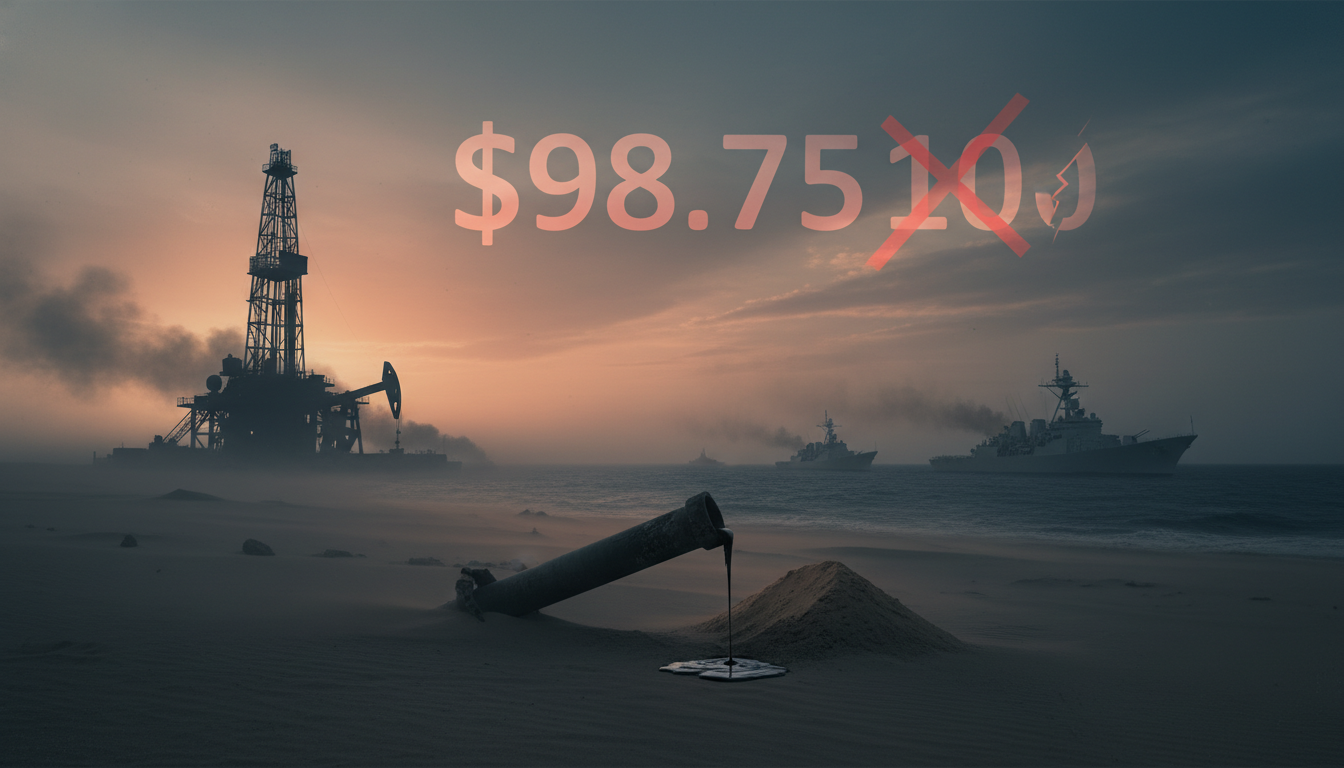
Geopolitical anxieties flared across global markets on Friday following a direct military confrontation between US and Iranian forces in the vital Gulf shipping lanes, significantly diminishing investor confidence in a swift diplomatic resolution to the ten-week conflict. While stock markets in Asia experienced declines, crude prices struggled to hold ground, remaining below the psychologically significant $100 per barrel threshold as traders grappled with the implications of renewed hostilities and the prospect of a prolonged conflict.
The latest escalation saw US Central Command report that Iranian forces had launched missiles, drones, and small boats overnight targeting three US warships. Fortunately, American defenses successfully neutralized the incoming threats, with no US vessels reportedly hit. In retaliation, US forces struck Iranian land bases. However, Iran’s central military command, Khatam al-Anbiya, offered a starkly different account, asserting that the clash erupted after US vessels targeted an Iranian civilian tanker en route to the Strait of Hormuz. Tehran accused its adversary of striking civilian areas in Bandar Khamir, Sirik, and Qeshm island, alleging cooperation from “some regional countries” in the attack.
Despite the exchange of fire, President Donald Trump maintained that a tenuous ceasefire with Iran persisted. Speaking from Washington, Trump remarked, “They trifled with us today. We blew them away. They trifled. I call that a trifle,” downplaying the severity of the incident. While Iran did not explicitly name the alleged US allies, the confrontation coincided with reports from the United Arab Emirates confirming it had intercepted a barrage of drones and missiles originating from Iran. The broader conflict, which commenced on February 28 with US-Israeli strikes, led to Iran largely closing the Strait of Hormuz, followed by a US blockade of Iranian ports. The United Nations International Maritime Organization now estimates approximately 1,500 ships and 20,000 international crew are stranded within the Gulf region due to the ongoing hostilities.
Iran’s Bid for Hormuz Control Sparks International Alarm
A new development threatening to further complicate peace efforts is Iran’s reported initiative to establish an authority for controlling transit through the Strait of Hormuz and collecting tolls from passing vessels. Industry publication Lloyd’s List revealed on Friday that “The Persian Gulf Strait Authority has already introduced a new framework requiring ships to obtain transit authorisation and pay tolls before sailing.” The journal detailed that ships are now mandated to submit comprehensive records including ownership details, insurance, crew information, and intended transit routes. This move was echoed by Iran’s Press TV earlier in the week, stating the country had developed a “system to exercise sovereignty over the Strait of Hormuz” and was disseminating “regulations” to transiting ships via email. This assertive step by Iran comes as the US President had recently paused operations aimed at forcing open the Strait of Hormuz, citing hopes for an imminent deal with Tehran. Iran has consistently signaled its intention to redefine control over the Strait, proposing to exact tolls and share the revenues with Oman.
However, this unilateral claim to control a crucial international waterway has drawn sharp condemnation from the United States. Secretary of State Marco Rubio unequivocally stated, “Iran now claims that they own, that they have a right to control, an international waterway… That’s an unacceptable thing that they’re trying to normalise.” Washington, leveraging Pakistani mediators, has conveyed a proposal to Iran aiming to extend the current Gulf truce and facilitate negotiations for a comprehensive resolution to the conflict. Rubio expressed anticipation for Iran’s response, hoping for a “serious offer.” Iran’s foreign ministry spokesman, Esmaeil Baqaei, confirmed the proposal was “under review,” with a final decision pending announcement, according to ISNA news agency.
Trump’s Dual Message: Deal Hopes and Stark Threats
Earlier in the week, global markets and oil prices had reacted positively to optimism surrounding the Pakistani-mediated peace process, which aimed to prolong the April 8 ceasefire between the US and Iran and pave the way for a negotiated settlement. However, the renewed exchange of fire in Hormuz on Friday quickly dampened this sentiment, sending stock markets downwards and fueling concerns that escalated fighting could impede or derail the reopening of this critical maritime trade artery, despite President Trump’s dismissal of the incident as inconsequential.
Trump’s rhetoric has been a mix of hopeful anticipation for a deal and stern warnings. While he suggested an agreement might be close, he simultaneously threatened a return to military action if Tehran refused to comply. Following Thursday’s skirmish, he reiterated this aggressive stance on his Truth Social platform, warning, “We’ll knock them out a lot harder, and a lot more violently, in the future, if they don’t get their Deal signed, FAST!” Analyst Chris Weston at Pepperstone observed that “the news flow on the geopolitical front has shown that the path towards a lasting agreement is anything but linear,” forcing traders to “rethink the assumptions on the trajectory of the conflict.” The dollar also saw a retreat against major rivals, as investors awaited key US jobs data.
Beyond the immediate Gulf tensions, the Israeli-Lebanese border remains a flashpoint. A separate truce there faces renewed strain after an Israeli strike in southern Beirut resulted in the death of a Hezbollah commander. The US State Department confirmed new Israel-Lebanon talks are scheduled for May 14 and 15, marking the third such meeting in recent months between the two nations, which technically remain at war. US Secretary of State Marco Rubio believes a peace deal between them is “eminently achievable,” pinpointing Hezbollah, rather than governmental issues, as the primary obstacle. Both Israel and Iran-backed Hezbollah have continued their attacks despite the ceasefire, with Lebanon drawn into the broader Middle East conflict following Hezbollah’s retaliatory rocket fire after the killing of Iranian Supreme Leader Ayatollah Ali Khamenei.
Key Market Figures Around 1100 GMT
- Brent North Sea Crude: UP 0.1% at $100.15 a barrel.
- West Texas Intermediate: DOWN 0.2% at $94.61 a barrel.
- Tokyo – Nikkei 225: DOWN 0.2% at 62,713.67 (close).
- Hong Kong – Hang Seng Index: DOWN 0.9% at 26,393.71 (close).
- Shanghai – Composite: FLAT at 4,179.95 (close).
- London – FTSE 100: DOWN 0.1% at 10,269.47 points.
- New York – DOW: DOWN 0.6% at 49,596.97 (close).
- Dollar/yen: DOWN at 156.75 yen from 156.83 yen.
Meanwhile, the yen firmed after Japanese media reported that officials intervened, spending approximately $64 billion since last week to bolster the currency. These market interventions reportedly commenced on April 30 when the yen weakened to nearly 160 per dollar, its lowest in almost two years, leading to subsequent spikes in its value and speculation of further government action.