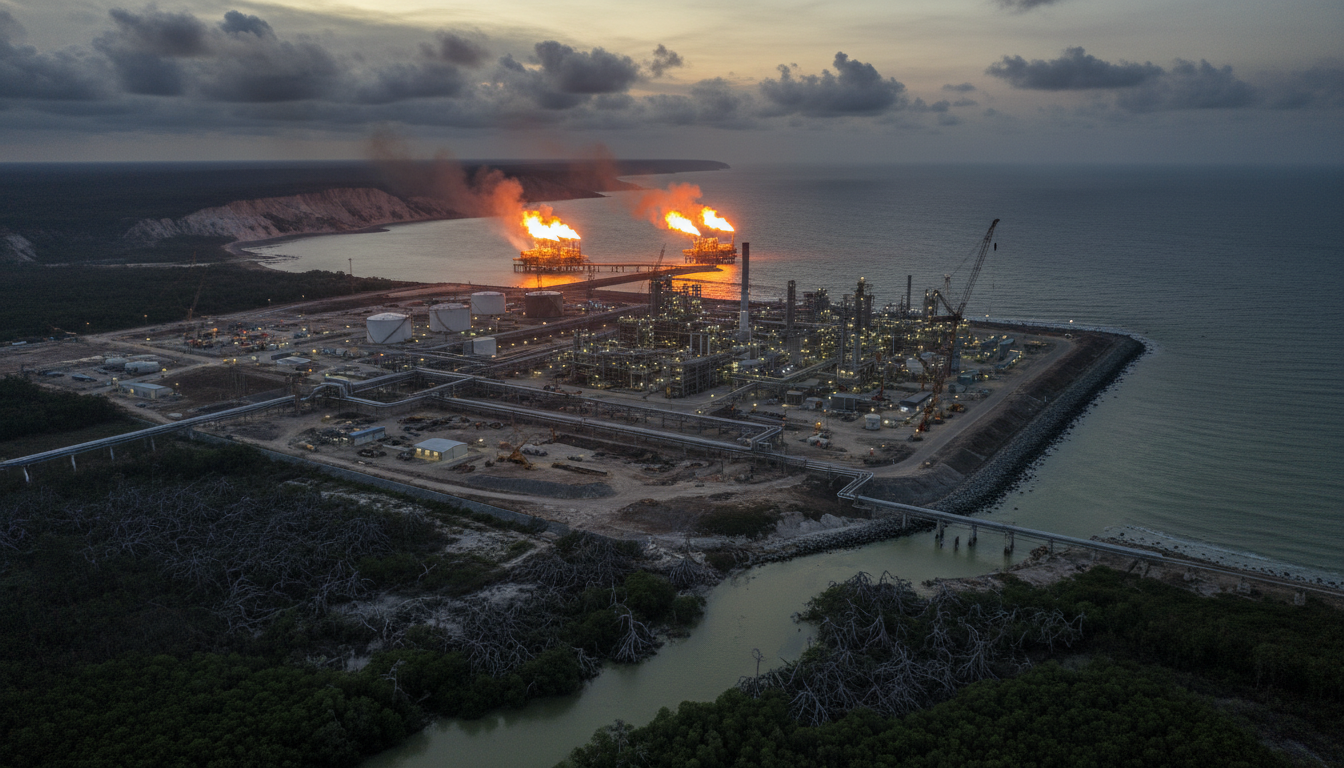
Victoria’s Otway Basin Gas Project: A Critical Investment in Energy Security Amidst Transition Debates
The Australian energy landscape continues to present a complex mosaic of opportunity and challenge for investors, particularly as the nation navigates its transition toward a lower-carbon future. A recent pivotal development for Victoria’s energy security and the broader Australian gas market is the federal and state governments’ joint approval of Amplitude Energy’s Annie gasfield project in the Otway basin. This strategic greenlight signals a commitment to bolstering domestic gas supply, a move that resonates deeply within an industrial sector heavily reliant on this crucial fossil fuel, even as environmental concerns intensify.
Scheduled to commence production by 2028, the Annie gasfield project is poised to deliver a significant boost to Victoria’s energy reserves, promising up to 65 petajoules (PJ) of gas. This volume alone could satisfy more than one-third of Victoria’s annual gas consumption, underscoring its importance in the state’s energy mix. The project’s location, approximately 9 kilometers off the coast near Peterborough and Port Campbell, and about 12 kilometers west of the iconic Twelve Apostles, places it in a region with established energy infrastructure, yet also near sensitive environmental and tourist areas.
Balancing Supply Needs with Evolving Demand
Victoria’s Energy and Resources Minister, Lily D’Ambrosio, articulated the government’s rationale, acknowledging a societal shift towards electrification that is gradually reducing overall demand for fossil fuels. However, she emphasized the immediate and ongoing necessity for gas to support “those industries that can’t electrify.” This stance highlights a pragmatic approach to energy policy, recognizing that while the long-term trajectory points to renewables, a robust and reliable gas supply remains indispensable for specific industrial processes, manufacturing, and maintaining grid stability in the interim.
This approval marks the second significant gas project endorsed by the current Labor government during its term. It comes after a 2022 election campaign where a strong emphasis was placed on accelerating renewable energy initiatives and achieving a target of 95% renewable energy by 2035 through the revival of the State Electricity Commission. The simultaneous pursuit of both gas expansion and ambitious renewable targets underscores the intricate balancing act required to manage Australia’s energy transition without compromising industrial output or household energy reliability.
Navigating Environmental Scrutiny and Carbon Budgets
Predictably, the Annie gasfield project has drawn sharp criticism from environmental advocacy groups. Organizations like Greenpeace Australia Pacific and Environment Victoria have voiced serious concerns, arguing that the project jeopardizes a “pristine ocean environment” and “makes the path to a safe climate harder.” Critics contend that approvals for new fossil fuel developments push global heating targets further out of reach, asserting that projected emissions from existing and planned projects have already consumed the carbon budget necessary to limit global warming to 2 degrees Celsius.
From an investor perspective, these environmental headwinds represent a growing risk factor, potentially influencing regulatory frameworks, public sentiment, and project financing over the long term. However, the government’s position prioritizes immediate energy security and industrial requirements, presenting a counter-narrative that acknowledges the continued, albeit evolving, role of natural gas in the national economy, particularly for Victoria, which stands as Australia’s largest consumer of gas, heavily utilizing it in manufacturing and for industrial heat generation.
Optimistic Market Forecasts and Policy Crossroads
Reinforcing the strategic importance of gas supply, the Australian Energy Market Operator (AEMO) recently revised its peak-day gas shortfall forecast, pushing it back a year to 2029. This adjustment reflects the positive impact of new infrastructure, increased supply, and reduced consumption, all contributing to a more robust gas supply outlook. Such updates provide a degree of confidence for investors in gas infrastructure and production projects, indicating a sustained need for these resources in the medium term.
The announcement regarding the Annie gasfield also coincided with significant policy proposals from the Victorian Coalition opposition. Should they secure power in November, the Coalition has pledged to pause and review all major transmission line projects connecting renewable energy to the grid, including the VNI West (a proposed 240km line linking Victoria to New South Wales) and the Western Renewables Link. This proposed pause stems from concerns over the “social licence” of these projects, citing “draconian laws” that grant government agencies access to private land without consent.
The Future of Grid Resilience: Transmission vs. Distributed Generation
Instead of large-scale transmission, the opposition proposes fostering “urban solar parks” by encouraging solar and battery installations on commercial and industrial rooftops across greater Melbourne. Nationals leader Danny O’Brien highlighted the potential of “thousands of hectares of roof space on warehouses, factories, buildings in urban areas” to host solar farms with battery storage, arguing that this would reduce the need for extensive new transmission lines by generating and consuming energy closer to its source.
However, energy experts offer a more nuanced view. Alison Reeve, Energy and Climate Program Director at the Grattan Institute, cautions that increased rooftop solar cannot fully substitute for new transmission lines. She points out the practical challenges, such as many commercial buildings not being structurally engineered to support significant rooftop weight. Reeve emphasizes that a truly resilient energy system demands a diverse portfolio—encompassing wind, large-scale and small-scale solar, batteries, pumped hydro, and a foundational level of gas. Crucially, she asserts that “the thing that hooks all of those things together is transmission,” making new transmission lines vital for delivering electricity from the most economical renewable sources to end-users.
Critics of the opposition’s plan, including Environment Victoria’s Joy Toose, warn that such a pause on transmission projects could “strangle Victoria’s renewable energy industry and drive up power bills for every household and business in the state.” The Victorian Greens leader, Ellen Sandell, further accused both major parties of prioritizing “fossil fuel corporation mates over the future of Victorian people and our environment,” encapsulating the deep ideological divisions shaping Australia’s energy policy.
Investment Implications in a Dynamic Energy Market
For investors, Victoria’s energy landscape presents a fascinating, albeit complex, arena. The approval of the Annie gasfield project signals continued governmental support for gas as a critical component of energy security, especially for industrial sectors. This offers clear investment opportunities in gas exploration, production, and associated infrastructure. Simultaneously, the robust push for renewable energy, coupled with policy debates around transmission infrastructure, points to a vibrant market for renewable energy development, grid modernization, and energy storage solutions.
The conflicting policy stances from the ruling government and the opposition introduce a layer of regulatory uncertainty, particularly concerning the pace and direction of renewable energy grid integration. Investors must closely monitor electoral outcomes and policy shifts, as these will directly influence the viability and profitability of energy projects across both traditional and renewable sectors. The ongoing tension between meeting immediate energy demands with established resources and accelerating the transition to a sustainable future will undoubtedly continue to define investment opportunities in Australia’s dynamic energy market.


