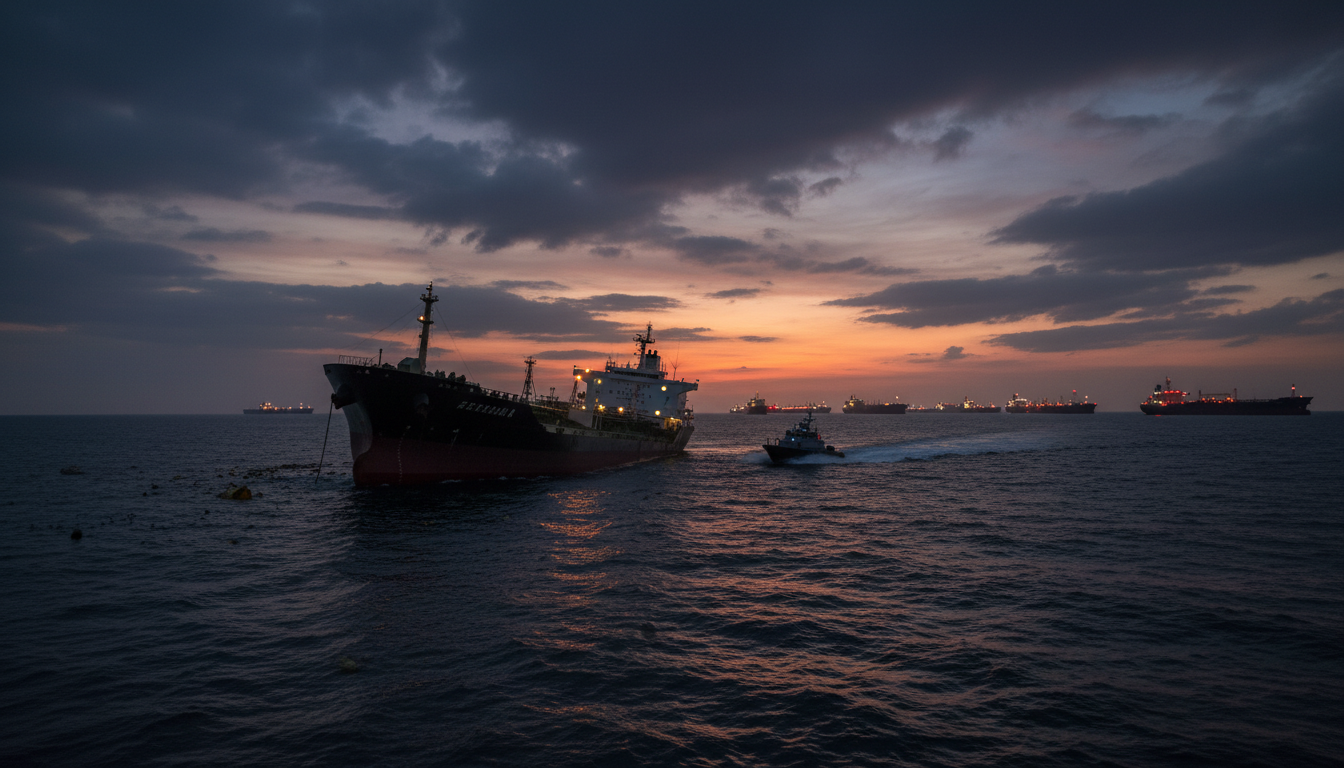
Critical Incident in Strait of Hormuz Elevates Energy Market Risk
An alarming incident unfolded early Monday Middle Eastern time, with an explosion and subsequent fire crippling the Panama-flagged cargo vessel HMM Namu, operated by South Korean shipping titan HMM Co. The vessel, anchored in waters offshore the United Arab Emirates, immediately became the focus of an intense investigation by South Korean authorities and the operating company itself. This event, occurring in the volatile Strait of Hormuz region, instantly sends ripples through global energy markets, forcing investors to re-evaluate regional stability and supply chain integrity.
The blaze, confirmed to have originated in the engine room, has prompted South Korea’s presidential office to convene high-level meetings to coordinate its response. The core of the immediate uncertainty, and a key concern for energy sector investors, remains whether the incident was the result of an external attack or an internal operational malfunction. Representatives from HMM acknowledged this ambiguity, noting that clarity would only emerge after the vessel’s assessment following its planned towing to Dubai, a multi-day operation. While thankfully no injuries were reported, and all crew members are confirmed safe, the mere occurrence of such an event in this critical chokepoint escalates the perceived risk for maritime traffic and energy shipments.
Strait of Hormuz: A Chokepoint Under Renewed Pressure
The Strait of Hormuz stands as an indispensable artery for global energy trade, funneling approximately one-fifth of the world’s total petroleum consumption and a significant volume of liquefied natural gas (LNG). Any disruption, real or perceived, within this narrow passage immediately influences crude oil futures, shipping rates, and the broader energy security landscape. This latest incident, regardless of its eventual cause, acts as a potent reminder of the inherent vulnerabilities within the global energy supply chain. Investors typically respond to such events by pricing in an increased risk premium, even before any quantifiable impact on supply manifests, driving volatility in oil benchmarks like Brent and WTI.
The strategic importance of this waterway cannot be overstated. With major oil and gas producers bordering the Gulf, and a continuous flow of supertankers and LNG carriers traversing its waters, the stability of the Strait directly correlates with global economic health. Maritime incidents in this region compel energy firms and logistics companies to reconsider their operational risk assessments, potentially leading to higher insurance premiums and more intricate logistical planning. For investors, monitoring the frequency and nature of such incidents becomes paramount to forecasting short-term market movements and evaluating long-term investment strategies in Middle Eastern energy assets.
Geopolitical Tensions Escalate Amidst Accusations
The incident quickly transcended a simple maritime investigation, plunging into the fraught geopolitical landscape of the Persian Gulf. Notably, US President Donald Trump issued a statement on Truth Social, directly accusing Iran of targeting the South Korean cargo ship and other “unrelated Nations” in relation to “PROJECT FREEDOM” vessel movements. He urged South Korea to “come and join the mission!” This direct accusation immediately amplifies the region’s already high tensions, injecting a political dimension into an ongoing commercial investigation.
In response to the escalating situation and implicit political pressure, South Korea’s government has adopted a pragmatic, cautious stance. While refraining from commenting on President Trump’s specific accusations, Seoul has initiated concrete measures to safeguard its commercial fleet. Industry officials revealed that South Korea-operated ships currently positioned near the UAE have begun rerouting westward towards Qatar, a strategic move designed to distance them from the immediate vicinity of the Strait of Hormuz. This proactive repositioning by a major economic power underscores the tangible impact of these geopolitical frictions on global shipping routes and highlights the heightened risk environment for international commerce.
Unanswered Questions Fuel Market Volatility
The ongoing uncertainty regarding the HMM Namu incident—whether an internal malfunction or an external attack—presents a complex challenge for energy investors. An accidental fire implies an isolated operational issue, albeit a serious one. Conversely, evidence of an external attack would fundamentally alter the risk calculus for all vessels operating in the region, potentially triggering a significant reassessment of maritime security protocols and war risk premiums across the insurance sector. This distinction is crucial, as the latter scenario could herald a new phase of regional instability directly impacting crude oil and LNG transit costs.
The prolonged period for the vessel to be towed to Dubai and for damage to be assessed means this uncertainty will persist for several days, contributing to sustained market apprehension. This ambiguity forces investors to price in a wider range of potential outcomes, from limited disruption to a broader escalation of regional conflict. Such an environment naturally favors short-term volatility and encourages a cautious approach to new investments in Gulf-related energy infrastructure or shipping ventures. The immediate financial implications include potential spikes in shipping insurance, increased operational expenditures for carriers, and an overall tightening of the supply chain capacity within the region.
Navigating Risk: Investor Outlook for Middle East Energy
The HMM Namu incident unfolds against a backdrop of incredibly fragile US-Iran relations, with a ceasefire agreement reportedly teetering on the brink. Recent statements from the US asserting its intent to guide vessels out of the Strait, juxtaposed with Iranian threats against any foreign forces attempting to enter, paint a picture of an extremely precarious operating environment. This delicate balance means that any new incident, regardless of its nature, carries the potential to ignite broader confrontation, directly impacting the uninterrupted flow of oil and gas from the Middle East.
For investors deeply entrenched in the oil and gas sector, particularly those with exposure to Middle Eastern assets, rigorous risk assessment is paramount. The incident underscores the necessity of factoring in geopolitical risk as a primary driver of market behavior, alongside traditional supply-and-demand fundamentals. Companies operating in the region must demonstrate robust contingency planning and adaptability to sudden shifts in security conditions. Investors should carefully scrutinize the geopolitical landscape, monitoring diplomatic developments and military posturing, as these factors directly influence the stability and profitability of energy ventures in this vital region.
The Future of Maritime Security in a Volatile Region
Looking ahead, the HMM Namu incident, coupled with persistent geopolitical tensions, prompts fundamental questions about the long-term viability and security of maritime operations in the Strait of Hormuz. Energy majors, independent producers, and global shipping companies must confront the possibility of sustained higher operational costs stemming from enhanced security measures, increased insurance premiums, and potential rerouting of vessels to avoid perceived high-risk areas. Such shifts could fundamentally alter global supply chains and energy economics, impacting everything from refining margins to consumer fuel prices.
While the immediate focus remains on determining the cause of the fire, the broader implications for international law, freedom of navigation, and regional stability cannot be overlooked. For investors, this translates into a heightened need for diversified portfolios, careful due diligence on operational resilience, and a keen eye on policy shifts from major naval powers and regional actors. The security of the Strait of Hormuz will undoubtedly remain a critical variable for assessing the future prospects of the global oil and gas industry, dictating investment strategies and risk appetites for years to come.


