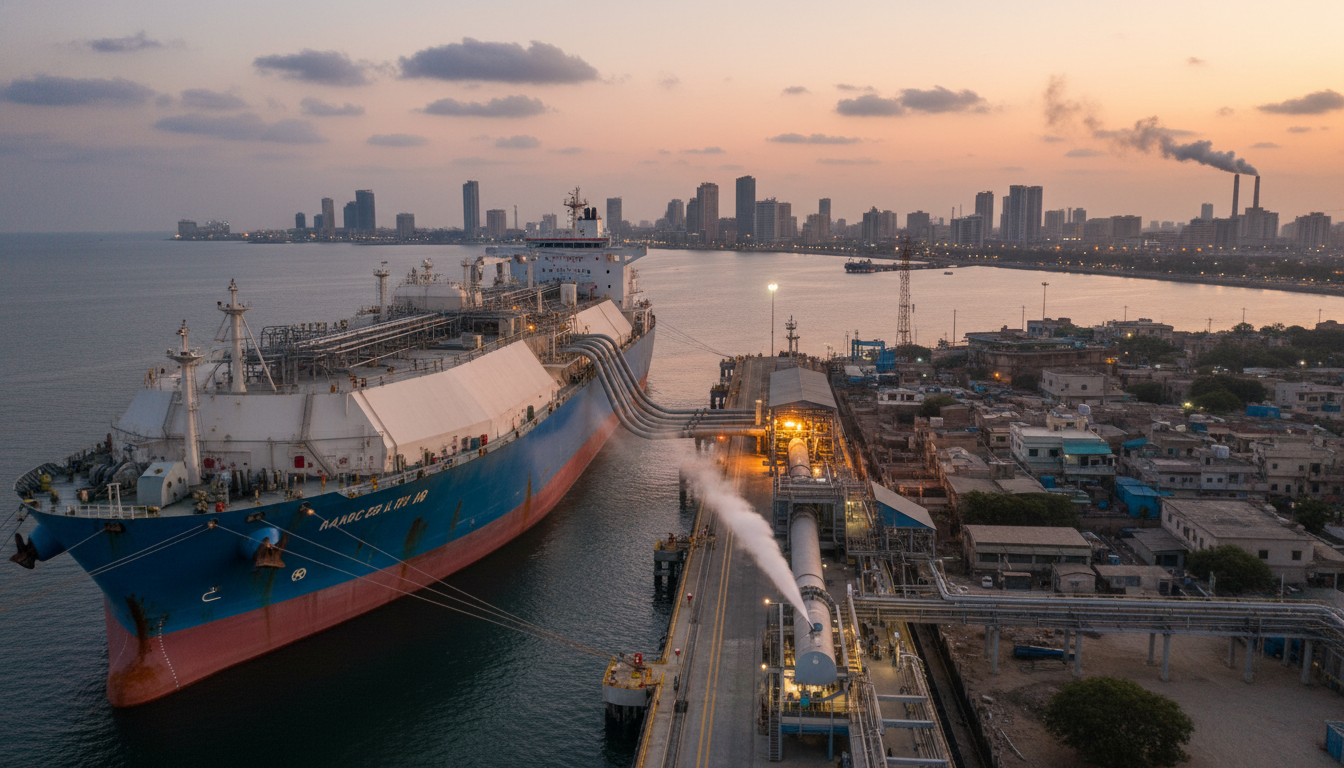
Pakistan’s energy landscape witnessed a critical turning point recently as the nation welcomed its first liquefied natural gas (LNG) cargo in nearly two months. This vital shipment, docking at the GasPort terminal, offers immediate relief to a country grappling with an intensifying energy crisis, signalling a proactive, albeit costly, shift in its procurement strategy amidst regional volatility.
The Danish-flagged LNG carrier, Seapeak Magellan, completed its arduous journey, departing from Sabine Pass in the United States on March 31st and successfully arriving at Port Qasim in Pakistan on April 30th. This 140,000 cubic meter cargo of LNG has now commenced feeding re-gasified LNG (RLNG) into the national gas network, a crucial step in alleviating widespread power outages and industrial slowdowns that have plagued the nation.
Strategic Procurement Amidst Soaring Spot Prices
This significant delivery was orchestrated by French supermajor TotalEnergies, a global behemoth in LNG trading. The transaction was reportedly secured at a price point of $18.40 per million British thermal units (MMBtu). For investors monitoring global energy markets, this price reflects the current premium associated with securing immediate LNG supply, particularly in Asia, where natural gas prices have seen substantial upward pressure.
The arrival of the Seapeak Magellan cargo marks the first substantial LNG shipment to Pakistan since another U.S.-origin delivery arrived in the early stages of the ongoing conflict in the Middle East. This renewed reliance on the spot market underscores the severe constraints Pakistan faces in its traditional supply channels and highlights the immediate financial implications for its energy budget and national economy.
Navigating the Volatile Waters of the Strait of Hormuz
Compounding Pakistan’s energy woes is the precarious situation surrounding existing contracts. The nation currently seeks the delivery of four Qatari LNG cargoes reportedly stranded in the Persian Gulf. The volatility pervading the Strait of Hormuz, a critical choke point for global energy transit, has severely hampered the passage of oil and LNG tankers in recent days, creating immense logistical and supply chain challenges. This disruption directly impacts the reliability of energy imports and drives up global LNG prices.
This geopolitical tension has directly impacted Asian spot LNG prices, which have surged dramatically. Reports indicate that the broader Middle East conflict, particularly involving Iran, has effectively restricted Middle Eastern LNG supply, including volumes from Qatar and the UAE, behind the Strait of Hormuz. Such disruptions underscore the inherent risks in global energy supply chains and the immediate financial repercussions for importing nations like Pakistan, which are highly susceptible to global oil and gas market fluctuations.
Pakistan’s Costly Shift to the Spot Market
For years, Pakistan has heavily relied on long-term LNG supply agreements with Qatar to meet its substantial energy demands. However, the escalating conflict in the Middle East has significantly complicated these established supply lines, leading to considerable disruptions in expected Qatari LNG deliveries. This forced pivot has compelled Pakistan to re-enter the volatile spot market for LNG, a move not actively pursued at this scale for nearly three years, illustrating a critical juncture in the country’s energy security strategy.
Despite the prevailing high spot LNG prices across Asia, Pakistan’s intensifying energy crisis, characterized by widespread power outages and fuel rationing, has left the government with little alternative but to secure immediate supply. This strategic shift, last seen with such urgency since late 2023, emphasizes the critical need for energy security and the premium importing nations are willing to pay when traditional avenues become unreliable. For oil and gas investors, this scenario highlights the enduring demand for flexible LNG trading solutions.
Investor Implications: Risk and Opportunity in Emerging Energy Markets
From an investor’s perspective, Pakistan’s predicament highlights several key trends in the global energy market. Firstly, the premium paid for spot LNG, currently at $18.40 per MMBtu, signals strong demand fundamentals even amidst geopolitical friction. Companies involved in LNG liquefaction, shipping, and trading, like TotalEnergies, demonstrate resilience and strategic importance in bridging supply gaps, presenting robust investment opportunities in the global LNG trade sector.
Secondly, the reliance on single-source or concentrated regional supply, as Pakistan’s long-standing relationship with Qatari term contracts exemplifies, carries significant geopolitical risk. Diversification of supply origins and routes becomes paramount for national energy security, driving investment in new liquefaction terminals and flexible trading capabilities globally. This encourages greater emphasis on diversified energy portfolios for long-term stability.
Furthermore, the increased volatility in critical maritime passages such as the Strait of Hormuz introduces heightened risk premiums for shipping and insurance, directly impacting the landed cost of hydrocarbons. Investors in maritime logistics and energy infrastructure should closely monitor these geopolitical flashpoints as they directly influence profitability and operational efficiency within the oil and gas industry.
Finally, the chronic energy deficits faced by emerging economies like Pakistan underscore the vast unmet demand for reliable power. This situation creates long-term opportunities for investments in diversified energy portfolios, including renewables, domestic gas exploration, and robust LNG import infrastructure. While the immediate crisis necessitates costly spot purchases, the underlying need for sustainable and secure energy solutions remains a powerful driver for future capital deployment in the region and similar markets, emphasizing the potential for significant returns in strategic energy investments.
Pakistan’s recent LNG import is more than just a single cargo; it is a vivid illustration of the complex interplay between global energy markets, geopolitical realities, and the pressing need for energy security. For astute investors, these developments offer crucial insights into the evolving landscape of international gas trade and the enduring challenges and opportunities in the energy sector.


