Venezuela’s Oil Exports Soar to Seven-Year High, Reshaping Global Market Dynamics
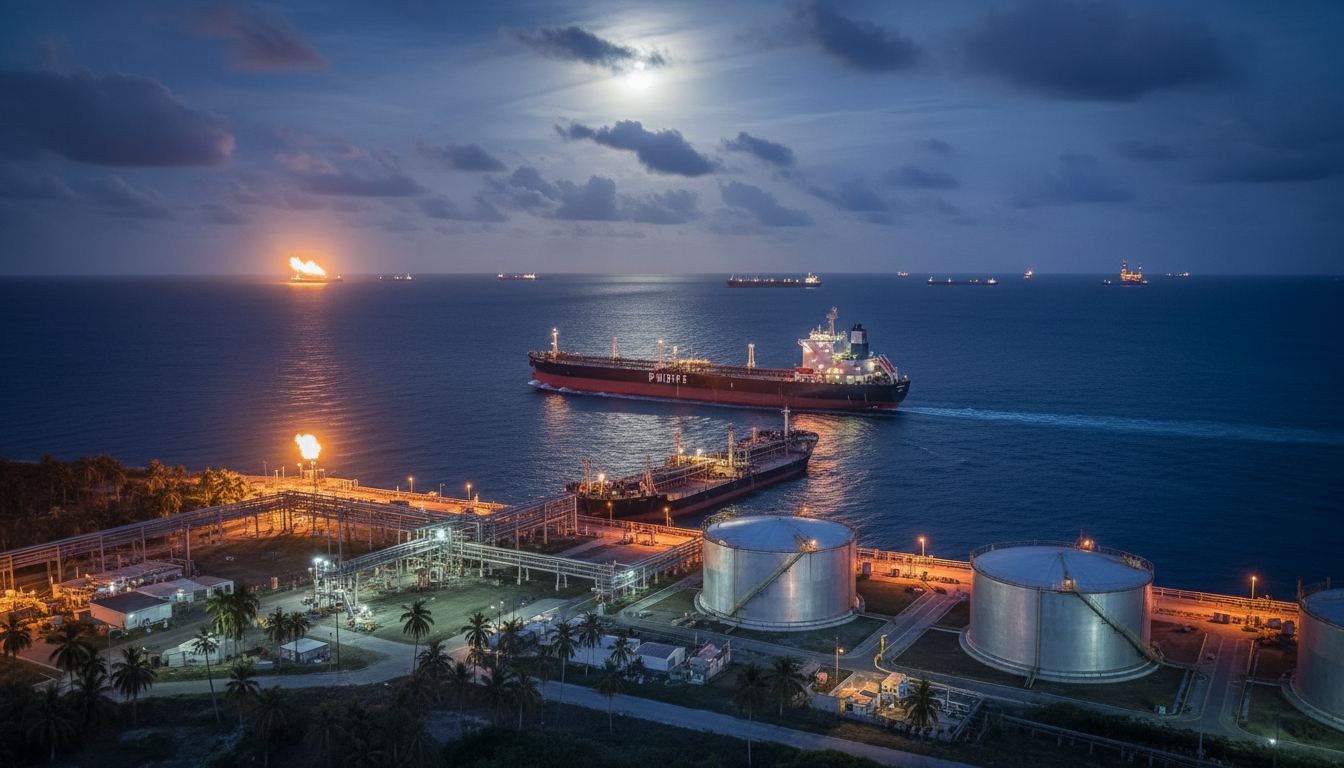
Energy investors are keenly observing a significant resurgence in Venezuela’s crude oil exports, which surged by an impressive 14% in April, reaching a robust 1.23 million barrels per day (bpd). This marks the highest export volume the nation has achieved in over seven years, or specifically, since late 2018, before the imposition of stringent U.S. sanctions dramatically curtailed its access to international markets. This formidable return signals a critical shift in the global oil supply landscape and warrants close attention from those tracking energy sector performance and geopolitical influences.
The remarkable uptick in April’s export figures was primarily propelled by an expansion of sales directed towards key markets including the United States, India, and various European nations. Shipping data and internal documents from the state-owned oil giant PDVSA confirm that a total of 66 vessels departed from Venezuelan ports last month, laden with crude oil and refined petroleum products. This represents a tangible increase from March, when 61 ships transported an average of 1.08 million bpd, underscoring a clear upward trajectory in the country’s petroleum trade activities. The sustained momentum indicates a strategic push by Venezuela to maximize its revenue potential amid evolving geopolitical conditions.
Understanding the Catalyst: Sanctions Easing and Political Agreements
This substantial export growth is directly attributable to recent policy shifts and diplomatic maneuvers. For years, U.S. sanctions crippled Venezuela’s ability to monetize its vast oil reserves, a critical source of national income. However, a significant political development occurred in January, described in reports as the “U.S. capture of President Nicolas Maduro,” which proved to be a pivotal moment. This event immediately led to a crucial supply agreement forged between the administration of U.S. President Donald Trump and Venezuela’s interim President Delcy Rodriguez. These high-level diplomatic engagements, coupled with the subsequent issuance of U.S. licenses specifically designed to ease sanctions on the nation’s vital oil sector, have fundamentally reshaped Venezuela’s re-entry into the global energy trade. These agreements effectively unlocked channels for Venezuelan crude to reach international refineries, providing much-needed impetus to its production and export capabilities.
The strategic relaxation of these economic restrictions has allowed PDVSA’s various joint-venture partners, along with prominent international trading houses such as Vitol and Trafigura, to resume receiving substantial crude cargoes from the state firm. These companies are now facilitating sales to a diverse range of refiners located across the United States, Europe, and Asia, re-establishing critical supply chains that had been dormant for years. For investors, this re-integration of Venezuela into the supply network introduces new variables into market forecasting and risk assessments, particularly concerning global crude price stability and regional supply dynamics.
Market Implications and Investor Outlook
The sudden influx of Venezuelan crude into the market carries significant implications for global oil supply and pricing. With Venezuela drawing down existing oil inventories and simultaneously ramping up its crude production in recent months, the world is witnessing a substantial addition to global supply. This development could exert downward pressure on crude oil prices, potentially impacting the profitability of other major oil-producing nations and integrated energy companies. Investors in other OPEC+ member countries, for instance, will need to consider how Venezuela’s increased output might influence collective production quotas and market share battles.
For those invested in the oil and gas sector, Venezuela’s rebound presents both opportunities and challenges. While a stable, increased supply could benefit refining margins and reduce certain geopolitical premiums, the long-term sustainability of this export surge remains contingent on the delicate balance of political agreements and the enduring stability of U.S.-Venezuelan relations. The capital expenditure required to fully restore Venezuela’s aging oil infrastructure to its peak capacity is immense, and the operational efficiency of PDVSA will be a critical factor to monitor. Smart investors will evaluate the durability of these political arrangements and the operational capabilities of Venezuela’s energy sector before making long-term commitments based solely on recent export figures.
Looking Ahead: Sustained Growth or Fleeting Recovery?
While the April export figures are undeniably impressive, marking a significant milestone, the path forward for Venezuela’s energy sector is not without its complexities. The country’s ability to sustain and further expand its production and export volumes will depend heavily on continued investment, technological upgrades, and above all, political stability. The agreements that have facilitated this recent surge could be subject to change, introducing an element of geopolitical risk that is inherent in investing in emerging energy markets. Energy sector analysts and investors must closely monitor future policy decisions from Washington, D.C., and Caracas, as well as the broader dynamics of global energy demand and supply. Venezuela’s re-emergence is a powerful narrative in the global oil market, yet its long-term trajectory remains a key watchpoint for those navigating the intricate world of oil and gas investing.