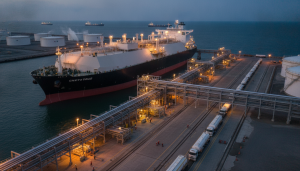
Global Lubricant Crisis: Geopolitical Tensions Squeeze High-Performance Oil Markets
The intricate world of petroleum derivatives is currently experiencing an unprecedented disruption, with a critical shortage of base oils now directly impacting the automotive sector, particularly the luxury vehicle market. Industry experts and analysts are sounding alarms, warning of imminent supply depletion for high-performance lubricants if the geopolitical instability in the Middle East, specifically the ongoing conflict involving Iran, continues unabated.
The International Energy Agency has characterized the persistent supply chain interference through the Strait of Hormuz as “the biggest energy security threat in history.” While widely recognized for its impact on crude oil, fertilizer, and helium, this escalating crisis extends deeply into the highly specialized base oils segment, critical for the global economy.
Base oils form the foundational component for nearly all finished lubricants, encompassing everything from engine oils to industrial fluids. Within this essential category, Group III and Group IV base oils, including sophisticated polyalphaolefins (PAO), are indispensable feedstocks for producing advanced synthetic lubricants. PAO, in particular, is vital for the demanding specifications of luxury and high-performance vehicles, which operate under extreme conditions.
The Critical Role of Group III and PAO in Performance Vehicles
Luxury automobiles, prevalent in affluent urban centers like London, Monte Carlo, and Los Angeles, rely heavily on these specialized base oils. Their unique formulations enable lubricants to withstand exceptional heat, maintain stability at high revolutions per minute (RPMs), and endure intense pressure – conditions standard for high-performance engines. Gabriella Twining, head of base oils pricing at Argus Media, underscored their ubiquitous necessity, stating, “The clue is in the name, as in, they are essentially the base for all finished lubricants for automotive, industrial, aviation, marine… you name it, if something moves, it will need a lubricant and that’s made from a base oil.”
The Gulf region plays a disproportionately significant role in this specialized market, accounting for approximately 20% of global Group III base oils production capacity. Furthermore, according to Argus Media data from last year, this region supplied a staggering 72% of Europe’s Group III imports and 47% of those destined for the United States, highlighting a profound supply dependency.
Twining’s stark warning paints a grim picture for the immediate future: “Stocks are going to run dry in a month if nothing comes in and that will just cut finished lubricant production.” Such a scenario implies not just price hikes, but potential unavailability, forcing consumers to delay essential maintenance or seek more costly alternatives.
Market Response: Soaring Prices and Supply Constraints
The impact on market pricing has been immediate and severe. Argus-assessed base oil prices have recently surged to unprecedented levels. Notably, Group III base oil prices in northern Europe have nearly doubled, climbing almost 100% since the commencement of the Iran conflict. This dramatic escalation reflects a perfect storm of supply disruptions.
Key factors contributing to this crisis include sustained impediments to shipping through the strategically critical Strait of Hormuz. Further exacerbating the situation, Iranian missile strikes have reportedly damaged Shell’s Pearl Gas-To-Liquid facility in Qatar. Additionally, producers in Bahrain and the United Arab Emirates have declared “force majeure,” legally suspending contractual obligations due to unforeseen circumstances, further tightening an already strained market.
Even major global producers are feeling the pinch. South Korea, a leading global producer and significant exporter of Group III base oils, has recently implemented mandatory export caps on refined petroleum products. This measure aims to safeguard its domestic base oil supply amidst the burgeoning international crisis, effectively reducing global availability. “These historic price rises have to be paid by somebody and that is going to be passed on to the finished lubricant and the buyer of the finished lubricant,” Twining commented, emphasizing the inevitable cost transfer to the end consumer.
Investor Outlook: Prolonged Pressure and Strategic Reassessment
Rico Luman, a senior sector economist specializing in transport and logistics at ING, confirms that the current oil market squeeze, combined with the heavy Asian and Middle Eastern footprint in base oils, will “definitely” trigger a significant supply crunch. He warns that while some inventories of these “relatively low turnover products” exist within the supply chain, delivery lead times are expected to extend substantially, threatening timely replenishment. Consequently, investors should anticipate sustained price appreciation, driven both by the region’s supply dependency and broader increases in crude oil prices.
The Independent Lubricant Manufacturers Association (ILMA) recently engaged with U.S. lawmakers to discuss the severity of these disruptions. The association described the meeting as “both productive and sobering,” with all parties acknowledging the gravity of the situation and the absence of immediate, clear solutions. ILMA highlighted that approximately 44% of the U.S. base oil supply traditionally originates from the Persian Gulf, making the domestic market highly vulnerable to regional instability. As of April 8, ILMA reported that market impacts are already emerging, creating ripple effects across numerous industrial sectors.
Looking ahead, ILMA anticipates the U.S. base oil market will remain under considerable pressure until at least 2027. Member companies are already bracing for significant cost increases across their entire supply chains. For investors, this signals a prolonged period of elevated input costs for lubricant manufacturers and potentially higher prices for end-users across various industries dependent on high-performance lubricants. Strategic re-evaluation of supply chain resilience and diversification initiatives will be paramount in navigating this challenging and uncertain market landscape.