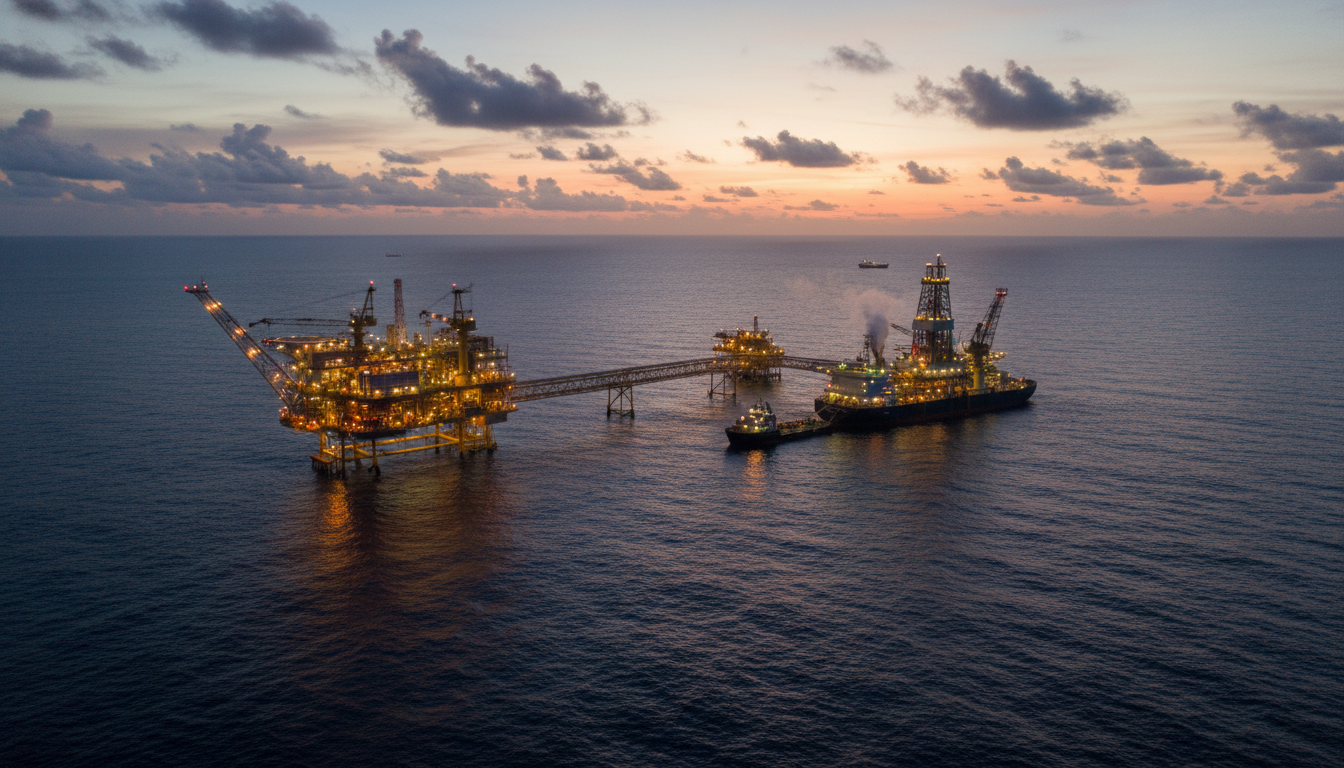
Subsea7 Secures Major ExxonMobil Contract, Bolstering West African Deepwater Prospects
Oil and gas investors are keenly observing a significant new development in the subsea engineering sector: Subsea7 S.A. has clinched a substantial Engineering, Procurement, Construction, and Installation (EPCI) contract from energy titan ExxonMobil. This crucial agreement centers on a subsea tie-back initiative located offshore Angola, marking a robust commitment to the region’s enduring deepwater hydrocarbon potential.
The contract, valued impressively between $150 million and $300 million, underscores continued capital allocation towards unlocking incremental production in established deepwater territories. For Subsea7 shareholders, this represents a considerable boost to the firm’s order backlog and revenue visibility, solidifying its position as a go-to provider for complex offshore solutions. The scope of work specifically targets the Redevelopment 2.0 Likembe Project within Angola’s Block 15, a mature deepwater asset where operators like ExxonMobil are strategically deploying tie-back developments to maximize recovery and extend field lifespans.
Strategic Partnerships Drive Complex Deepwater Projects
Execution of this multi-million dollar venture will be channeled through the renowned Subsea Integration Alliance, a formidable partnership uniting Subsea7’s installation prowess with SLB OneSubsea’s specialized technology. This alliance structure is a testament to the industry’s shift towards integrated solutions, enabling streamlined project delivery and optimized performance for supermajors navigating challenging deepwater environments. Under the terms of the agreement, Subsea7 will spearhead the vital project engineering and installation activities, leveraging its extensive global experience and cutting-edge subsea fleet. Concurrently, SLB OneSubsea will be responsible for delivering the critical umbilical components, essential for controlling subsea production systems and transmitting vital data.
Such collaborative frameworks are increasingly attractive to operators seeking efficiency and de-risking in large-scale offshore capital projects. The combined expertise of Subsea7 and SLB OneSubsea through their alliance provides ExxonMobil with a single point of responsibility for a significant portion of the subsea infrastructure, an approach designed to enhance project synergy and reduce interface complexities, ultimately benefiting the project’s bottom line and ensuring timely delivery.
Global Expertise Powers Localized Angola Deepwater Development
The logistical footprint of this project highlights the truly global nature of modern deepwater energy development. Engineering and critical project management functions will be meticulously carried out across Subsea7’s international office network, encompassing key hubs in Paris, Luanda, Lisbon, and Sutton. This distributed model allows for optimal resource allocation, drawing upon diverse pools of engineering talent and specialized expertise from various regions.
Furthermore, the manufacturing of the crucial umbilical systems will be supported from Norway, a nation synonymous with advanced offshore technology and precision engineering. This global supply chain integration not only ensures access to state-of-the-art manufacturing capabilities but also demonstrates the industry’s capacity to mobilize resources across continents to support specific regional energy objectives. For investors, this global yet coordinated approach signals operational resilience and an ability to deliver high-quality components and services regardless of the project’s remote location.
Strengthening Relationships Amidst West Africa’s Energy Renaissance
Commenting on the award, Olivier Blaringhem, CEO of Subsea Integration Alliance, emphasized the deal’s role in “further strengthening our relationship with ExxonMobil.” This statement resonates deeply in the competitive landscape of oil and gas services. Repeat business with a major international operator like ExxonMobil not only validates Subsea7’s capabilities but also signals a high degree of client confidence and trust. Blaringhem further noted the instrumental role of early collaboration in optimizing project execution, a clear indicator of how proactive engagement between clients and service providers can lead to more efficient and cost-effective outcomes in complex offshore developments.
This substantial contract award is not an isolated event but rather a clear indicator of continued strategic investment in subsea tie-back developments across West Africa. The region’s mature deepwater basins, while already prolific, still hold significant untapped potential. Operators are increasingly focusing on these tie-back initiatives as a commercially prudent strategy to extend the productive life of existing offshore assets and maximize hydrocarbon recovery from established fields. This approach leverages existing infrastructure, often leading to lower capital expenditure and quicker time-to-production compared to entirely new field developments.
Investor Outlook: Resilience and Strategic Growth in Subsea Sector
For investors tracking the subsea services sector, this contract with ExxonMobil for the Angolan deepwater project offers several key takeaways. Firstly, it underscores the enduring importance of deepwater production to global energy supply, even amidst the broader energy transition narrative. Companies like Subsea7, with specialized EPCI capabilities, remain critical enablers for sustaining and optimizing these vital assets.
Secondly, the focus on tie-back projects in mature basins highlights a strategic pivot in capital allocation within the industry. Rather than exclusively chasing frontier exploration, supermajors are demonstrating a preference for maximizing value from existing discoveries through cost-efficient redevelopment schemes. This trend provides a stable and predictable demand pipeline for subsea contractors skilled in executing these types of projects.
Lastly, the success of the Subsea Integration Alliance serves as a powerful model for future project delivery, signaling that strategic partnerships and integrated offerings will continue to be a competitive advantage in securing and executing large-scale, technically demanding offshore contracts. As West Africa continues to play a pivotal role in global energy security, investments like the Redevelopment 2.0 Likembe Project will be instrumental in sustaining output and generating long-term value for stakeholders across the oil and gas value chain.