In a seismic shift for global energy markets, the United Arab Emirates has declared its departure from OPEC, a decision immediately lauded by U.S. President Donald Trump who believes the move will ultimately drive down energy costs. This bombshell announcement, coming amidst an already volatile period characterized by escalating conflict in the Middle East, is poised to redefine the dynamics of international oil production and pricing.
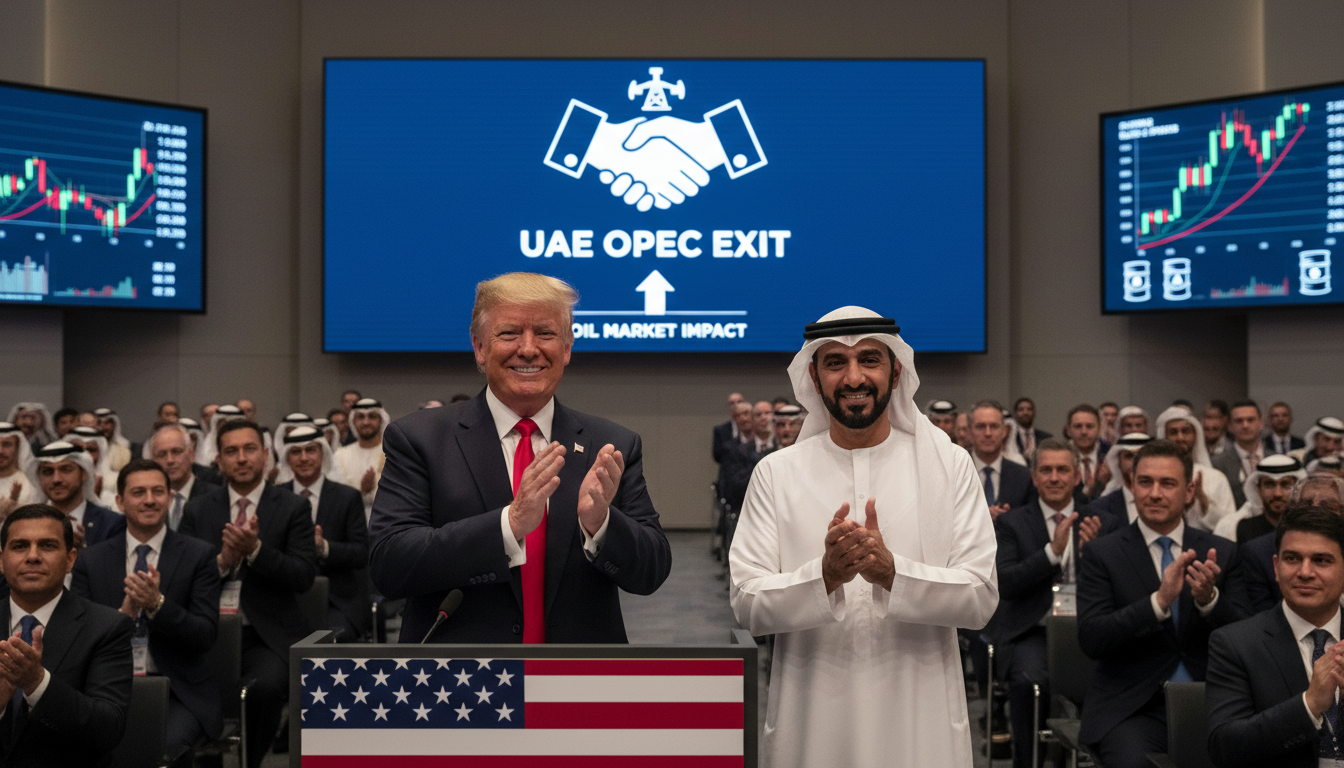
President Trump, addressing reporters at the White House on Wednesday, April 29, 2026, shortly after a meeting with the Artemis II astronauts, expressed strong support for Abu Dhabi’s withdrawal. “I think it’s great,” Trump stated, commending UAE President Sheikh Mohamed bin Zayed Al Nahyan as “very smart” for potentially choosing to “go his own way.” The U.S. President articulated his conviction that this independent path is “a good thing” for lowering the price of gasoline, crude oil, and overall energy costs, hinting at internal “problems in OPEC.”
The UAE’s surprise declaration on Tuesday, confirming its disassociation from the cartel effective May 1, marks a significant blow to the organization that has coordinated global oil prices and production quotas for over six decades. As OPEC’s third-largest producer in February, trailing only Saudi Arabia and Iraq, the UAE’s exit deprives the group of a substantial and influential member. Abu Dhabi’s energy ministry clarified its decision stemmed from a comprehensive review of its production policy and capacity, concluding that an exit served its national interest. While acknowledging its appreciation for the OPEC alliance and decades of cooperation, the move unequivocally signals a new era of independent energy strategy for the Gulf nation.
This momentous development unfolds against a backdrop of severe regional instability that has seen crude oil prices spiral upwards. Since the U.S. and Israel launched military operations against Iran on February 28, the Middle East has become a flashpoint, directly impacting global energy security. The UAE, a nation traditionally aligned with Western interests, has found itself increasingly in the crosshairs, enduring repeated missile and drone attacks from Iran, a fellow, albeit now former, OPEC member. These assaults underscore the heightened geopolitical risks threatening oil infrastructure and supply lines across the region.
Compounding these security concerns, Tehran’s de facto closure of the Strait of Hormuz has placed immense pressure on the UAE’s ability to export its vital oil resources, posing a direct threat to its economic stability. The Strait, a critical maritime chokepoint, accounts for the transit of a significant portion of the world’s seaborne crude oil. Any disruption here sends immediate ripples through global energy markets, driving up prices and increasing investor uncertainty.
In response to Iran’s actions in the Strait, the Trump administration has imposed its own retaliatory blockade of Iranian ports, a strategic maneuver President Trump described as “genius” and “100% foolproof.” Speaking Wednesday afternoon in the Oval Office, he suggested the blockade would remain in place until Iran concedes, stating they “have to cry uncle” and “give up.” This aggressive posture highlights Washington’s commitment to maintaining pressure on Tehran, but also raises the specter of further escalation.
Negotiations to de-escalate the conflict appear to be at a standstill. According to reports, Iran’s proposal for a mutual reopening of the Strait, coupled with a postponement of nuclear talks, was outright rejected by President Trump. He emphatically told a news outlet that Iran is “choking like a stuffed pig, and it is going to be worse for them. They can’t have a nuclear weapon.” When queried whether the blockade alone would suffice to bring Iran to peace talks or if additional military action might be necessary, Trump’s response was a terse “depends.” Sources further indicated that U.S. Central Command is actively preparing for a potential “short and powerful” wave of strikes, hoping to break the current deadlock with Iran.
Investment Implications Amidst Unprecedented Volatility
For investors, the UAE’s exit from OPEC presents a complex calculus. While the immediate implications for OPEC’s diminished influence could lead to less coordinated supply management, potentially allowing the UAE to boost output unfettered by quotas, this effect is largely overshadowed by the profound geopolitical risks gripping the Middle East. The ongoing conflict, the looming threat of further military action, and the precarious situation in the Strait of Hormuz introduce substantial volatility and an inherent risk premium into crude oil prices. Companies operating in the region face heightened operational risks, while global shipping and logistics firms navigate increasing insurance costs and potential disruptions.
The investor community must critically assess how these interlocking factors—a potentially more independent UAE supply, a weakened OPEC, and an extremely tense geopolitical environment—will shape the energy landscape. While President Trump anticipates lower prices, the immediate market reaction has been driven by supply anxiety and regional instability. This highly fluid situation demands acute vigilance, strategic hedging, and a diversified approach to energy investments, as the trajectory of oil prices remains firmly tethered to the unfolding events in the Gulf. The long-term implications for OPEC’s ability to influence global markets will be closely watched, but the immediate focus for oil and gas investors must remain on the acute geopolitical risks that continue to dominate headlines and drive market sentiment.