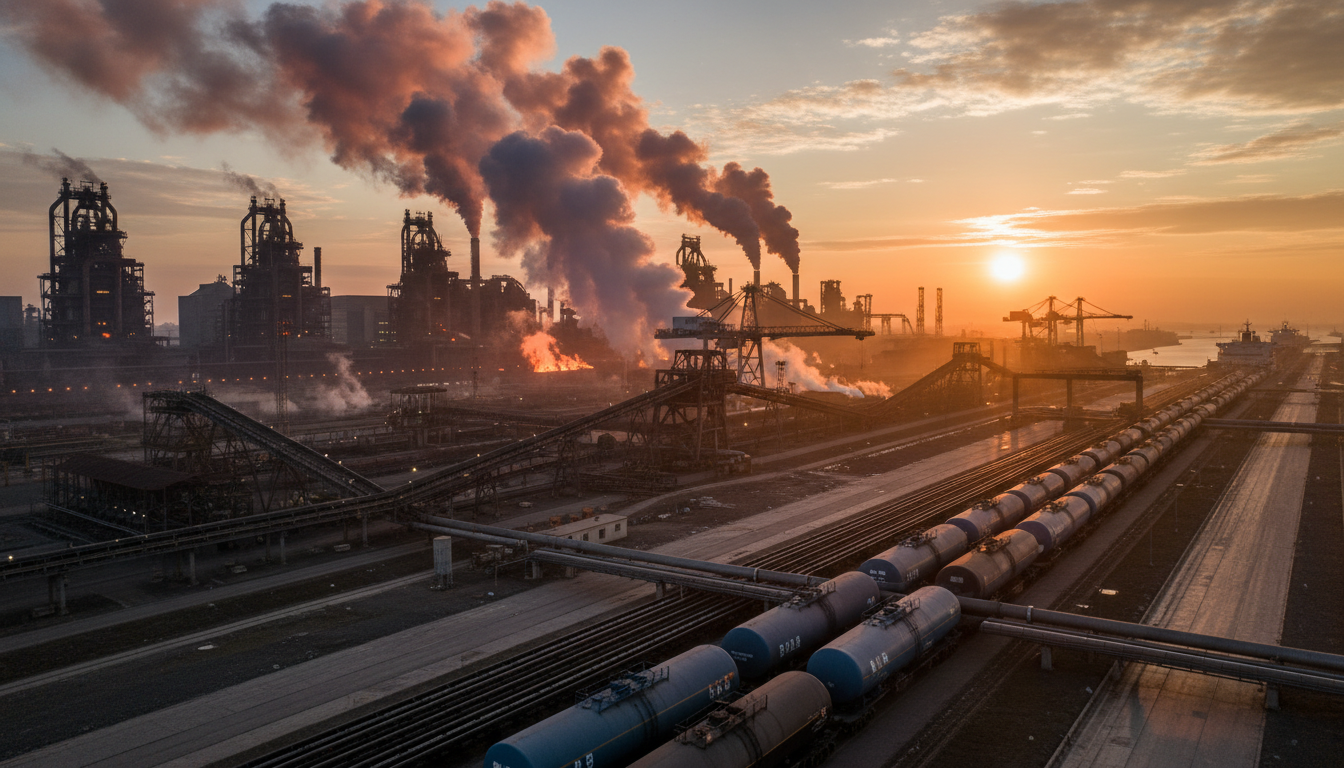
China’s Industrial Giants Capitalize on Global Commodity Disruption
China’s metals manufacturing sector experienced an exceptionally robust first quarter, booking its strongest performance since 2016. This significant uplift in profitability was fueled by persistently elevated commodity prices and exacerbated by the escalating geopolitical tensions across the Middle East, creating a dynamic environment that astute investors are closely monitoring for its broader implications on energy markets and global supply chains.
The period between January and March saw Chinese metals producers collectively amass an impressive $21 billion in profits. Leading this charge were aluminum and copper, commodities vital to global infrastructure, manufacturing, and the burgeoning green energy transition. Copper prices achieved an unprecedented all-time high during the quarter, while aluminum ascended to levels not seen since 2022. This surge underscores not only resilient demand but also the profound impact of supply-side disruptions, a narrative increasingly familiar across the entire commodity spectrum, including crude oil and natural gas.
Middle East Tensions Ripple Through Global Supply Chains
The ongoing instability in the Middle East, primarily characterized by disruptions to energy production and transit routes, has had far-reaching consequences extending beyond traditional oil markets. A notable casualty has been the production of sulfuric acid, a foundational industrial chemical indispensable for various sectors, including mining and metals processing. Reduced energy output in the region severely curtailed sulfuric acid manufacturing capabilities, leading to an extraordinary price surge for this commodity, reaching historic peaks. For energy investors, this situation highlights the interconnectedness of industrial inputs; a bottleneck in one critical area can cascade through global manufacturing, potentially impacting the demand elasticity for energy itself.
Beyond the indirect impact on chemical precursors, the regional conflict has also directly imperiled metals production facilities. Reports indicate that strategic attacks, attributed to Iran, targeted at least two major aluminum-producing hubs in Gulf states: Aluminium Bahrain and Emirates Global Aluminium. These facilities are cornerstone elements of the global aluminum supply network, and their operational challenges reverberate through international markets.
Analysts from Britannia Global Markets emphasized the gravity of the situation at the close of March, stating that such strikes on Middle Eastern aluminum plants threaten to propel an already fragile market into crisis territory, potentially triggering unprecedented price increases. This assessment is supported by concerning data regarding global inventories. LME (London Metal Exchange) warehouses have reportedly experienced a dramatic drawdown in aluminum stocks, with some analyses indicating a staggering 60% reduction from earlier levels. This sharp decline in available supply leaves the market with minimal buffer against further shocks, amplifying the potential for extreme price volatility.
China’s Strategic Position and Industrial Policy
With China hosting many of the world’s largest metals producers, its industrial sector is strategically positioned to capitalize on periods of global supply constraint and elevated prices. The robust performance of the Chinese metals industry in Q1 reflects a broader improvement across the nation’s industrial landscape. This turnaround is partly attributable to the Chinese government’s focused efforts to address perennial issues of industrial overcapacity and intense competition, which historically suppressed profitability. By rationalizing production and fostering a more disciplined market environment, Beijing has inadvertently strengthened its domestic producers’ ability to leverage global supply disruptions.
For investors focused on oil and gas, China’s industrial health is a critical barometer of global energy demand. A thriving Chinese manufacturing sector signals robust consumption of industrial commodities and, by extension, the energy required to extract, process, transport, and utilize them. This intertwining relationship means that positive indicators from China’s industrial giants often precede or coincide with heightened demand for crude oil, natural gas, and refined products globally.
Investment Implications for Energy Markets
The current landscape presents a complex interplay of forces for energy investors. The immediate correlation is clear: geopolitical instability in the Middle East directly threatens oil and gas supply, but its secondary impact on industrial commodity chains, such as metals and chemicals, further compounds market uncertainty. The surging prices of industrial metals like copper and aluminum, alongside chemicals like sulfuric acid, serve as strong indicators of inflationary pressures and robust industrial activity, factors that invariably influence central bank policies and the broader investment climate for energy assets.
Moreover, the vulnerability exposed in the global metals supply chain underscores the broader imperative for energy companies to assess and mitigate risks related to their own operational logistics and supply dependencies. Companies with diversified sourcing strategies, robust inventory management, and resilience to geopolitical shocks are likely to command a premium in this volatile environment. The ongoing re-evaluation of global supply chain security, prompted by these events, also opens potential investment avenues in energy-intensive sectors that could benefit from domestic or near-shore production shifts.
In conclusion, China’s stellar performance in the metals sector during Q1 is not merely an isolated industrial success story; it is a profound signal for global commodity markets and a critical indicator for oil and gas investors. It highlights the strategic implications of geopolitical tensions, the interconnectedness of industrial supply chains, and the significant role of China’s industrial policy in shaping global commodity prices and demand for energy. Prudent investors will continue to monitor these dynamics closely, recognizing that shifts in one critical sector can cascade across the entire global economy, impacting energy asset valuations and investment strategies.


