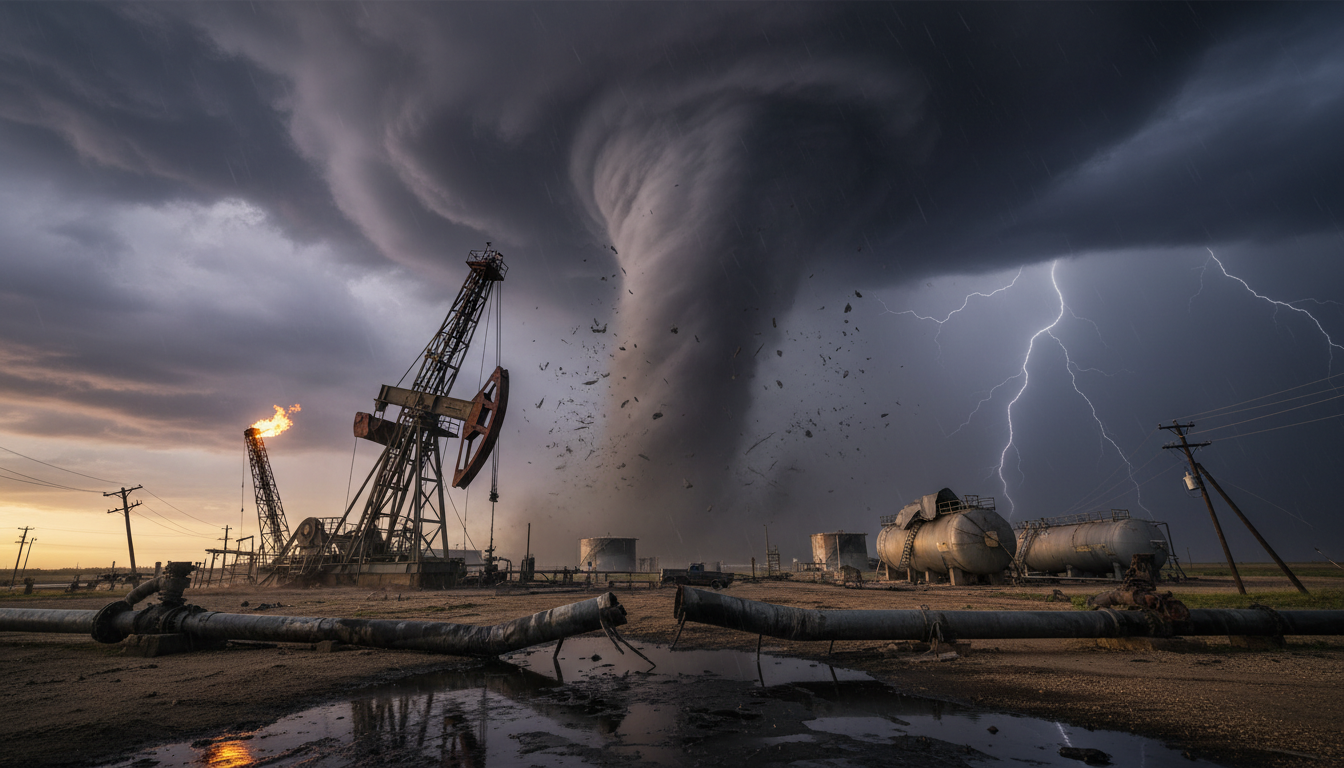
A powerful tornado recently tore through Enid, Oklahoma, inflicting significant localized damage and raising critical questions for investors regarding infrastructure resilience in energy-producing regions prone to extreme weather. While no major oil and gas facilities sustained direct hits, the widespread disruption to essential utilities and residential areas in this key energy state highlights the indirect risks that severe weather poses to regional operational continuity, labor availability, and the broader economic stability crucial for sustained energy sector performance.
The destructive force of the tornado, which remained on the ground for an extended period of 30 to 40 minutes, caused substantial damage across the city of approximately 50,000 residents, located about 85 miles north of Oklahoma City. Initial assessments indicated damage to at least 40 homes, with commercial structures south of the city completely unseated from their foundations, transformed into piles of twisted metal and splintered wood. This level of devastation, even if not directly impacting oil and gas wells or refineries, inherently strains local resources, disrupts transportation networks, and challenges the operational backbones of any industry in the vicinity.
Remarkably, despite the tornado’s intensity, the community reported no fatalities and only minor injuries. This outcome is largely attributed to the ingrained preparedness of Oklahoma residents, who are accustomed to severe weather and utilize storm cellars or reinforced safe rooms. While commendable for human safety, this preparedness also speaks to the consistent threat environment that energy companies operating in “Tornado Alley” must factor into their risk assessments and asset protection strategies. Robust emergency response and resilient infrastructure planning are not merely options but necessities for maintaining uninterrupted operations in such volatile climates.
Infrastructure Integrity Under Scrutiny: Power Grids and Logistics
The tornado’s path left a trail of downed utility poles and power lines, entangled with substantial debris, underscoring the vulnerability of critical power infrastructure. For oil and gas operations, a stable and reliable electricity supply is paramount for everything from drilling and pumping to processing and transportation. Any prolonged power outages in a region can halt production, disrupt pipeline flows, and impact refining capacity, leading to potential supply chain bottlenecks and revenue losses.
Commercial buildings reduced to rubble signify broader economic disruption, impacting local supply chains for equipment, materials, and services vital to the energy sector. While initial reports did not specify damage to dedicated oil and gas logistics hubs, the general impairment of local roadways and commercial facilities creates indirect challenges. Investors must consider how such widespread community damage can translate into increased operational costs, delays in project timelines, and difficulties in sourcing labor or specialized services for regional energy assets.
Economic Ripple Effects: Beyond Residential Damage
The aftermath saw immediate community-wide efforts, with local authorities and volunteers mobilizing to clear debris and provide aid. Enid Mayor David Mason noted the rapid influx of supplies, a testament to the community’s solidarity. However, the long-term economic implications of rebuilding dozens of homes and numerous commercial properties will necessitate significant capital injection and resource allocation. This rebuilding effort, while a local stimulus, could divert labor and materials that might otherwise contribute to energy sector projects.
For investors, understanding the broader economic health of a region is crucial. A community grappling with extensive property damage and reconstruction can experience shifts in local consumer demand and labor market dynamics. While not a direct threat to crude oil prices, the cumulative effect of multiple localized extreme weather events across a producing state like Oklahoma can subtly influence regional operating environments and investment attractiveness.
Strategic Implications: Vance AFB and Regional Operations
The nearby Vance Air Force Base, situated approximately 80 miles north of Oklahoma City, also reported light damage, including downed fences and some equipment. Crucially, the base announced its closure until further notice due to ongoing power and water restoration efforts. Military installations are significant consumers of various energy products, and their operational status directly influences regional fuel demand. A disruption at a facility like Vance AFB can have subtle but measurable impacts on local energy markets, particularly for jet fuel and other refined products. Furthermore, the base’s role in national defense underscores the importance of resilient infrastructure for strategic assets, a principle that extends to vital energy infrastructure supporting national security interests.
Climate Volatility and Energy Investment Outlook
Meteorological experts described the Enid tornado as a “higher-end” event, characterized by violent motion and extensive debris clouds. This observation, coupled with forecasts of continued storm activity across Oklahoma and into Missouri, reinforces the growing frequency and intensity of extreme weather phenomena. For oil and gas investors, these trends necessitate a rigorous re-evaluation of asset location, design, and operational protocols. Climate volatility is no longer a distant threat but a present and persistent risk factor demanding proactive mitigation strategies.
Companies with substantial asset bases in regions like “Tornado Alley” must demonstrate robust climate risk management frameworks. This includes investing in hardened infrastructure, diversifying operational footprints, and integrating advanced meteorological data into operational planning. The incident in Enid serves as a stark reminder that even without direct hits on major energy facilities, the surrounding environment’s vulnerability can translate into significant operational and financial risks.
Building Resilience: A Mandate for O&G Operators
The Enid tornado, while a localized disaster, offers broader lessons for the oil and gas sector. Investors are increasingly scrutinizing the resilience of energy infrastructure against extreme weather. The damage to power grids, the disruption of local economies, and the closure of strategic facilities all paint a picture of interconnected vulnerabilities. For energy companies, demonstrating a proactive approach to enhancing infrastructure resilience, safeguarding supply chains, and supporting community recovery efforts will become increasingly important for maintaining investor confidence and securing long-term operational stability in an era of escalating climate risks.