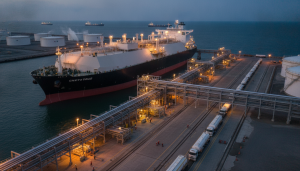
The global energy market is currently navigating an unprecedented period of uncertainty, primarily driven by the ongoing disruption in the Strait of Hormuz. This critical maritime chokepoint, essential for global energy flows, has seen its operational integrity severely compromised since early March following heightened geopolitical tensions. For investors, the implications extend far beyond short-term price volatility, pointing towards a sustained period of market pressure that could last well into the next year. Our proprietary analysis, leveraging insights from key industry figures and real-time market data, indicates that the complex unwinding of this bottleneck will be a multi-quarter endeavor, fundamentally reshaping supply chains and investment strategies across oil, gas, and petrochemical sectors.
The Protracted Recovery: A Logistical Labyrinth
For those anticipating a swift return to normalcy in the Strait of Hormuz, recent expert assessments offer a sobering counter-narrative. A seasoned veteran of the petrochemical industry, speaking shortly before his retirement, shared internal scenario planning suggesting that even under an optimistic immediate reopening, clearing the immense logistical backlog would demand an estimated 275 days—potentially longer. This isn’t merely about resuming transit; it involves the intricate choreography of repositioning empty vessels, conducting thorough cleansing operations within the strait and the broader Arabian Gulf, and meticulously re-establishing reliable shipping routes. This comprehensive recovery process is far from a matter of weeks or a couple of months; it represents a significant, multi-quarter commitment that will continue to constrain global energy and chemical flows, necessitating a strategic recalibration of investor expectations.
Petrochemicals: The Unseen Frontline of Disruption
While the immediate focus often gravitates towards crude oil flows, the petrochemical sector has arguably borne an even more acute and disruptive shock. The effective closure of the Strait of Hormuz didn’t just curtail approximately 20% of global oil capacity; it paralyzed an estimated 50% of the world’s ethylene and polyethylene production. These compounds are the bedrock of countless plastic products vital to modern economies, meaning the disruption reverberates deeply into downstream manufacturing and consumer goods. Furthermore, the strait serves as an irreplaceable conduit for crucial petrochemical inputs like naphtha. An estimated 40% of the naphtha feedstock consumed by Asian and European producers typically transits this narrow passage. The immediate tightening of naphtha supply has thus created an urgent operational challenge for manufacturers reliant on these raw materials, driving up costs and straining capacities across continents. Investors must recognize that this is not merely an oil story; it’s a profound structural shock to the global chemical supply chain with lasting implications.
Market Response and Forward Indicators
The severity of the supply curtailment stemming from the Hormuz bottleneck is clearly reflected in current market dynamics. As of today, Brent Crude is trading at $113.69, marking a significant 2.94% increase within the day, with its price oscillating between $110.26 and $114.66. Similarly, WTI Crude stands at $109.68, up 2.62% from its daily low of $106.45. This upward momentum is part of a broader trend; over the past 14 days, Brent has surged from $95.2 on April 10th to $111.65 by April 29th, representing a robust 17.3% increase. Gasoline prices, currently at $3.64, also reflect this inflationary pressure. Investors are keenly watching for further indicators. In the coming weeks, key data releases such as the Baker Hughes Rig Count on May 1st and May 8th, the EIA Short-Term Energy Outlook on May 2nd, and the weekly API and EIA petroleum status reports will offer critical insights into supply and demand balances. The IEA Oil Market Report on May 12th will be particularly scrutinized for its updated forecasts in light of the Hormuz situation, influencing base-case Brent price forecasts for the next quarter and beyond.
Investor Focus: Navigating Uncertainty and Opportunity
Our proprietary reader intent data reveals a distinct focus among investors on understanding the trajectory of crude oil prices and identifying resilient investment opportunities in this volatile environment. Many are asking for a clear base-case Brent price forecast for the next quarter, while others are tracking the weekly trend for crude oil and the specific performance of WTI. The ongoing geopolitical situation, including stalled US-Iran negotiations and the potential for extended ceasefires, adds another layer of complexity to these forecasts. In this context, questions around OPEC+ compliance and potential overproduction become even more salient; while some members might be over-producing, the sheer magnitude of the Hormuz disruption means that global supply remains exceptionally tight. Savvy investors are examining companies with diversified energy portfolios, robust hedging strategies, or significant domestic production capabilities that are less exposed to the chokepoint risks. Furthermore, the acute disruption in petrochemical feedstocks presents unique challenges and potential opportunities within the chemical industry, favoring companies with strong inventory positions or alternative supply routes. The overarching message is clear: sustained vigilance and adaptable strategies will be paramount for navigating the year-long pressure emanating from the Strait of Hormuz.