Europe’s Energy Paradigm Shift: AccelerateEU Targets Security Through Decarbonization
The European Commission has introduced AccelerateEU, a comprehensive policy framework designed to fortify the continent’s energy independence while safeguarding consumers and industries from the erratic nature of global fossil fuel markets. This strategic pivot arrives amidst heightened geopolitical tensions, particularly in the Middle East, which have already propelled energy prices higher and underscored Europe’s precarious reliance on external supply chains. The region recently absorbed an additional €24 billion ($26 billion) in energy import costs, a significant financial burden without any corresponding increase in supply volumes, a stark illustration of the vulnerability AccelerateEU seeks to address.
Commission President Ursula von der Leyen emphasized the critical juncture for the continent, stating, “The decisions we make today will dictate our capacity to navigate current challenges and future crises. Our AccelerateEU strategy delivers both immediate relief and structural solutions for European citizens and businesses. We must accelerate our transition to indigenous, clean energy sources. This path ensures our energy independence and security, making us more resilient against geopolitical disruptions.” This ambitious agenda signals a decisive move to de-risk Europe’s energy future, merging immediate economic protection with long-term strategic transformation.
Enhanced Coordination to Stabilize Energy Markets
A cornerstone of the AccelerateEU strategy involves establishing more robust coordination mechanisms among EU member states. This intensified cooperation aims to synchronize national efforts concerning gas storage replenishment, the strategic release of oil reserves, and the implementation of emergency supply measures. Regular gatherings of dedicated oil and gas coordination groups will provide real-time visibility across the bloc, preventing fragmented national responses that could inadvertently exacerbate supply shortages or trigger price spikes. For investors, this signals a more unified and predictable regulatory environment for energy infrastructure and trading within the EU.
Further enhancing market transparency and responsiveness, the Commission plans to launch a new Fuel Observatory. This system will meticulously monitor production, import, export, and stock levels of transport fuels, offering an early warning mechanism for potential shortages. Its primary objective is to guide targeted interventions, particularly for critical sectors such as aviation. The Commission will also proactively clarify regulatory flexibilities necessary to ensure uninterrupted fuel availability for airlines, guaranteeing stability in jet fuel supplies and underpinning confidence in the European aviation market.
Targeted Economic Relief for Consumers and Industry
In the immediate term, AccelerateEU prioritizes cushioning households and businesses from acute price volatility. Member state governments will receive encouragement to implement precisely targeted income support programs, energy vouchers, and social leasing schemes. Additionally, temporary reductions in electricity excise duties for vulnerable households are under consideration. These measures are designed to provide crucial financial relief without creating undue fiscal pressure or distorting market signals excessively.
Furthermore, a revised State Aid Temporary Framework will grant governments increased flexibility to offer support to energy-intensive industries facing severe cost pressures. This ensures that crucial sectors remain competitive during the transition. The Commission’s emphasis remains on deploying interventions that are both targeted and temporary, aiming to mitigate immediate economic risks while avoiding long-term market dependencies, a crucial balance for maintaining fiscal health and market integrity.
Electrification and Clean Energy Drive Structural Change
Beyond crisis management, AccelerateEU represents a profound push for structural transformation across the European energy landscape. The Commission will introduce an Electrification Action Plan by summer, establishing ambitious targets for electrification across industrial processes, transport networks, and the building sector. This strategy explicitly prioritizes replacing oil and gas consumption with electrified systems powered by renewable energy sources. Concurrently, the Sustainable Transport Investment Plan will accelerate the deployment of sustainable aviation fuels, signaling significant investment opportunities in green transportation technologies.
Addressing existing bottlenecks, grid infrastructure remains a critical focus. The Commission is urging the swift implementation of existing legislation and rapid agreement on the European Grids Package, which is vital for integrating increased renewable generation capacity. Repowering existing renewable assets, including older wind farms and hydropower plants, is identified as a fast-track solution to boost clean energy supply without lengthy permitting processes. A forthcoming legislative proposal will also adjust network charges and taxation structures to inherently favor electricity over fossil fuels, fundamentally altering the economic calculus for energy consumers and investors alike.
Massive Investment Required to Power the Transition
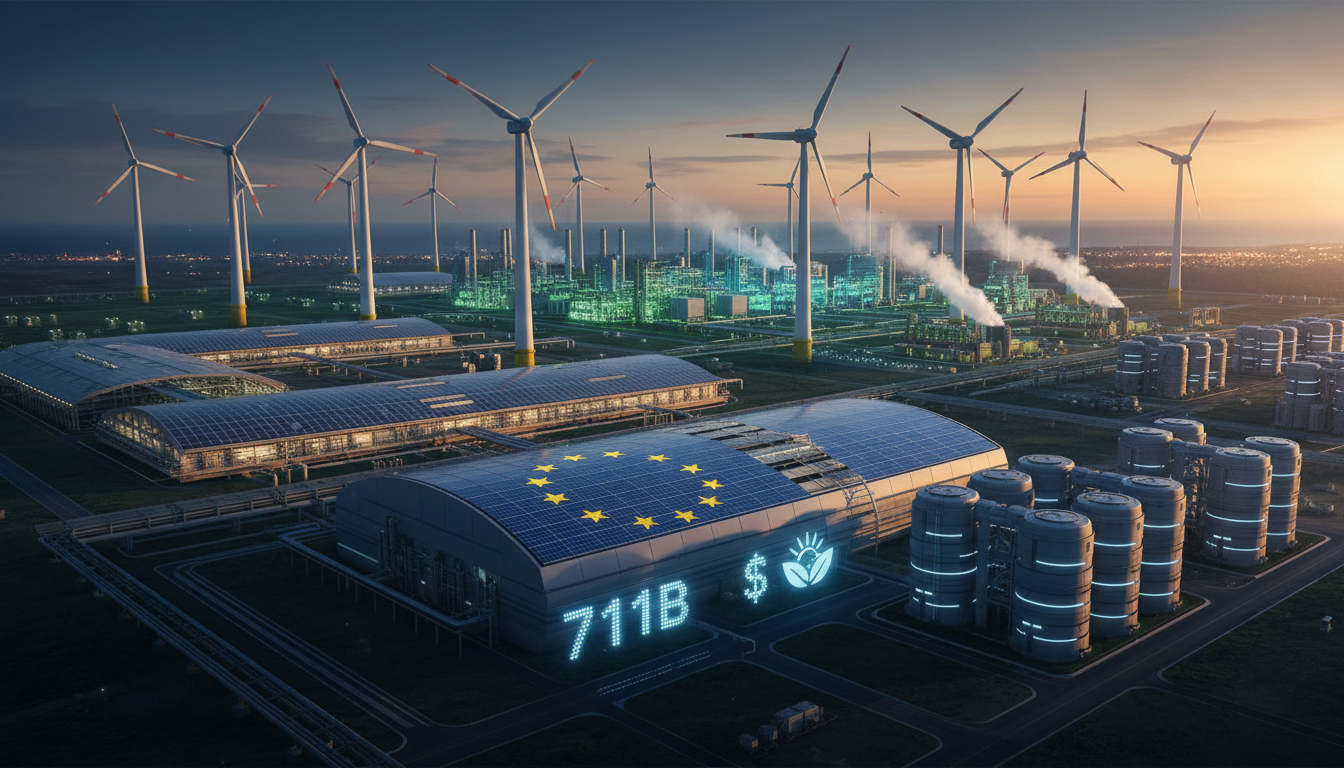
The scale of investment mandated by Europe’s energy transition is substantial. The Commission projects an annual investment requirement of approximately €660 billion ($711 billion) through 2030 to achieve its ambitious energy transition objectives. While significant public funding is earmarked—with €219 billion available under the Recovery and Resilience Facility alongside cohesion funds—officials acknowledge that this will be insufficient to bridge the entire financing gap.
To catalyze private capital deployment, the Commission launched a dedicated Clean Energy Investment Strategy in March 2026. This initiative will culminate in a specialized investment summit, convening institutional investors, industrial leaders, and project developers. The goal is to accelerate the flow of private capital into critical areas like grid modernization, renewable energy generation, innovative electrification technologies, and sustainable fuel production. This approach signifies a broader evolution in EU policy, where energy security, industrial strategy, and climate objectives are now intrinsically linked, creating a multi-faceted investment landscape.
Implications for Energy Executives and Investors
AccelerateEU marks a pivotal moment in Europe’s energy evolution. For corporate leaders in the energy sector and related industries, this initiative provides clearer regulatory certainty and a strong policy tailwind for electrification and clean energy deployment. The explicit policy preference for renewables over fossil fuels, backed by financial and legislative adjustments, will shape strategic decisions for decades to come. Companies positioned in renewable generation, grid technologies, energy storage, and electric transport stand to benefit significantly from this long-term directional clarity.
For investors, the staggering €660 billion annual investment requirement underscores immense opportunities across the entire energy value chain. Capital will flow into grid infrastructure upgrades, advanced renewable energy projects, electrification solutions for heavy industry and transport, and the development of sustainable fuels. While traditional oil and gas assets face increasing headwinds and a managed decline in demand, the plan simultaneously reinforces the EU’s commitment to mitigating exposure to geopolitical shocks while aligning with its ambitious climate targets. The overarching message is unequivocal: energy security and decarbonization are now inseparable strategic imperatives, fundamentally restructuring Europe’s energy system and creating both challenges and unparalleled opportunities for savvy investors globally.


