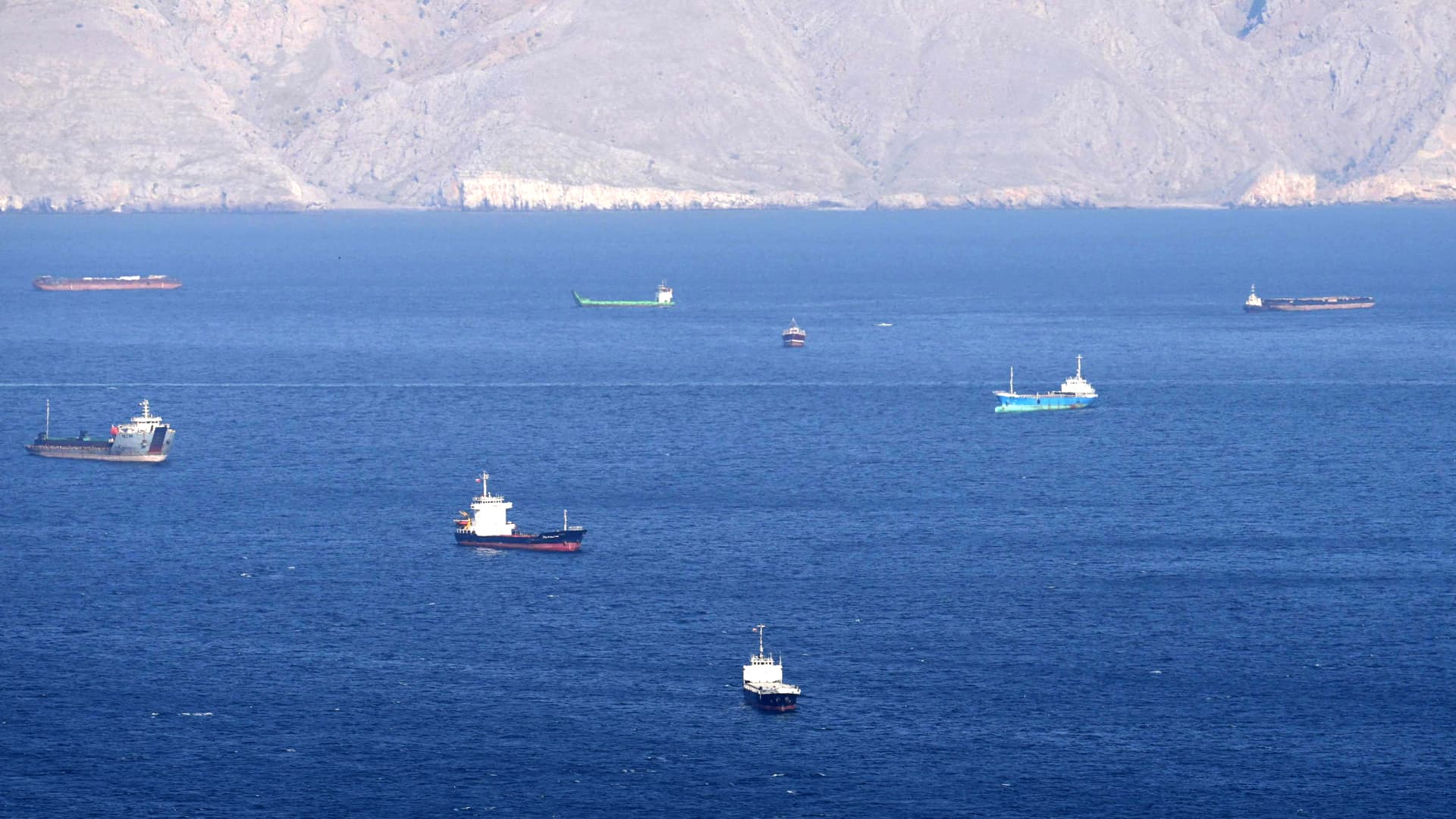
The Strait of Hormuz, a critical chokepoint for global oil supply, remains shrouded in uncertainty and escalating tensions, despite a recently extended ceasefire between the United States and Iran. This precarious situation is creating significant ripples across energy markets, driving crude prices higher and forcing investors to re-evaluate geopolitical risk premiums. Our proprietary data indicates that market participants are closely monitoring every development, keenly aware that disruptions in this vital waterway can trigger immediate and profound supply shocks, impacting not just oil but the broader global economy.
The Strait’s Standoff: A Dangerous Reality for Shipping
Despite President Trump’s unilateral decision to extend the truce with Iran, the operational reality within the Strait of Hormuz paints a picture of continued confrontation, not de-escalation. Shipping traffic, a key indicator of stability, remains critically light. As of Wednesday, only six ships, including three oil tankers, traversed the strait, according to tracking data. This is a stark contrast to pre-conflict levels, where over 100 commercial vessels navigated the passage daily. The lingering US blockade on Tehran’s ports and vessels, coupled with Iran’s persistent attempts to assert control over the sea lane, has created a de facto closure for much of the world’s commercial shipping.
The security environment within the strait is demonstrably dangerous. Iran’s Revolutionary Guard seized two container ships this week for allegedly attempting to cross “without authorization.” Concurrently, a cargo ship was reportedly fired upon and left adrift, while another container vessel suffered heavy bridge damage from a gunboat attack. These incidents follow a weekend of intense skirmishes, including Iranian forces firing on Indian-flagged tankers and cargo ships, and the U.S. Navy boarding an Iranian cargo ship in the Gulf of Oman. Such brazen acts underscore the severe risks faced by maritime traffic and directly contribute to the heightened geopolitical risk premium currently embedded in crude prices.
Market Reaction: Prices Climb Amidst Supply Fears
The persistent instability in the Strait of Hormuz has had an immediate and tangible impact on global energy benchmarks. As of today, Brent Crude trades at $103.95, marking a 2.22% increase within the day’s range of $101.6 to $104.11. Similarly, WTI Crude stands at $98.46, up 2.17%, having moved between $96.24 and $98.85. Gasoline prices have also edged higher, reaching $3.41, a 1.49% increase. This upward momentum is not merely a daily fluctuation; our 14-day Brent trend data shows a significant increase of $7.2, or 7.6%, climbing from $94.75 on April 8th to $101.95 on April 27th. This sustained appreciation clearly reflects the market’s pricing in of supply disruption risk originating from the Hormuz situation. The ongoing difficulty in securing safe passage for tankers translates directly into concerns about global crude availability, pushing prices upward as traders anticipate potential shortages and increased transit costs.
Investor Focus: Forecasting Volatility and Upcoming Catalysts
Our proprietary reader intent data reveals that investors are keenly focused on understanding the trajectory of crude prices, particularly asking about factors that could push Brent above $120 or below $80. The current crisis in the Strait of Hormuz provides a direct answer to the ‘above $120’ scenario. A full or prolonged closure of this waterway would undoubtedly trigger a massive supply shock, easily pushing Brent well past the $120 threshold. The market is not yet fully pricing in a complete closure, but the current premium reflects the significant probability of continued friction and localized disruptions.
Looking ahead, investors should closely monitor several key upcoming energy events for further insights into supply-demand dynamics amidst this geopolitical backdrop. The API Weekly Crude Inventory report on April 28th and May 5th, followed by the EIA Weekly Petroleum Status Report on April 29th and May 6th, will provide crucial data on U.S. crude stockpiles. Any unexpected draws, especially in light of the Hormuz situation, could exacerbate price pressures. Furthermore, the Baker Hughes Rig Count on May 1st and May 8th will offer a glimpse into North American production activity, indicating potential supply responses to higher prices. Finally, the EIA Short-Term Energy Outlook on May 2nd will be scrutinized for updated forecasts on global oil demand and supply, with its analysis likely incorporating the heightened risk profile of Middle Eastern crude flows. These reports, against the backdrop of an unstable Hormuz, will be critical inputs for refining price forecasts and assessing market sentiment.
Geopolitical Stalemate and Long-Term Investment Implications
The extended ceasefire, rather than paving the way for open dialogue, has highlighted the profound stalemate between the US and Iran. While President Trump has ruled out nuclear options and expressed no rush for a deal, Iran continues to demand the lifting of the US blockade on its ports as a prerequisite for a full ceasefire. This deep-seated impasse means that the underlying causes of the Hormuz tensions are unlikely to be resolved swiftly. The Iranian tanker Atlantis II reportedly crossing into the Gulf of Oman despite the US blockade further illustrates the complex and often defiant nature of operations in the region.
For energy investors, this situation necessitates a robust assessment of portfolio exposure to geopolitical risk. Companies heavily reliant on Middle Eastern crude flows, or those with significant shipping operations through the Strait, face elevated operational costs and potential delays. Conversely, upstream producers in stable regions may see enhanced profitability due to higher crude prices. The ongoing volatility also underscores the strategic importance of diversified energy sources and resilient supply chains. As the situation evolves, the market will continue to price in the perceived risk, making meticulous analysis of geopolitical developments as crucial as fundamental supply-demand metrics.


