Geopolitical Tensions Mount as US Extends Iran Ceasefire, Blockade Persists
In a move with profound implications for global energy markets, US President Donald Trump unilaterally announced an extension of the two-week ceasefire with Iran, citing a “fractured” Iranian leadership and the need for them to formulate a “unified” peace proposal. This decision, communicated on April 21st, comes amidst escalating tensions and a continued US blockade of Iranian ports, a policy vehemently opposed by Tehran that poses significant risks to crude oil prices and the stability of global oil supply chains.
President Trump’s statement indicated that the extension was also made at the behest of Pakistani Field Marshal Asim Munir and Prime Minister Shehbaz Sharif, who have been mediating in the volatile situation. While no specific timeframe for the new truce was provided, the US intends to maintain the ceasefire until Iran submits its proposal and subsequent discussions conclude. This precarious pause leaves investors grappling with considerable uncertainty regarding the future trajectory of Middle East geopolitical risk and its inevitable impact on energy commodity prices.
Tehran’s immediate response to the ceasefire extension has been less than enthusiastic, casting doubt on its reciprocal commitment. An advisor to Iran’s powerful parliament speaker sharply criticized the extension, characterizing it as a deceptive maneuver designed to gain time for a potential surprise attack. The advisor stressed the imperative for Tehran to seize the initiative, although specific actions remained undisclosed. Crucially, the spokesperson reiterated Iran’s firm stance that the ongoing US blockade of its ports is tantamount to an act of aggression, demanding a military response rather than passive acceptance. This rhetoric underscores the deep divisions and high stakes involved for oil and gas investing entities monitoring the region.
Prior to this extension, President Trump had expressed reluctance to prolong the temporary truce, which was initially set to expire on April 22nd, as Washington awaited progress in negotiations with Tehran. Further compounding the uncertainty, a planned trip by Vice President JD Vance to Islamabad for a second round of Pakistani-mediated negotiations, originally scheduled for April 21st, was postponed indefinitely. This diplomatic setback suggests significant hurdles remain in bridging the divide between the two nations, keeping global energy markets on edge regarding potential disruptions to crude supply.
Persistent Blockade Fuels Regional Instability and Oil Market Concerns
A key flashpoint exacerbating the current geopolitical crisis remains the US blockade of Iranian ports, which President Trump confirmed would continue. This enforcement has already resulted in at least two vessels being seized by the US Navy, triggering a strong condemnation from Tehran. Iran has firmly stated it will not resume negotiations as long as the blockade is in effect, while the United States maintains that the naval action will only cease upon the signing of a comprehensive peace agreement. This standoff creates a deadlock that directly impacts maritime trade and the security of vital shipping lanes, inherently affecting the stability of crude oil prices.
Pakistan, as a primary mediator, had urged both the US and Iran to extend their respective truces. However, reports suggest Tehran is meticulously evaluating its strategic options, prioritizing an end to the blockade and international recognition of its right to enrich uranium as non-negotiable preconditions for further dialogue. Esmail Baqaei, Iran’s Foreign Ministry spokesman, vehemently denounced the boarding of an Iranian tanker on April 20th and the seizure of a cargo ship a day earlier, labeling these actions as “piracy at sea and state terrorism.” Such strong language raises serious questions about Washington’s commitment to good-faith negotiations and signals continued volatility for global energy markets.
Iran’s ‘New Cards’ Threaten Strait of Hormuz and Global Energy Transit
The severity of the situation deepened with remarks from Iranian parliamentary speaker Mohammad Baqer Qalibaf, who also serves as Iran’s lead negotiator. Qalibaf declared on April 20th that Tehran is “prepared to reveal new cards” in the ongoing conflict with the United States and Israel. He accused President Trump of “imposing a siege and violating the cease-fire” and attempting to manipulate negotiations into either a surrender or a pretext for renewed hostilities. These statements are particularly alarming given Trump’s previous threats to restart military action and target Iranian civilian infrastructure, including bridges and power plants, should Tehran reject his terms. The initial conflict began on February 28th with US and Israeli airstrikes across Iran, marking a significant escalation in regional tensions.
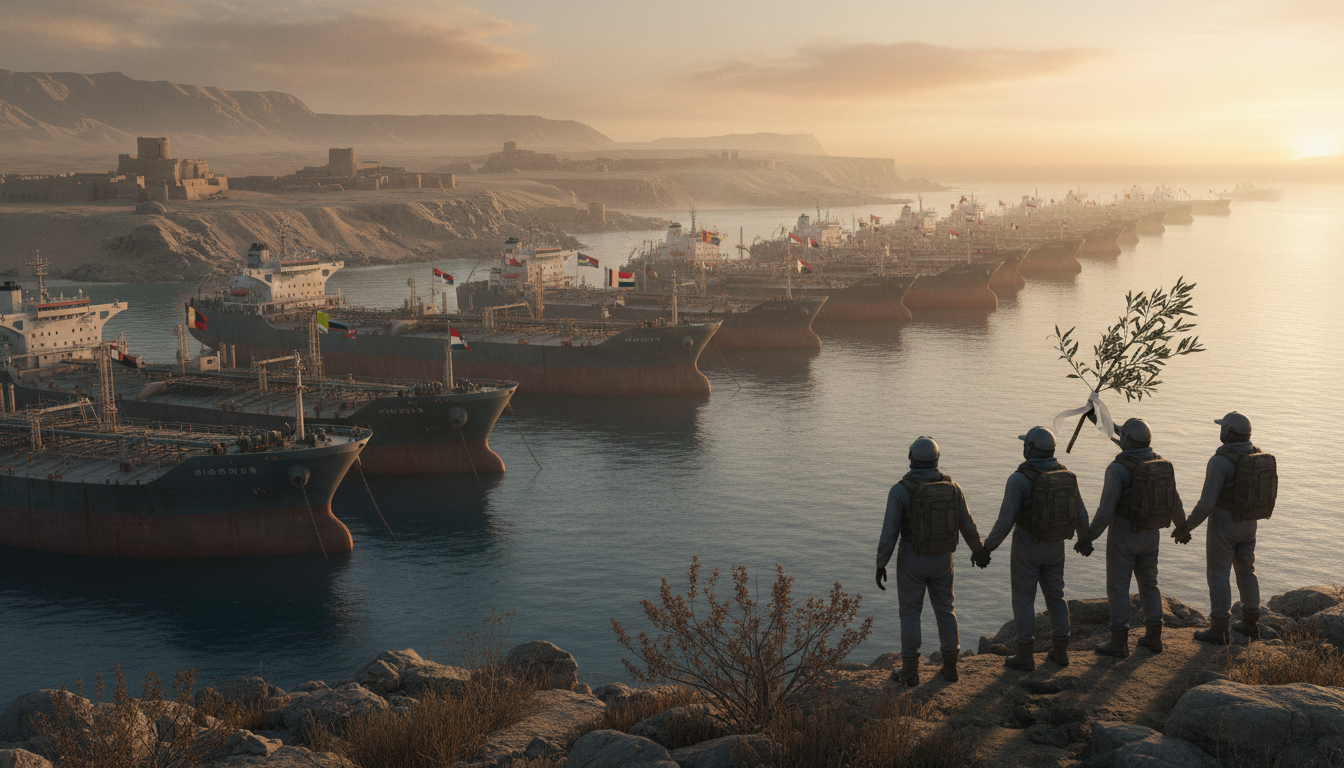
The geopolitical instability has tangible economic consequences, particularly for global oil and gas transport. The Strait of Hormuz, a critical maritime choke point, remains under Iranian restriction, permitting passage only to its own vessels or those explicitly approved by Tehran. This vital waterway facilitates approximately 20 percent of global oil and gas waterborne transit. Shipping analysts typically record around 140 vessels traversing the strait daily; however, current traffic has significantly slowed, with reports indicating it has “ground more or less to a halt.”
Despite the severe restrictions, ship-tracking data from MarineTraffic revealed some isolated movements on April 21st. An unflagged vessel named the Ean Spir, with unknown ownership, successfully navigated the waterway after previously docking at an Iraqi port. Similarly, another unflagged ship, the Lian Star, also appeared to have passed through the strait. While these isolated movements offer a glimmer of activity, the overall reduction in shipping traffic through this critical artery continues to send shivers through global energy markets, reinforcing concerns about supply chain disruptions and sustained upward pressure on crude oil prices for investors closely monitoring Middle East developments.