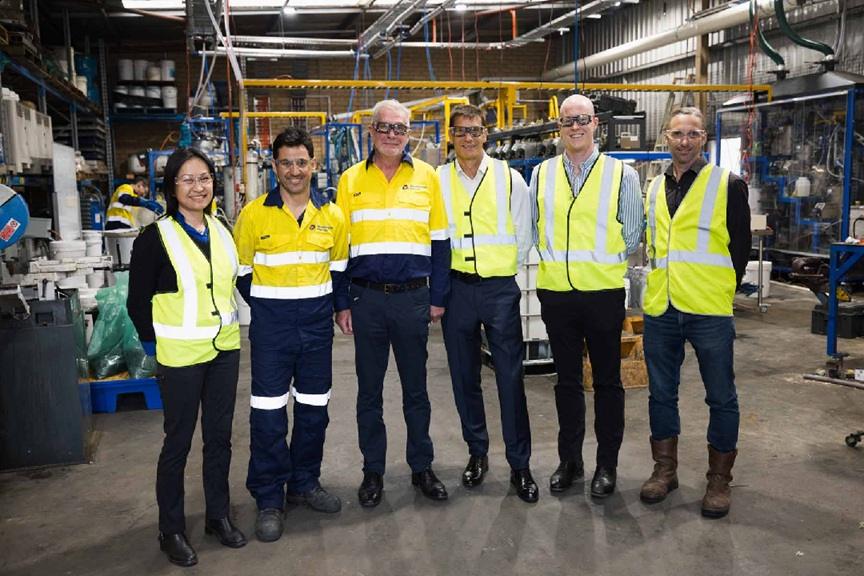
The global energy landscape is undergoing a profound transformation, driven by an accelerating shift towards sustainable solutions and a parallel surge in demand for critical minerals. While OilMarketCap.com primarily focuses on the dynamics of crude and natural gas, smart investors recognize that the broader energy transition creates both challenges and opportunities within and beyond traditional fossil fuels. A recent development in the battery recycling sector, specifically the securing of $12 million in Series A funding by an Australian startup focused on advanced lithium-ion battery recycling, underscores this evolving investment thesis. This capital infusion is not merely about a single company’s growth; it represents a critical step in building the essential infrastructure for a future less reliant on conventional energy sources, thereby shaping long-term supply chains and ultimately influencing the very demand for the commodities we track daily.
The Dual Imperative: Securing Critical Minerals Amidst Energy Transition
The push for electric vehicles (EVs) and renewable energy storage has intensified the race for critical minerals like lithium, cobalt, nickel, and manganese. For investors grappling with questions like “What’s the impact of EV adoption on long-term oil demand projections?”, this funding round provides a tangible answer: robust supply chains for EV components are being built out, accelerating the transition. The $12 million investment in advanced battery recycling technology signals strong market confidence in innovations that can significantly enhance resource security for these vital materials. This particular technology boasts an impressive overall recovery rate exceeding 95% from end-of-life lithium-ion batteries, with a reported 30% higher lithium recovery compared to existing methods. Such efficiency improvements are game-changers, addressing not only the finite nature of primary mineral extraction but also the geopolitical vulnerabilities associated with concentrated supply sources. By recovering more from less, these advancements strengthen the entire EV ecosystem, making the long-term shift away from internal combustion engines more viable and economically attractive.
Oil Market Volatility Persists as New Energy Infrastructure Gains Traction
While long-term capital flows into critical mineral recycling signal a strategic shift, the short-term realities of the traditional oil market remain compelling for investors. As of today, Brent Crude trades at $99.13, reflecting a modest daily dip of 0.22%, with its range oscillating between $97.55 and $101.32. WTI Crude shows a more pronounced decrease at $94.4, down 1.51% for the day. This current snapshot follows a noticeable trend over the past two weeks, where Brent has seen a decline from $109.27 on April 7th to $99.78 yesterday, marking an 8.7% depreciation. This volatility, a constant companion for oil & gas investors, is influenced by a myriad of factors, from demand outlooks to geopolitical events. Indeed, some readers are asking “What would push Brent below $80? What would push it above $120?”, highlighting the market’s sensitivity to supply-side disruptions or significant demand shifts. The stalled US-Iran negotiations and extended ceasefire in the Middle East, as noted in recent investor inquiries, underscore the ever-present geopolitical risk premium baked into crude prices. This juxtaposition — short-term crude price sensitivity versus long-term strategic investment in new energy — defines the current investment landscape.
Advanced Recycling: A Catalyst for Sustainable and Economical Resource Recovery
The technology behind this recent funding success is not just about recovery rates; it’s about fundamentally reshaping the economics and environmental footprint of battery recycling. Utilizing a proprietary alkali-based hydrometallurgical process, the method can efficiently process diverse battery chemistries, including NMC, LCO, and LFP, without the laborious and costly need for pre-sorting or dismantling. This bypasses the creation of “black mass,” a common intermediate bottleneck in current practices, streamlining the entire operation. Furthermore, the process tackles significant environmental challenges by effectively recycling reagents and wastewater, thereby mitigating problematic waste streams like sodium sulphate. For investors, particularly those with ESG mandates, this translates directly into lower operational costs, reduced regulatory hurdles in key markets like the U.S. and Europe, and a substantially smaller environmental footprint. These efficiencies make the recovery of valuable materials like lithium, cobalt, nickel, copper, and manganese not only more sustainable but also more profitable, strengthening the economic case for further investment in the circular economy for critical minerals.
Upcoming Data Points to Navigate a Dynamic Market
For investors monitoring the energy sector, the coming weeks are packed with critical data releases that will shape near-term market sentiment and potentially influence price action across traditional commodities. On April 28th, the API Weekly Crude Inventory report will offer an early glimpse into U.S. crude stock levels, followed closely by the EIA Weekly Petroleum Status Report on April 29th. These reports are crucial barometers of supply and demand, with significant draws or builds often triggering market reactions. As we move into May, the Baker Hughes Rig Count on May 1st and May 8th will provide insights into drilling activity and future production trends, while the EIA Short-Term Energy Outlook on May 2nd will offer broader projections on supply, demand, and prices for various energy commodities. These traditional oil and gas indicators remain indispensable for navigating the market’s immediate future. Yet, it is vital to contextualize them against the backdrop of strategic shifts, such as the accelerating investment in battery recycling. This dual perspective allows investors to capitalize on short-term market movements while positioning for the long-term structural changes driven by the energy transition, understanding how advancements in areas like EV component supply chains will ultimately impact the demand trajectory for traditional energy resources.


