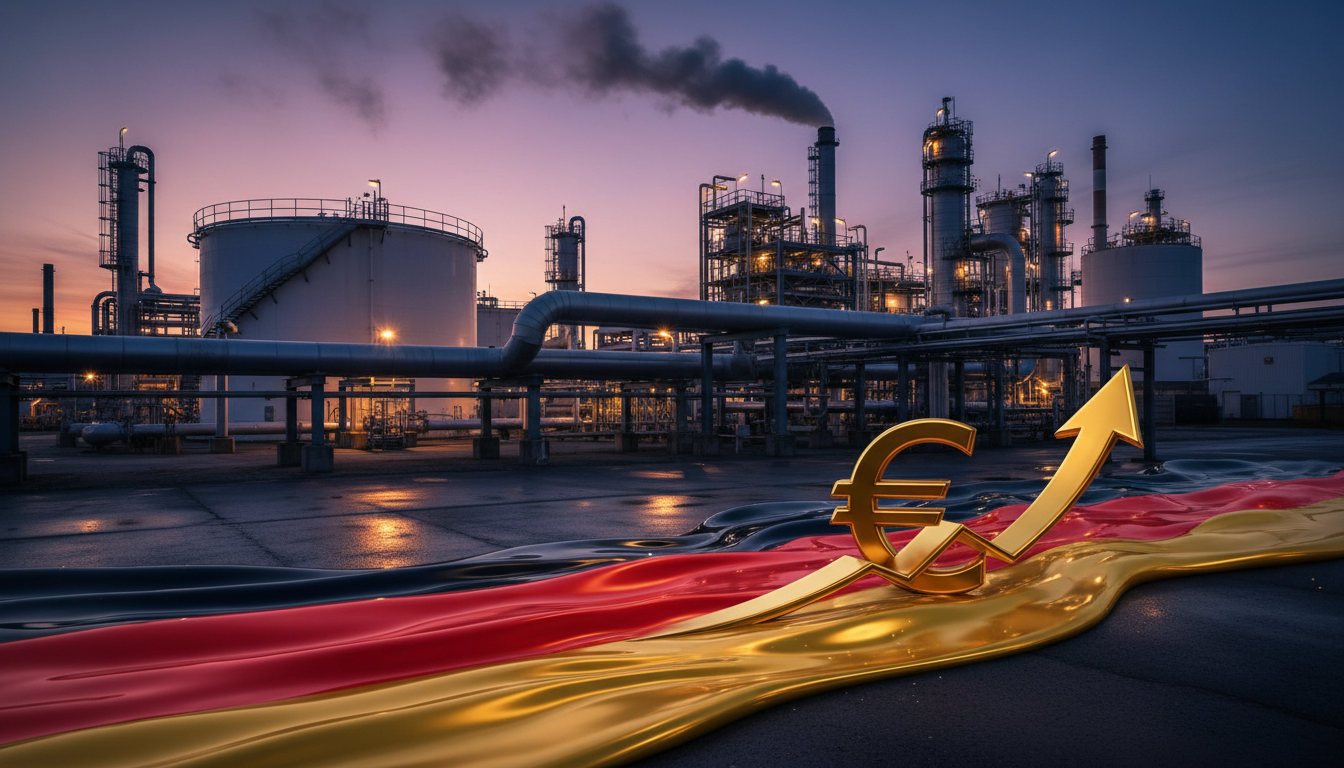
The German government has officially commenced the privatization process for SEFE (Securing Energy for Europe), the critical energy entity that was formerly Russia’s Gazprom Germania. This strategic move, following its seizure in 2022 amidst the Ukraine invasion and subsequent EU sanctions, marks a significant pivot for Germany’s energy landscape and presents substantial opportunities for astute investors eyeing the European energy market.
SEFE stands as a linchpin in Germany’s energy infrastructure, managing vital energy import and operational assets. To fortify its future and expand its capabilities, the German state plans a robust capital-raising round for the company. This initiative aims to secure between 1.5 billion and 2 billion euros, equivalent to approximately $1.76 billion to $2.35 billion, as reported by Reuters, citing an interview with SEFE’s chief executive in the Financial Times. The incoming capital is earmarked for crucial infrastructure development, underscoring Germany’s commitment to enhancing its energy security and supply resilience.
The decision to privatize SEFE comes after a period of intense deliberation by the German government regarding the entity’s long-term future. Options explored since the 2022 nationalization included a potential breakup of the business, outright sale, or even a merger with a major industry player like Uniper. The current strategy aligns with the broader objective of finalizing SEFE’s privatization by 2030, offering a clear roadmap for potential investors and ensuring a stable trajectory for the company’s evolution within the competitive European energy sector.
In anticipation of this ownership transition, SEFE has proactively worked to bolster its appeal and secure its supply foundation. The company has aggressively built a diversified procurement portfolio, ensuring a resilient energy supply for Germany and enhancing its attractiveness to prospective suitors. These strategic supply agreements position SEFE as a robust and reliable partner in the global natural gas market, a critical consideration for any long-term energy investment strategy.
A notable example of SEFE’s forward-thinking supply strategy materialized in 2023 with a long-term liquefied natural gas (LNG) supply agreement with Russia’s Novatek. This deal secures supplies from the Yamal LNG facility, which crucially remains exempt from international sanctions. Europe continues to import nearly all the gas produced by Yamal LNG, highlighting the facility’s strategic importance and SEFE’s pragmatism in securing diverse energy sources amidst geopolitical complexities. This arrangement underscores the intricate balance between energy security and the evolving sanctions landscape in the European gas market.
Further strengthening its market position, SEFE forged a monumental long-term natural gas supply agreement with Norway’s Equinor in 2023. This landmark deal, valued at an estimated $55 billion, commits Equinor to supply SEFE with 10 billion cubic meters of natural gas annually over a decade, spanning from 2024 to 2034. This significant pact not only diversifies Germany’s gas supply away from traditional Russian pipeline flows but also cements a crucial partnership with a reliable North Sea producer, reinforcing the nation’s energy independence and long-term supply stability. Investors should view such long-term, high-value contracts as significant de-risking factors for SEFE’s future profitability.
Entering 2024, SEFE continued its aggressive procurement drive by striking a substantial deal with the United Arab Emirates’ ADNOC. This agreement secures 1 million tons of LNG annually for a period of 15 years. The LNG deliveries are slated to originate from ADNOC’s Ruwais LNG project, currently under development in Al Ruwais Industrial City, Abu Dhabi. While the project’s completion timeline has faced extensions due to global events, the commitment from ADNOC provides another layer of long-term supply diversification for SEFE, tapping into the burgeoning Middle Eastern LNG export capacity and further solidifying its global supply chain.
The impending privatization of SEFE, coupled with its ambitious capital raise and a robustly diversified supply portfolio, signals a pivotal moment for Germany’s energy future and for investors tracking critical European infrastructure. This move not only aims to ensure Germany’s energy security but also positions SEFE as a compelling investment vehicle within the dynamic global oil and gas landscape. The strategic maneuvers undertaken by SEFE, from securing supplies with disparate global producers to preparing for a significant capital infusion, demonstrate a clear intent to build a resilient, profitable, and attractive enterprise for the long haul. Market participants will closely monitor the capital raise and the eventual investor interest as Germany reshapes its energy destiny.


