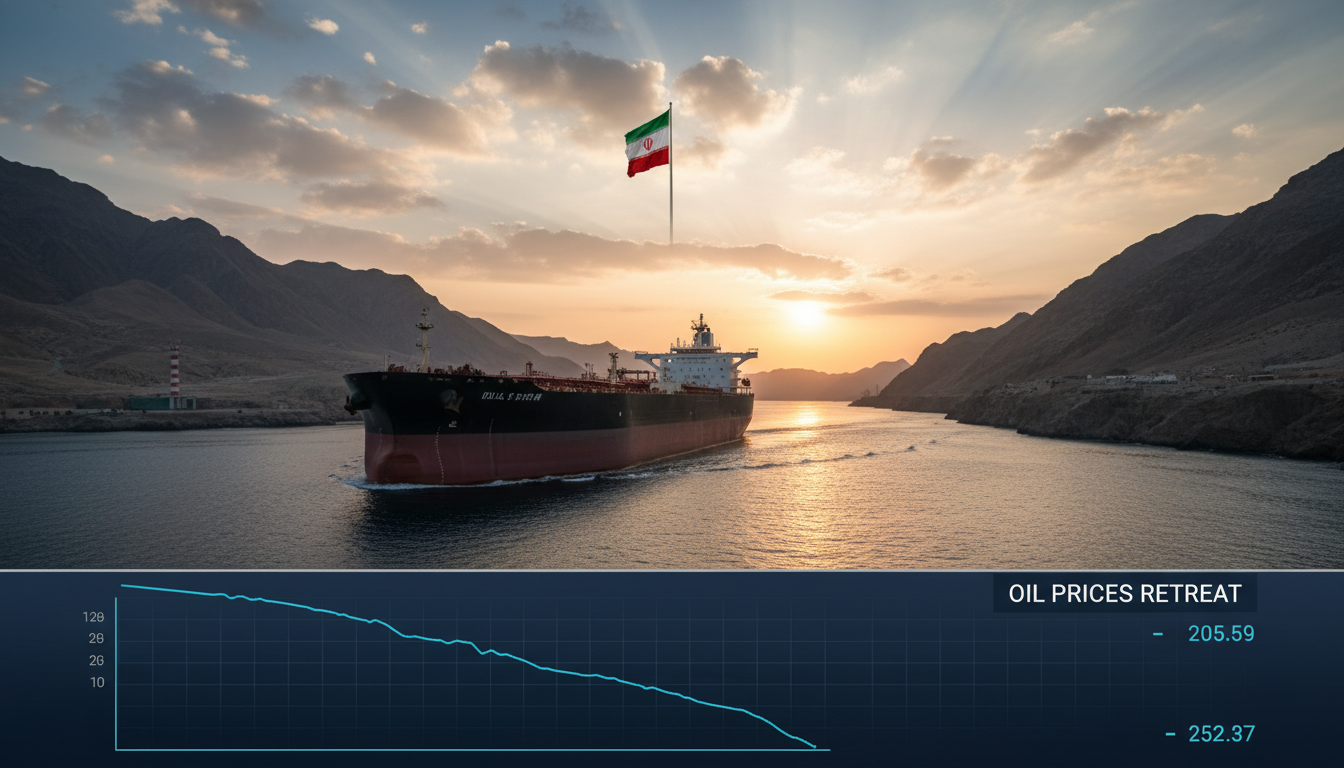
Strait of Hormuz Reopening Signals Volatility Ahead for Global Oil Markets
Oil investors are closely monitoring a pivotal shift in global energy security following Iran’s declaration that the Strait of Hormuz has reopened for commercial shipping. This critical development coincides with a fragile 10-day ceasefire between Israel and Hezbollah in Lebanon, offering a potential reprieve for the flow of crude through one of the world’s most vital maritime chokepoints. The announcement capped a week characterized by extreme volatility in oil markets, where supply disruptions and rapidly shifting geopolitical signals drove significant price fluctuations.
Iranian Foreign Minister Abbas Araghchi confirmed the strategic waterway is now “completely open.” This marks the most substantial change in transit conditions since the strait effectively ceased normal operations following a sharp escalation of regional conflict in late February. The news provided a momentary sigh of relief for markets grappling with heightened supply anxieties.
The Critical Chokepoint: Hormuz’s Indispensable Role in Global Energy Flows
The Strait of Hormuz serves as an indispensable artery for global energy markets, typically facilitating the passage of approximately one-fifth of the world’s total oil and liquefied natural gas (LNG) shipments. Its recent effective closure, even partial, removed substantial volumes of energy commodities from active circulation, directly contributing to elevated crude prices and an exacerbated climate of market uncertainty. For investors with exposure to the energy sector, the strait’s operational status is a paramount indicator of global supply stability and price direction.
The implications of this waterway’s disruption are profound, impacting everything from tanker insurance premiums to the willingness of refiners to commit to long-term supply contracts. Its closure in recent weeks underscored the inherent fragility of global energy supply chains and the immediate consequences of geopolitical tensions on commodity pricing. A significant portion of Middle Eastern crude, destined for major demand centers in Asia, Europe, and North America, must traverse this narrow passage. The re-establishment of commercial shipping lanes is therefore not merely a logistical update but a fundamental rebalancing factor for global energy economics.
Geopolitical Easing and Market Swings: A Closer Look at Price Dynamics
The initial investor response to the reopening declaration was a sharp downward correction in oil prices, as crude benchmarks retreated from their recent highs. Traders immediately factored in the prospect of restored supply flows from the Persian Gulf, recognizing the easing of a major logistical bottleneck. However, this immediate knee-jerk reaction has since given way to a more nuanced market posture. Prices have stabilized somewhat amidst ongoing uncertainty concerning the true durability of the ceasefire and the prospective pace at which shipping activities will fully normalize.
This reopening is intricately linked to the broader geopolitical landscape, specifically the apparent holding of the ceasefire between Israel and Hezbollah. This nascent period of calm has potentially opened a narrow window for more extensive diplomatic engagements, particularly between the United States and Iran. Officials are reportedly weighing an extension of their own ceasefire, with critical discussions reportedly underway regarding highly contentious issues such as Iran’s nuclear policy, the potential for sanctions relief, and broader maritime security protocols in the region. The confluence of these factors paints a complex picture for energy market participants.
Normalization’s Path: Cautious Optimism Amidst Lingering Risks
While the announcement provides a much-needed signal of de-escalation, significant uncertainty persists regarding the speed and thoroughness with which tanker traffic and cargo flows will return to pre-crisis levels. Investors must exercise caution, recognizing that a “completely open” declaration does not automatically equate to immediate, unfettered access or a complete elimination of risk premiums. The United States continues to exert considerable pressure on Iranian crude exports, including recent enforcement actions and a robust naval presence strategically positioned in the region. Furthermore, Washington has issued clear warnings that military operations could swiftly resume should the ongoing diplomatic negotiations falter, casting a long shadow over the current fragile détente.
The path to full normalization of shipping in the Strait of Hormuz is fraught with potential pitfalls. Beyond the immediate ceasefire, the stability of broader U.S.-Iran talks will be crucial. Any perceived breakdown in these diplomatic channels could quickly reignite tensions, jeopardizing the newfound accessibility of the strait and potentially sending oil prices spiraling once more. Energy sector investors are advised to closely monitor not only the daily shipping manifests but also the subtle cues from international diplomatic arenas, as these will likely dictate the longevity and reliability of the strait’s operational status.
Investment Horizons: Strategic Considerations for Oil & Gas Portfolios
A sustained reopening of the Strait of Hormuz holds profound significance for stabilizing global oil markets. This is particularly pertinent given the backdrop of recent disruptions that have tightened overall supply and amplified price volatility across the energy complex. For portfolios heavily weighted towards oil and gas, this development presents a complex calculus. While the immediate easing of supply constraints might alleviate some upward pressure on crude prices, the underlying geopolitical risks remain acutely present and could resurface at any moment.
Discerning investors should look beyond the immediate price reaction and focus on key indicators such as the durability of the regional ceasefires, the progress of U.S.-Iran diplomatic efforts, and any shifts in U.S. policy regarding sanctions enforcement or naval deployments. The capacity for rapid shifts in the Middle East’s geopolitical landscape necessitates a strategy that prioritizes flexibility and resilience. Companies with robust balance sheets, diversified asset bases, and strong risk management frameworks are better positioned to navigate the ongoing volatility. While the reopening provides a critical moment of relief, the strategic imperative for energy investors remains vigilant oversight of global supply chain vulnerabilities and the ever-present influence of geopolitical events on commodity prices.


