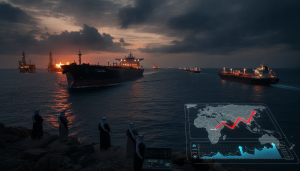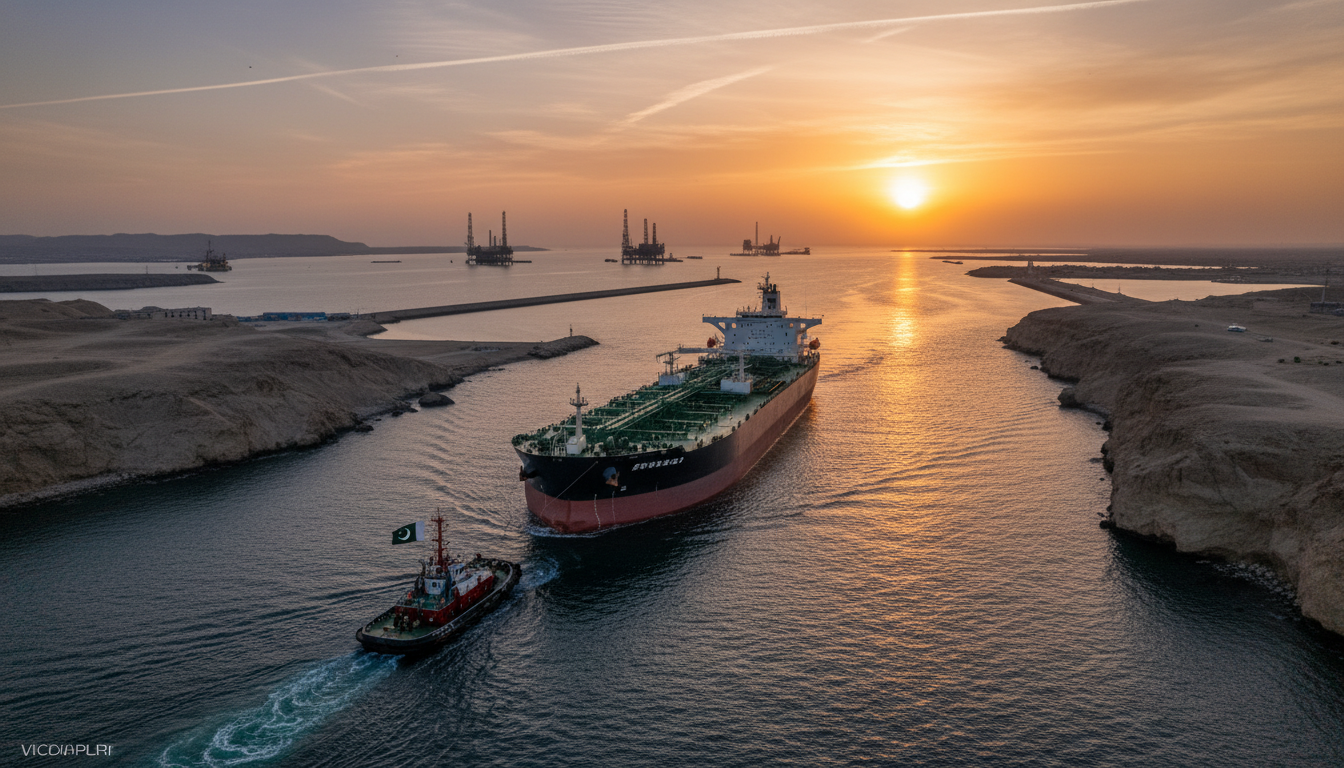
The strategic Strait of Hormuz has once again proven its pivotal role in global energy markets, highlighted by the recent, highly scrutinized passage of the Pakistan-flagged Aframax tanker, the Shalamar. This vessel marked a significant milestone, becoming the first crude oil carrier to successfully navigate out of the Persian Gulf via this critical chokepoint since the United States initiated a comprehensive naval blockade earlier this week. For investors monitoring the volatile oil and gas landscape, this event underscores the severe constraints now impacting maritime traffic and the heightened geopolitical risks threatening global energy supply chains.
Operating under the management of Pakistan National Shipping Corp., the Shalamar departed the UAE’s Das Island with approximately 450,000 barrels of crude, a cargo representing only half of its capacity. Its destination, Karachi, signals a regional delivery, yet its journey through the Strait and into the Gulf of Oman late Thursday serves as a stark reminder of the severely limited throughput now characterizing this vital waterway. This isolated successful transit comes amidst a backdrop of sharply curtailed shipping activity, a direct consequence of escalating tensions and the newly imposed US naval presence.
Strait Under Siege: The New Geopolitical Reality for Oil Shipping
The narrow Strait of Hormuz has seen its average daily transits plummet to single digits since late February, when a series of US and Israeli military actions initiated a new phase of regional instability. While a brief surge in traffic was observed over a recent weekend, numbers quickly reverted to these depressed levels. The latest development, a robust US Navy blockade, has introduced an unprecedented layer of complexity and risk for shipowners. Now, any vessel seeking to transport oil or other commodities from the Persian Gulf to international markets must secure clearance from both Iranian and American authorities—a bureaucratic and geopolitical tightrope walk that few are willing or able to perform.
This dual approval mandate has effectively stifled conventional shipping routes, sending shockwaves through the global crude market. While three supertankers carrying non-Iranian crude did manage to exit the Strait last week, their passages were outliers. For seven weeks prior, even before US warships tightened their grip, very few other vessels with similar cargoes successfully traversed Hormuz. The Shalamar’s journey, completed within days of entering the Gulf, stands out as particularly unusual given the current climate, even with apparent specific permissions granted to some Pakistani vessels by Iran.
Iranian Exports Grinds to a Halt Amidst Blockade
The impact of these maneuvers extends directly to Iran’s own energy exports. Prior to the latest US actions, Iran’s tanker fleet had maintained a consistent, albeit reduced, flow of crude, exporting nearly 1.7 million barrels per day (bpd) in March. This critical revenue stream for Tehran has now largely dried up. The cessation of these exports signals a direct consequence of the blockade and a potential precursor to renewed, high-stakes negotiations between Iran and the United States, talks that currently appear stalled. Investors must factor this significant reduction in Iranian supply into their crude price forecasts and geopolitical risk assessments.
The Shalamar‘s initial attempt to enter the Persian Gulf on Sunday was met with immediate resistance, forcing it to execute a U-turn as peace talks between Washington and Tehran dramatically collapsed. However, it successfully made the passage hours later, heading directly for the United Arab Emirates’ strategic Das Island to load its cargo. The official announcement of the US blockade of Iran’s coastline by President Donald Trump, which took effect on Monday, fundamentally altered the risk calculus for all maritime operators. The Shalamar subsequently began its eastward journey on Thursday, and maritime tracking data indicates it is currently well into the Gulf of Oman, making its way toward the Arabian Sea.
Navigating the New Normal: Risks and Rare Successes
Since the US blockade became active, very few vessels have even attempted to depart the Persian Gulf. Reports indicate that some ships, after initiating their outward transit, were compelled to reverse course back through Hormuz, unwilling or unable to meet the stringent new requirements. US Central Command disclosed on Thursday that a remarkable fourteen vessels had turned around in just three days, a testament to the blockade’s immediate and disruptive effectiveness. This unprecedented level of disruption highlights the formidable challenge shipowners face in navigating this newly militarized zone.
The scope of the blockade is extensive, stretching from the Omani coastline near Ras al Hadd, extending northeastward all the way to the Iran-Pakistani border. This broad enforcement zone ensures comprehensive coverage, limiting nearly all maritime traffic in and out of the Persian Gulf. As of Friday, some movements were observed: four vessels, all bound for destinations outside of Iran, were either making or approaching inbound transits. Additionally, two bulk carriers originating from Iran were sighted sailing out into the Gulf of Oman, suggesting a nuanced application of the blockade that may permit certain cargo types or specific clearances, though crude exports remain severely restricted.
Investor Outlook: Volatility Ahead for Energy Markets
For sophisticated investors, the unfolding situation in the Strait of Hormuz presents a complex tapestry of risk and opportunity. The drastic reduction in tanker traffic, the effective cessation of Iranian crude exports, and the dual-clearance requirement signal a significant tightening of global oil supply. This environment typically favors higher crude prices, but it also introduces considerable uncertainty and volatility. Shipping costs and insurance premiums for vessels operating in the region are undoubtedly soaring, impacting the profitability of energy trades and potentially causing ripple effects throughout the global supply chain.
The Shalamar’s singular success serves as a critical data point, demonstrating that limited, highly scrutinized transits are still possible, though far from routine. As negotiations between the US and Iran remain delicately poised, the geopolitical landscape in the Persian Gulf will continue to be a dominant factor shaping crude oil markets. Investors should closely monitor diplomatic developments, naval activities, and any shifts in the blockade’s enforcement, as these will directly influence the flow of vital energy resources and, consequently, the profitability of their oil and gas portfolios. The era of predictable shipping through Hormuz has ended, giving way to an environment where every tanker transit is a high-stakes event.