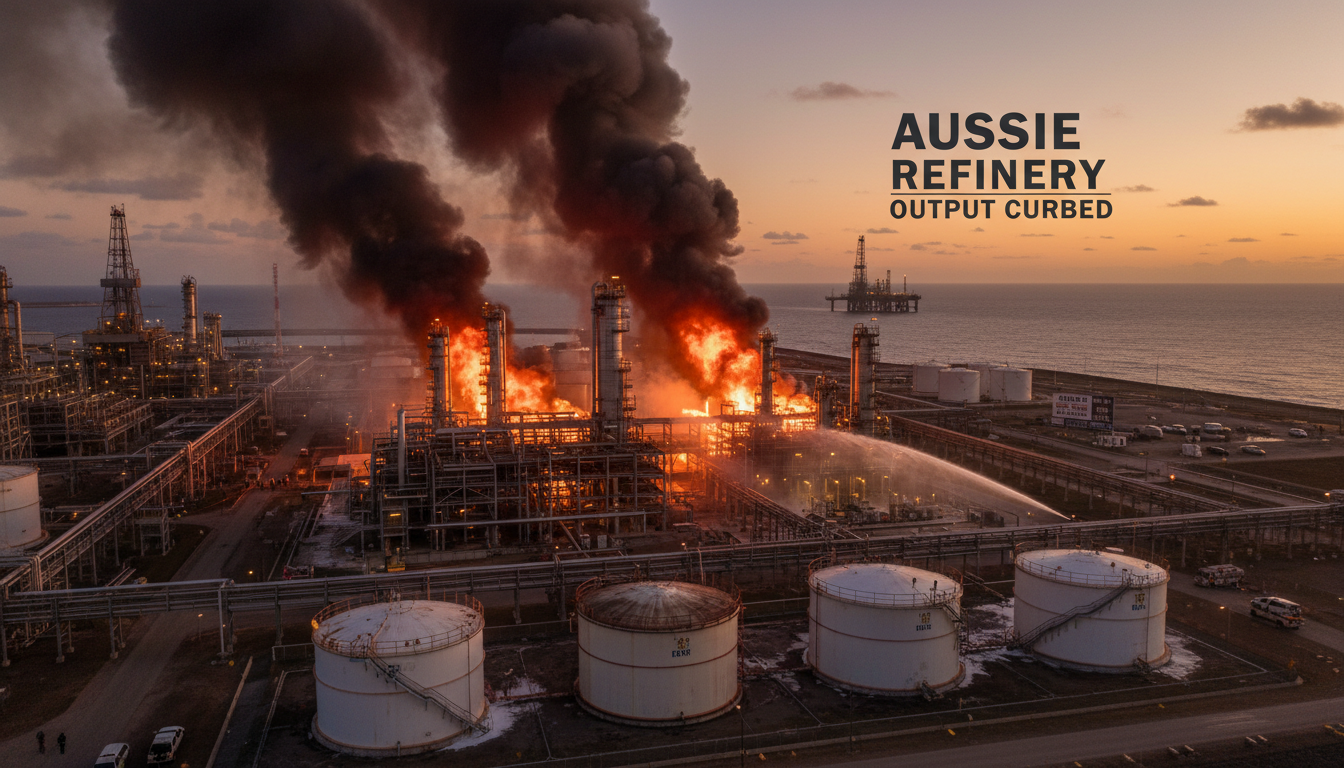
Australian Refinery Fire Rattles Local Fuel Market, Government Mobilizes Strategic Reserves
A significant operational disruption struck Australia’s energy landscape this week as a major fire erupted at the Geelong refinery in Victoria. While emergency services swiftly brought the blaze under control by 12:04 PM on Thursday and fortunately no casualties were reported, the incident has inevitably scaled back production at a facility critical to the nation’s fuel supply chain. This development immediately prompted a coordinated response from both the refinery operator and the Australian government, highlighting the vulnerabilities and robust strategies in play within the domestic petroleum market.
Geelong Refinery: A Cornerstone of Australian Fuel Supply Faces Production Cutbacks
The Geelong refinery, operated by Viva Energy Group, stands as one of Australia’s two active refining facilities, boasting a processing capacity of 120,000 barrels of crude oil per day. Commissioned in 1954, its strategic importance is undeniable, supplying over 50 percent of Victoria’s fuel demand and contributing approximately 10 percent to Australia’s total fuel requirements. The complex produces a diverse range of refined products, including petrol, diesel, liquefied petroleum gas (LPG), jet fuel, aviation gasoline, and low aromatic fuel.
Following the incident, Viva Energy confirmed the facility remains operational but at reduced production rates. The full extent of the damage is still under assessment, pending safety clearances. Initial estimates indicate the primary impact will fall on the output of gasoline and aviation gasoline. However, Viva Energy has proactively assured the market there is no immediate threat to fuel supply, confirming plans to offset any lost production through its established fuel import program. This commitment underscores the company’s focus on maintaining market stability and fulfilling contractual obligations despite the unexpected setback.
Australia’s Fuel Security in Focus: Assessing National Stockpiles Amidst Disruption
The incident at Geelong brings Australia’s broader fuel security into sharp focus for investors monitoring the energy sector. As of Tuesday, national government estimations indicated Australia held approximately one month’s supply of critical fuels, including gasoline, kerosene, and diesel. This metric provides a crucial context for understanding the urgency of the government’s response to any domestic supply disruption.
Adding another layer to the national supply picture, entities subject to the country’s Minimum Stockholding Obligation have been operating under a 20 percent reduction in required volumes since April 7. This pre-existing measure, overseen by the Department of Climate Change, Energy, the Environment and Water, suggests a continuous vigilance over national energy reserves and the strategic flexibility to manage potential shortfalls. The current refinery incident tests the resilience of these frameworks and the efficacy of contingency planning.
Strategic Diplomatic Efforts Bolster National Diesel Reserves
In a decisive move to pre-emptively address any potential supply gaps, the Australian government, led by Prime Minister Anthony Albanese, has swiftly activated its new Strategic Reserve powers. This legislative authority has already yielded tangible results, with the government securing approximately 100 million liters of diesel from international partners Brunei and South Korea. This initial consignment represents a significant step in reinforcing Australia’s fuel buffer and mitigating any ripple effects from the Geelong incident.
Further leveraging these powers, Viva Energy has partnered with Export Finance Australia (EFA), the government’s export credit agency, to procure an additional 570,000 barrels of diesel. EFA’s proactive engagement extends beyond Viva, as it has also finalized commercial agreements with other key fuel distributors, including Ampol, Park Fuels, and IOR. These partnerships are instrumental in facilitating the purchase of supplementary fuel volumes, specifically targeting regional shortages and critical supply gaps across the nation. Such coordinated action highlights a robust governmental and industry commitment to ensuring uninterrupted energy flow.
Forging Regional Energy Partnerships: A Proactive Stance on Supply Chains
The Prime Minister’s diplomatic itinerary concurrently addressed long-term energy security objectives. During a recent visit to Malaysia, discussions with Malaysian counterpart Anwar Ibrahim included securing assurances from Malaysia’s state-owned Petroliam Nasional Bhd (Petronas) regarding potential future fuel supplies to Australia. This builds upon an already robust energy trade relationship: Malaysia stands as Australia’s third-largest source of refined fuel, while Australia supplies a substantial 95 percent of Malaysia’s imported natural gas.
The commitment to maintain the “continued flow of essential supplies including fuel” underscores the strategic partnership between Australia and Malaysia. This proactive engagement extends further, with Australian Foreign Affairs Minister Penny Wong slated to visit Singapore. These ongoing diplomatic efforts with regional partners are vital for sustaining the two-way flow of energy supplies, fertilizers, and other critical goods, demonstrating Australia’s comprehensive approach to safeguarding its commodity imports and exports in a dynamic global market.
Investor Outlook: Navigating Australian Energy Market Resilience
For investors, the Geelong refinery incident, while a localized event, provides crucial insights into the resilience of Australia’s energy infrastructure and the government’s strategic response capabilities. The rapid deployment of Strategic Reserve powers, coupled with diplomatic maneuvers to diversify and secure international fuel supplies, demonstrates a strong commitment to energy security. This proactive approach helps to stabilize fuel markets, potentially mitigating sharp price spikes for consumers and businesses alike.
Companies like Viva Energy, Ampol, Park Fuels, and IOR are positioned at the forefront of these efforts, highlighting their critical role in the national supply chain. Investors should observe how these companies manage import logistics and adapt to evolving supply dynamics. The long-term implications may include increased investment in import infrastructure, further diversification of sourcing, and a reinforced emphasis on regional energy cooperation. While short-term volatility in specific product markets like gasoline and aviation fuel might be observed, the comprehensive government and industry response aims to insulate the broader Australian economy from significant disruption, affirming confidence in the market’s underlying stability.


