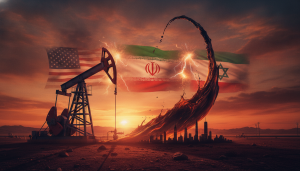
Crude oil markets witnessed significant upward momentum on Thursday, with international benchmarks pushing aggressively towards the psychologically important $100 per barrel mark. This surge reflects mounting apprehension surrounding tanker movement through the Strait of Hormuz, a critical maritime chokepoint that remains heavily restricted with no clear resolution in sight for its full reopening.
The global benchmark, Brent crude for June delivery, posted a robust performance, climbing by nearly 5% to settle at $99.39 per barrel. Concurrently, West Texas Intermediate (WTI) crude for May delivery also advanced strongly, rising almost 4% to conclude the session at $94.69 per barrel. These price movements underscore the market’s heightened sensitivity to geopolitical developments in the Middle East, particularly those impacting vital shipping lanes.
The Strait of Hormuz: A Global Supply Flashpoint
The current low volume of oil tanker traffic navigating the Strait of Hormuz is the primary catalyst driving the recent price spikes. This narrow waterway is arguably the most strategically important chokepoint for global oil supply, facilitating the passage of an estimated 20% of the world’s total petroleum consumption and approximately one-third of global liquefied natural gas (LNG). When operations through this strait are constrained, the implications for energy security and prices reverberate worldwide.
The ongoing naval blockade by the U.S. Navy along Iran’s coastline has significantly curtailed shipping, reducing daily transits to a mere handful of vessels. Adding to the tension, Tehran has issued explicit threats of reprisal against shipping in the Persian Gulf, exacerbating fears of potential escalation and further supply disruptions. This standoff has effectively put a geopolitical premium on every barrel, as investors price in the risk of constrained supply in an already tight market.
Fragile Diplomacy: U.S.-Iran Negotiations
Amidst the escalating energy market pressures, diplomatic efforts continue, albeit with significant uncertainty. President Donald Trump indicated on Thursday that a second round of negotiations between the U.S. and Iran is “probable” and could potentially occur over the upcoming weekend. However, no official date or venue for these crucial discussions has been formally announced, leaving investors in a state of suspense.
These potential talks follow a series of failed engagements, most notably a recent attempt last weekend in Pakistan. A significant breakthrough prior to new discussions was the agreement between Israel and Lebanon on a 10-day ceasefire. The ongoing conflict between Israel and Hezbollah, an Iranian-backed group, had emerged as a major impediment during the previous U.S.-Iran talks, complicating efforts to find common ground on regional stability and energy flow.
Despite the efforts, the path to a comprehensive resolution appears protracted. Sources familiar with the discussions, as reported by Bloomberg, suggest that several European and Gulf Arab leaders anticipate that a full U.S.-Iran deal could realistically take up to six months to negotiate. This extended timeline implies sustained geopolitical risk for energy markets in the medium term, even if immediate tensions are temporarily defused.
The Looming Expiration of the Ceasefire
Adding another layer of urgency to the diplomatic landscape is the impending expiration of the two-week ceasefire between the U.S. and Iran, scheduled for Tuesday, April 21. This truce was initially agreed upon with the understanding that Iran would facilitate the reopening of the Strait of Hormuz to normal traffic. However, Tehran has consistently sought to assert and maintain its control over shipping activities within the vital sea lane, presenting a significant sticking point in any lasting agreement.
The expiration of this ceasefire without a clear pathway for sustained open shipping through the Strait of Hormuz could trigger further instability. Investors are closely monitoring the rhetoric and actions of all parties, understanding that the failure to extend the truce or secure tangible concessions could lead to renewed blockades, increased threats, and a corresponding spike in crude oil prices.
Investment Implications and Energy Market Outlook
For energy investors, the current environment demands a cautious yet vigilant approach. The significant rally in Brent and WTI crude highlights the market’s immediate reaction to geopolitical risk premiums. Nearing $100 per barrel suggests a strong belief among traders that supply disruptions, even potential ones, could severely impact global inventories. This situation presents both opportunities and risks across the energy sector.
Companies with significant upstream exposure, particularly those less reliant on spot market purchases for their refining operations, may see enhanced profitability in the short term. However, the broader economic impact of sustained high oil prices could dampen demand, creating headwinds for refiners and other energy consumers. Volatility in crude futures contracts is expected to remain high as the diplomatic ballet unfolds, making hedging strategies and agile portfolio management crucial.
The long-term outlook remains heavily dependent on the diplomatic progress between the U.S. and Iran. While a comprehensive deal could eventually ease supply concerns and potentially temper prices, the six-month negotiation window flagged by European and Gulf Arab sources indicates that a geopolitical premium is likely to persist on oil prices for the foreseeable future. Investors should remain prepared for sudden shifts based on negotiation outcomes, military posturing, and the operational status of the Strait of Hormuz.