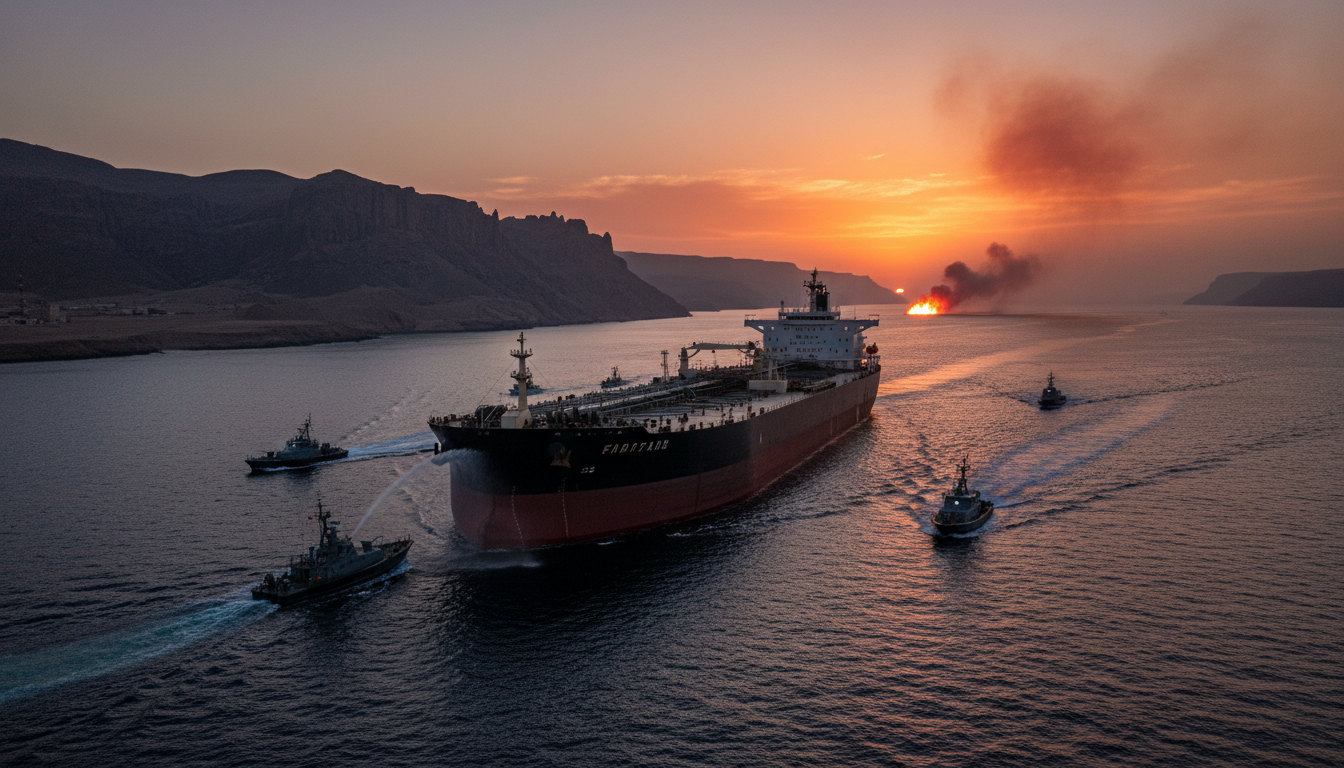
The intricate dance between geopolitical strategy and global energy markets intensified this week as a Chinese-owned tanker, operating under U.S. sanctions, successfully navigated the Strait of Hormuz. This incident unfolded despite a newly announced U.S. blockade targeting Iranian port traffic, underscoring the complexities and challenges facing Washington’s efforts to curb Tehran’s oil exports and revenue streams.
For investors keenly monitoring the stability of global energy supply lines, this development signals ongoing volatility and the persistent elasticity of illicit oil trading networks. The Strait of Hormuz, a critical maritime chokepoint, remains a focal point for geopolitical tension and a significant variable in crude oil price discovery.
Sanctioned Vessel Navigates Critical Chokepoint Amidst New Blockade
Maritime intelligence firms Kpler and MarineTraffic reported that the vessel, named Rich Starry, a tanker owned by Shanghai Xuanrun Shipping Co Ltd., traversed the Strait of Hormuz earlier today. This passage occurred concurrently with the commencement of a U.S. blockade explicitly designed to impede shipping to and from Iranian ports, which began Monday at 10 am Eastern Time.
The Rich Starry itself is no stranger to U.S. enforcement actions, having been previously designated for its involvement in the transport of Iranian crude. However, the specific circumstances of its recent journey present a nuanced picture. According to tracking data, the vessel was loaded with approximately 250,000 barrels of methanol, a petrochemical product, which it took on at the Emirati port of Hamriyah. This detail appears crucial, as U.S. Central Command (CENTCOM) clarified that the new blockade would specifically target traffic originating from or destined for Iranian ports, not necessarily all vessels traversing the strait.
The distinction between crude oil and petrochemicals, and the vessel’s origin/destination, likely played a role in its unobstructed passage. Yet, the presence of a known sanctioned entity successfully navigating the region during an active blockade period undoubtedly raises questions for market participants regarding the efficacy and full scope of enforcement actions.
Another Sanctioned Tanker Enters the Fray
Adding another layer to this complex maritime chessboard, industry data from Kpler and LSEG also revealed that a second U.S.-sanctioned tanker, the Murlikishan, also entered the Strait of Hormuz on the same day. This vessel, known for its previous involvement in transporting both Iranian and Russian oil, is reportedly en route to Iraq, where it is slated to load fuel oil. The continued movement of such vessels highlights the persistent ‘dark fleet’ operations that actively seek to circumvent international sanctions, presenting a continuous challenge to global oil market transparency and compliance efforts.
Understanding the Blockade’s Scope and Investor Implications
President Trump’s initial announcement on Sunday via social media created immediate ripples across energy markets. His statement, declaring that the U.S. Navy would “begin the process of BLOCKADING any and all Ships trying to enter, or leave, the Strait of Hormuz,” suggested a potentially wide-ranging disruption to global oil flows. Such an aggressive posture, if fully implemented, would have profound implications for crude oil prices, shipping costs, and insurance premiums, given that approximately 20% of the world’s oil supply transits this narrow waterway.
However, subsequent clarifications from CENTCOM aimed to mitigate market anxiety by narrowing the scope of the blockade. In an official communication, CENTCOM stated that the enforcement would be “impartially against vessels of all nations entering or departing Iranian ports and coastal areas, including all Iranian ports on the Arabian Gulf and Gulf of Oman.” Crucially, the authority also emphasized that “CENTCOM forces will not impede freedom of navigation for vessels transiting the Strait of Hormuz to and from non-Iranian ports.” This distinction is paramount for investors, as it suggests a targeted interdiction strategy rather than a wholesale closure of the strait, thus limiting immediate, widespread disruption to global energy trade.
Geopolitical Tensions and Crude Oil Market Volatility
The ongoing naval activities in the Strait of Hormuz and the broader Persian Gulf region serve as a potent reminder of the inherent geopolitical risks embedded within global oil and gas investments. Tensions between the U.S. and Iran have a long history of impacting crude oil benchmarks, influencing trading strategies for futures contracts, and shaping investment decisions in upstream and downstream energy sectors.
For energy investors, these events underscore several critical considerations:
- Supply Security: Any perceived threat to the Strait of Hormuz instantly elevates concerns over global crude oil supply security, potentially driving Brent and WTI futures higher.
- Shipping and Logistics: Increased naval presence and interdiction efforts can lead to higher shipping costs, longer transit times, and elevated insurance rates for vessels operating in the region, impacting tanker company valuations and refining margins.
- Sanctions Efficacy: The continued operation of sanctioned vessels, even if technically compliant with a narrow blockade definition, highlights the limitations of sanctions as a tool for completely halting illicit trade. This challenges the effectiveness of broader policy goals and can create market inefficiencies.
- Market Volatility: Such geopolitical flashpoints inject significant uncertainty into energy markets, necessitating robust risk management strategies for commodity traders and portfolio managers.
The Road Ahead: Navigating Uncertainty in Energy Investments
As the situation in the Strait of Hormuz evolves, investors must remain vigilant. While the immediate impact of the blockade appears to be narrowly focused on Iranian port traffic, the broader geopolitical context of U.S.-Iran relations continues to cast a long shadow over the Middle East’s role in global energy supply. The successful passage of a sanctioned tanker, albeit with non-crude cargo, during the initial phase of a U.S. blockade underscores the persistent challenges in enforcing complex international sanctions regimes.
Companies with significant exposure to Middle Eastern crude supply, tanker operations, or energy infrastructure in the region will need to closely monitor these developments. The interplay between military strategy, diplomatic efforts, and the relentless drive of global energy demand will continue to shape crude oil prices and the overall landscape for oil and gas investing in the coming months. Smart investors will look beyond the headlines to understand the underlying dynamics of supply, demand, and geopolitical risk that define today’s energy markets.


