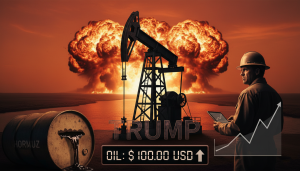
The global oil market currently presents a complex paradox for energy investors, with futures prices showing sensitivity to diplomatic overtures while the physical market screams of imminent supply shortages. Early Tuesday trading saw benchmark crude contracts retreat from recent highs, giving back some of the previous session’s gains as hopeful signals from potential U.S.-Iran negotiations tempered the immediate fear of a significant supply disruption.
As of writing, Brent crude futures registered at $98.08 per barrel, a notable decline of 1.28% for the day. Similarly, West Texas Intermediate (WTI) futures dropped 1.91%, trading around $97.19 per barrel. While these figures indicate a pullback below the critical $100 mark for front-month contracts, the underlying physical market paints a dramatically different and more alarming picture. Data from Monday revealed Forties Blend crude, a key North Sea benchmark, fetching nearly $149 per barrel. This stark divergence between futures optimism and spot market distress underscores the severe tightness already gripping global energy supplies.
Futures React to Hope, Physical Market Confronts Reality
The financial derivatives market, particularly oil futures, continues to exhibit remarkable sensitivity to even the most tenuous signs of geopolitical de-escalation. Prices have fallen in response to diplomatic speculation, even as the United States officially implemented a blockade of the Strait of Hormuz on Monday – a move with profound implications for global crude transit. Former President Trump recently asserted that Iranian negotiators had initiated contact and expressed a desire to finalize a deal, while Iran’s President has publicly stated the nation remains open to discussions within the established framework of international law. Such pronouncements inject a degree of volatility into futures trading, allowing speculative capital to price in the possibility of reduced geopolitical risk premiums.
However, investors must look beyond the immediate headlines impacting futures. The physical oil market is facing an increasingly undeniable predicament. The final cohort of oil tankers that successfully navigated the Strait of Hormuz prior to the recent conflict outbreak are now nearing their respective destinations. This moment represents a crucial inflection point for global supply chains. Once these pre-conflict cargoes are fully absorbed by the market, particularly by refiners in Asia, the scramble for alternative barrels will intensify significantly. This situation is poised to force Asian buyers to aggressively seek supplies from more distant and often more expensive sources within the Atlantic Basin.
Cascading Supply Crunch: From Asia to the Atlantic
The inevitable shift in buying patterns from Asia will trigger a cascading effect across the global energy infrastructure. As major Asian economies begin to pull substantial volumes from the U.S., the North Sea, and various African producing nations, refiners in Europe and the United States will inevitably experience a more acute shortage themselves. The ripple effect of this heightened demand across continents means that even regions traditionally considered well-supplied will soon feel the pinch.
Indications of this impending tightening are already evident in current spot market dynamics. Prompt crude grades are commanding substantial premiums over their respective futures contracts, a clear signal that immediate supply is scarcer and more valuable than deliveries slated for later months. This phenomenon, known as backwardation, serves as a powerful indicator of structural market tightness, suggesting that supply-demand imbalances are not merely speculative but deeply embedded in current trading patterns.
International Response and the Lingering Question for Investors
In response to the escalating tension and tightening supplies, the International Energy Agency (IEA) has affirmed its readiness to release additional strategic petroleum reserves if market conditions warrant such intervention. Concurrently, the IEA has urged member countries to refrain from any actions that could exacerbate the situation, such as hoarding oil or imposing restrictions on exports. These calls highlight the global community’s awareness of the fragile balance within the energy ecosystem and the potential for unilateral actions to destabilize it further.
For now, astute energy traders appear to be navigating a challenging equilibrium, weighing persistent structural tightness in physical supplies against the ephemeral optimism generated by diplomatic rhetoric. While oil futures have seen some downside, the broader U.S. stock market has demonstrated resilience, managing to recoup losses incurred during the initial weeks of heightened geopolitical conflict. The fundamental question for investors in the oil and gas sector remains stark: how long can the market truly subsist on diplomatic hope alone when the physical realities of supply and demand continue to diverge so dramatically?
Investors must remain vigilant, recognizing that the current market environment demands a nuanced understanding of both geopolitical developments and the underlying fundamentals of crude oil supply chains. The divergence between futures prices and physical crude values serves as a critical signal, urging caution against solely relying on short-term price movements influenced by political discourse.