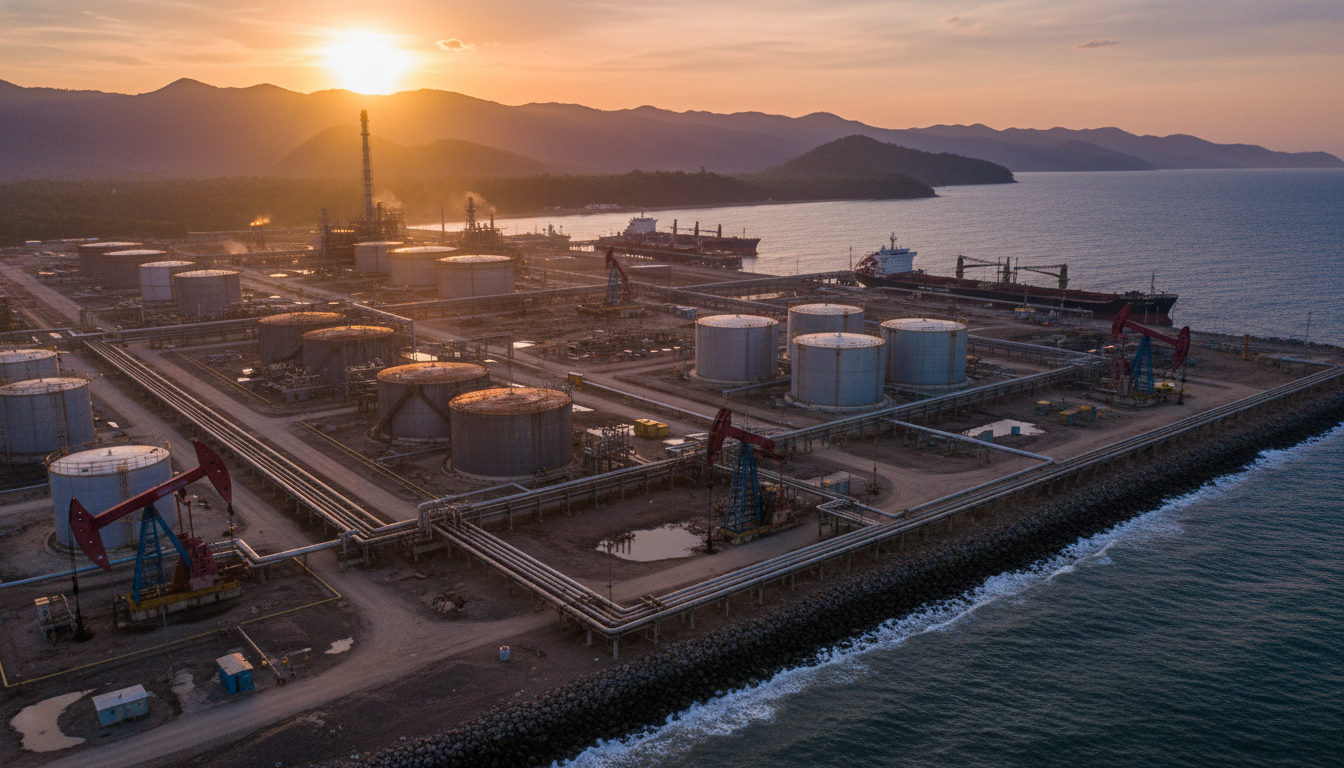
Chevron’s recent strategic maneuver in Venezuela signals a clear and intensified focus on the nation’s vast heavy oil resources, a move that warrants close attention from investors tracking global upstream shifts. By agreeing to an asset swap with Petróleos de Venezuela S.A. (PDVSA), the energy giant is significantly expanding its footprint in the Orinoco Belt, one of the world’s largest accumulations of extra-heavy crude. This transaction is not merely an incremental adjustment; it represents a deliberate recalibration of Chevron’s portfolio, prioritizing long-term heavy oil development while divesting certain offshore gas assets. For shareholders and market watchers, this move underscores a strategic commitment to resource-rich, albeit sometimes challenging, basins, aiming to leverage existing infrastructure and capitalize on future energy demand dynamics. As we dissect the implications, we will consider the immediate market context, the forward-looking potential tied to upcoming energy events, and the broader investor sentiment surrounding crude price trajectories.
Chevron’s Deepening Commitment to Venezuelan Heavy Oil
The core of Chevron’s latest agreement involves a substantial increase in its stake within the Petroindependencia joint venture, raising its interest to a dominant 49% through the acquisition of an additional 13.21%. This move solidifies its position in a key heavy oil producing asset. Furthermore, the company is set to advance development opportunities in the Orinoco Belt through Petropiar, where it already holds a 30% interest. A significant aspect of this expansion is the assignment of rights to the adjacent Ayacucho 8 area, which is strategically proximate to existing Petropiar operations. This geographical synergy is expected to unlock efficiencies and support more streamlined development, a critical factor in the capital-intensive heavy oil sector.
In exchange for these fortified heavy oil positions, Chevron will transfer its interests in several offshore gas assets to PDVSA. This includes operated stakes in Plataforma Deltana Block 21 and Block 32, alongside a non-operated interest in the Petroindependiente joint venture located in western Venezuela. This exchange clearly illustrates Chevron’s strategic intent to streamline its Venezuelan portfolio, concentrating efforts on extra-heavy crude developments within the Orinoco Belt. The company, with over a century of operational history in Venezuela, emphasizes that this agreement reflects a sustained focus on strategic upstream assets, particularly those poised for long-term, high-volume production.
Navigating Market Volatility: Heavy Oil in the Current Climate
Chevron’s decision to double down on heavy oil comes amidst a dynamic and often volatile global crude market. As of today, Brent Crude trades at $95.32, demonstrating a robust 5.47% increase in intraday trading, with a daily range fluctuating between $92.77 and $97.81. This recent uptick, however, follows a significant downward trend over the past two weeks, where Brent shed nearly 20% of its value, dropping from $112.78 on March 30 to $90.38 on April 17. Such market swings highlight the inherent risks and opportunities in the energy sector.
Investing in heavy oil, particularly in basins like the Orinoco Belt, often represents a long-term strategic bet, somewhat insulated from short-term price fluctuations. While heavy crudes typically trade at a discount to lighter benchmarks like Brent and WTI due to higher refining costs, their vast resource base provides long-term supply security. Chevron’s focused investment suggests a belief in the sustained global demand for crude, irrespective of ongoing energy transition narratives. For investors, this move signals Chevron’s confidence in its ability to efficiently produce and market heavy oil, leveraging its established infrastructure and operational expertise to mitigate some of the inherent complexities of such projects.
Geopolitical Landscape and Future Market Signals
Operating in Venezuela inherently involves navigating a complex geopolitical landscape, yet Chevron’s long-standing presence and recent asset swap underscore a calculated risk-reward analysis. This strategic optimization aligns with a broader industry trend where operators are prioritizing developments that can leverage existing infrastructure, improve capital efficiency, and secure long-term resource access in mature basins.
Looking ahead, several key energy events on the horizon could influence the broader market sentiment and, indirectly, the attractiveness of heavy oil investments. The upcoming OPEC+ Joint Ministerial Monitoring Committee (JMMC) Meeting today, April 20, followed by the full OPEC+ Ministerial Meeting on April 25, will be crucial in shaping global supply policy. Any decisions regarding production quotas could significantly impact crude prices and, consequently, the economics of all oil projects, including heavy oil. Furthermore, weekly inventory reports from the API (April 21, April 28) and the EIA (April 22, April 29) will provide vital insights into demand strength and inventory levels, offering clues about the global appetite for various crude types. Chevron’s long-term commitment in Venezuela indicates a strategy that can withstand, or even benefit from, the shifting sands of global supply and demand dynamics, positioning itself for a future where diverse crude sources remain essential.
Addressing Investor Focus: Price Trajectories and Long-Term Value
Our proprietary reader intent data reveals a keen investor focus on the future direction of oil prices, with common queries such as “is WTI going up or down?” and “what do you predict the price of oil per barrel will be by end of 2026?” These questions reflect widespread uncertainty and a desire for clarity in a volatile market. Chevron’s deeper commitment to Venezuelan heavy oil offers an interesting lens through which to consider these concerns.
While short-term price movements are influenced by a multitude of factors, including geopolitical events, inventory reports, and OPEC+ decisions, Chevron’s strategy appears geared towards long-term resource monetization. Heavy oil projects, characterized by their significant upfront capital requirements and extended development cycles, are less about hedging against immediate price swings and more about securing a stable, long-term supply chain. For investors asking about 2026 price predictions, Chevron’s move suggests a belief in the enduring value of crude oil and the strategic importance of diversifying supply sources. Developing the Orinoco Belt offers access to substantial proven reserves, potentially providing a predictable revenue stream for decades. This focused approach may offer a measure of stability for Chevron’s portfolio, irrespective of intermittent market turbulence, appealing to investors seeking long-term value in the energy sector.