In a significant move poised to reshape the landscape of unconventional completions outside North America, Halliburton has secured a multi-billion dollar, multi-year contract with Argentina’s state-owned energy giant, YPF. This monumental agreement positions Halliburton as a dominant force in the Vaca Muerta shale, one of the world’s most promising and rapidly developing unconventional plays. The deal, which includes the deployment of Halliburton’s cutting-edge ZEUS electric fracturing system and OCTIV digital platform, represents a strategic victory for the oilfield services major, cementing its role in driving efficiency and sustainability in a sector increasingly scrutinized for its environmental footprint. For investors, this contract provides a compelling signal of long-term revenue visibility and a testament to the growing global demand for advanced, lower-carbon completion technologies, even as the broader crude market navigates periods of intense volatility.
Halliburton’s Strategic Win Amidst Market Swings
The award of this multi-billion dollar contract to Halliburton, following a competitive bidding process, underscores the company’s robust technological prowess and strategic positioning within the global energy services market. This long-term commitment from YPF, a key operator in the Vaca Muerta, provides a stable, high-value revenue stream for Halliburton. The timing of such a substantial contract is particularly noteworthy given the recent fluctuations in global crude prices. As of today, Brent crude trades at $95.32, marking a robust 5.47% daily increase, while WTI sits at $87.23, up 5.62%. This daily surge stands in stark contrast to the preceding fortnight, where Brent shed nearly 20% of its value, dropping from $112.78 on March 30th to $90.38 on April 17th. This inherent market volatility, which often prompts investors to question the short-term trajectory of WTI and Brent, highlights the intrinsic value of long-term, multi-billion dollar service contracts. Such agreements offer Halliburton a degree of insulation from immediate commodity price swings, ensuring sustained operational activity and revenue generation, making it an attractive prospect for investors seeking stability in an often unpredictable sector.
Electrification and Digitalization: Driving the Next Generation of Frac Operations
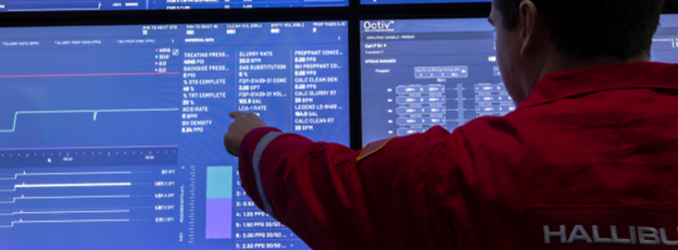
At the core of Halliburton’s Vaca Muerta deal is the deployment of its advanced technology suite, notably the ZEUS electric fracturing system and the OCTIV digital fracturing platform. The ZEUS system represents a significant leap forward, marking its first international application in Argentina. This technology is engineered to enhance operational efficiency while simultaneously reducing emissions intensity compared to conventional diesel-powered fracturing fleets. For investors increasingly focused on ESG (Environmental, Social, and Governance) factors, this commitment to electrification in a major shale play is a powerful signal. It demonstrates Halliburton’s proactive approach to meeting evolving industry standards and operator demands for more sustainable practices. Complementing ZEUS is the OCTIV digital fracturing platform, which integrates automation and real-time data to ensure consistent execution during pumping operations. This combined approach leverages electrification and digital workflows to optimize completions performance and enhance operational control, ultimately leading to lower costs and improved well productivity for YPF. This technological edge is a key differentiator for Halliburton, addressing investor inquiries about how companies are adapting to the dual challenge of energy demand and environmental stewardship.
Vaca Muerta’s Strategic Importance and Argentina’s Upstream Ambitions
The Vaca Muerta shale formation is unequivocally one of the most critical growth areas for Argentina’s upstream sector, frequently cited as one of the largest shale developments outside of North America. YPF’s ongoing investment in large-scale unconventional development within this region is aimed at significantly increasing the nation’s oil and gas output, thereby bolstering its energy security and supporting ambitious export capacity goals. Halliburton’s multi-year contract reflects this sustained commitment to scaling operations and adopting advanced completion technologies to improve efficiency, reduce costs, and manage emissions in this expansive shale play. For investors, Vaca Muerta represents a compelling opportunity to participate in a burgeoning non-OPEC supply source with substantial long-term potential. The consistent focus on optimizing development and leveraging cutting-edge solutions, as evidenced by this Halliburton deal, underscores the strategic importance of Vaca Muerta in the global energy supply matrix and its capacity to attract significant capital and technological innovation.
Navigating Future Headwinds and Opportunities for HAL Investors
Looking ahead, Halliburton’s expanded footprint in Vaca Muerta positions the company favorably to capitalize on the sustained growth of unconventional resources globally. However, the investment landscape remains dynamic, influenced by a confluence of geopolitical events, economic indicators, and industry-specific developments. For investors seeking to predict the price of oil per barrel by the end of 2026, or the trajectory of WTI, several upcoming events will offer crucial directional cues. The upcoming OPEC+ Joint Ministerial Monitoring Committee (JMMC) meeting on April 20th, followed by the full OPEC+ Ministerial Meeting on April 25th, will be pivotal in shaping global supply policy, directly impacting crude oil price stability. Furthermore, regular insights from the API Weekly Crude Inventory and EIA Weekly Petroleum Status Reports, scheduled for April 21st, 22nd, 28th, and 29th, will provide critical data on demand and inventory levels. The Baker Hughes Rig Count, due on April 24th and May 1st, will offer a barometer of drilling activity and future production trends. While these events can introduce volatility, Halliburton’s strategy of securing long-term, high-value contracts for advanced services in key growth basins like Vaca Muerta helps to mitigate some of the short-term market noise. This deal enhances Halliburton’s international revenue diversification, strengthens its technology leadership, and positions it as a resilient player capable of delivering value to shareholders regardless of intermittent commodity price fluctuations.