Middle East Volatility Keeps Oil Markets Edgy Ahead of Critical US-Iran Talks
The global energy landscape remains gripped by profound uncertainty as diplomatic efforts intensify to de-escalate tensions in the Middle East. With the crucial Strait of Hormuz effectively bottlenecked and persistent hostilities flaring between Israel and Hezbollah, the fragile ceasefire across the region faces its most significant test. Investors in the oil and gas sector are closely monitoring the high-stakes US-Iran negotiations scheduled for Saturday, understanding that their outcome could dramatically reshape global supply dynamics and crude pricing.
While a broader truce, announced earlier this week, has largely held across most of the Middle East, reports from Kuwait of overnight attacks underscore the precariousness of the situation. The glaring exception to this tentative calm is Lebanon, where an ongoing, parallel campaign by Israel against the Tehran-backed Hezbollah militia continues unabated. This concentrated conflict raises serious questions about the scope of the current ceasefire and its ability to usher in a period of lasting peace and stability vital for energy markets.
The Hormuz Bottleneck: A Global Supply Crisis Deepens
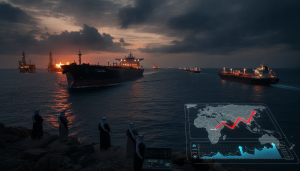
Central to the current geopolitical volatility and its impact on energy markets is the continued effective closure of the Strait of Hormuz. Before the recent conflict, this narrow waterway served as the indispensable transit point for approximately one-fifth of the world’s crude oil and liquefied natural gas (LNG) shipments. Its prolonged obstruction has created a severe chokehold on global fuel supplies over the past six weeks, directly contributing to the upward pressure on international crude benchmarks.
US President Donald Trump has been unequivocal in his condemnation of Iran’s actions regarding the strait. In a recent social media post, he declared, “Iran is doing a very poor job, dishonorable some would say, of allowing Oil to go through the Strait of Hormuz. That is not the agreement we have!” He further warned, “You’ll see Oil start flowing, with or without the help of Iran and, to me, it makes no difference, either way,” while also cautioning against any Iranian attempts to impose transit fees on tankers. Despite the announced truce, ship-tracking data reveals minimal meaningful pickup in traffic through the strategic waterway, with a Russian-flagged supertanker passing late Thursday noted as a rare instance rather than a trend. This ongoing blockage sustains the elevated risk premium in oil prices, with Brent crude trading around $95 a barrel in London on Friday, influencing US stock market fluctuations after a strong seven-day rally as investors await clarity from the peace talks.
Lebanon: A Persistent Regional Flashpoint Threatening Broader Peace
The situation in southern Lebanon remains a critical point of contention, undermining the broader regional ceasefire. Israeli forces have continued striking towns in the area, albeit on a reduced scale compared to a major operation earlier in the week that tragically claimed over 200 lives. In response, Hezbollah has launched drones and rocket salvos towards Israel, resulting in several injured individuals reported by medics in central and southern Israel. This escalating exchange highlights a fundamental disagreement between negotiating parties: Iran asserts that the United States bears responsibility for halting the fighting in Lebanon, where over 1,700 lives have been lost, while American officials maintain that Lebanon was not encompassed within the initial ceasefire accord.
Iranian President Masoud Pezeshkian has labeled the Israeli strikes in Lebanon a “clear violation” of the ceasefire, warning that such actions render the planned peace talks “meaningless.” Conversely, Israeli Prime Minister Benjamin Netanyahu has reiterated that the ongoing attacks in Lebanon fall outside the scope of the US-Iran ceasefire deal. The chief of the general staff for the Israel Defense Forces, Eyal Zamir, affirmed, “The Israel Defense Forces is in a state of war; we are not in a ceasefire on the northern front. We continue to operate here on this front. This is our primary operational focus.” Hezbollah’s Secretary-General Naim Qasem, via Al-Manar TV, declared the group’s “resistance will continue until its last breath,” urging the Lebanese government to cease making “free concessions” to Israel. This militant group, founded in 1982 and inspired by Iran’s Shiite revolution, has evolved into Tehran’s most formidable proxy, expanding its influence across the Middle East and forming a critical node in Iran’s network of allies including Yemen’s Houthi rebels and Hamas in Gaza. The Lebanese government’s previous pledges to disarm Hezbollah have proven unsuccessful, underscoring the deep-seated nature of this conflict.
High-Stakes Diplomacy: The Islamabad Summit
Against this backdrop of regional instability, US and Iranian delegations are preparing to converge in Islamabad on Saturday for direct talks. Vice President JD Vance, leading the US delegation, emphasized that President Trump had provided “clear guidelines” for the negotiations, urging Iran to engage seriously. Vance warned reporters, “As the president of the United States said, if the Iranians are willing to negotiate in good faith, we’re certainly willing to extend the open hand. If they’re going to try to play us, then they’re going to find the negotiating team is not that receptive.”
Despite the prevailing skepticism, President Trump expressed optimism about reaching a deal with Iran, describing the nation’s leaders as “much more reasonable” than their public statements might suggest during an interview with NBC News. However, new Iranian Supreme Leader Mojtaba Khamenei, whose father was killed on the first day of the war, issued a statement via Telegram declaring that Iran “will definitely bring the management of the Strait of Hormuz to a new stage.” While the precise implications of this statement remain unclear, it could refer to long-standing Iranian demands for control over the waterway, a position consistently rejected by the US. Khamenei further reiterated demands for war reparations, a likely nonstarter for US negotiators, suggesting a challenging path ahead for the diplomatic efforts.
Wider Regional Conflict and Energy Infrastructure Damage
The broader Middle East war has exacted a heavy toll over the past six weeks, claiming thousands of lives and inflicting substantial damage on critical energy infrastructure across the oil-rich Persian Gulf. Saudi Arabia, a cornerstone of global oil supply, has reported a loss of over half-a-million barrels a day of its oil output capacity due to Iranian strikes. Specifically, attacks on a pumping station serving the vital East-West Pipeline this week crippled daily throughput by 700,000 barrels, according to the state-run Saudi Press Agency. While the US and Iran reportedly paused most strikes after continued fighting on Wednesday, reports from Kuwait’s Foreign Ministry of fresh attacks by Iran and its proxies were promptly denied by Tehran’s Islamic Revolutionary Guard Corps, which asserted its forces had not launched drones or missiles since the ceasefire began. The human cost of the conflict remains severe, with over 5,500 lives lost regionally, including more than 3,600 in Iran, 1,700 in Lebanon, and significant casualties among Israeli forces, Hezbollah militants, and personnel in Gulf Arab nations and Iraq, alongside 13 American troops killed.
Investor Outlook: Navigating Geopolitical Headwinds in Energy Markets
For oil and gas investors, the current Middle East crisis presents a complex web of risks and opportunities. The immediate and sustained closure of the Strait of Hormuz continues to represent the most significant supply-side threat, capable of triggering sharp spikes in crude prices should diplomatic efforts fail to secure its reopening. The volatile situation in Lebanon, with Israel and Hezbollah deeply entrenched, ensures that geopolitical risk premiums will persist, maintaining a floor under energy commodity valuations. While the upcoming US-Iran talks in Islamabad offer a glimmer of hope for de-escalation, the divergent positions on key issues such as Hormuz management, war reparations, and the scope of the ceasefire—particularly concerning Lebanon—suggest that a comprehensive and swift resolution is far from guaranteed.
Investors must remain vigilant, closely monitoring developments from the Islamabad summit and any changes in the operational status of the Strait of Hormuz. The stability of global oil supply chains and the trajectory of energy prices in the coming weeks will largely hinge on the willingness of all parties to negotiate in good faith and the effectiveness of international efforts to translate a fragile truce into durable peace. Market participants should prepare for continued volatility, with significant price movements possible based on diplomatic breakthroughs or, conversely, a breakdown of talks that could further exacerbate regional tensions and energy supply concerns.