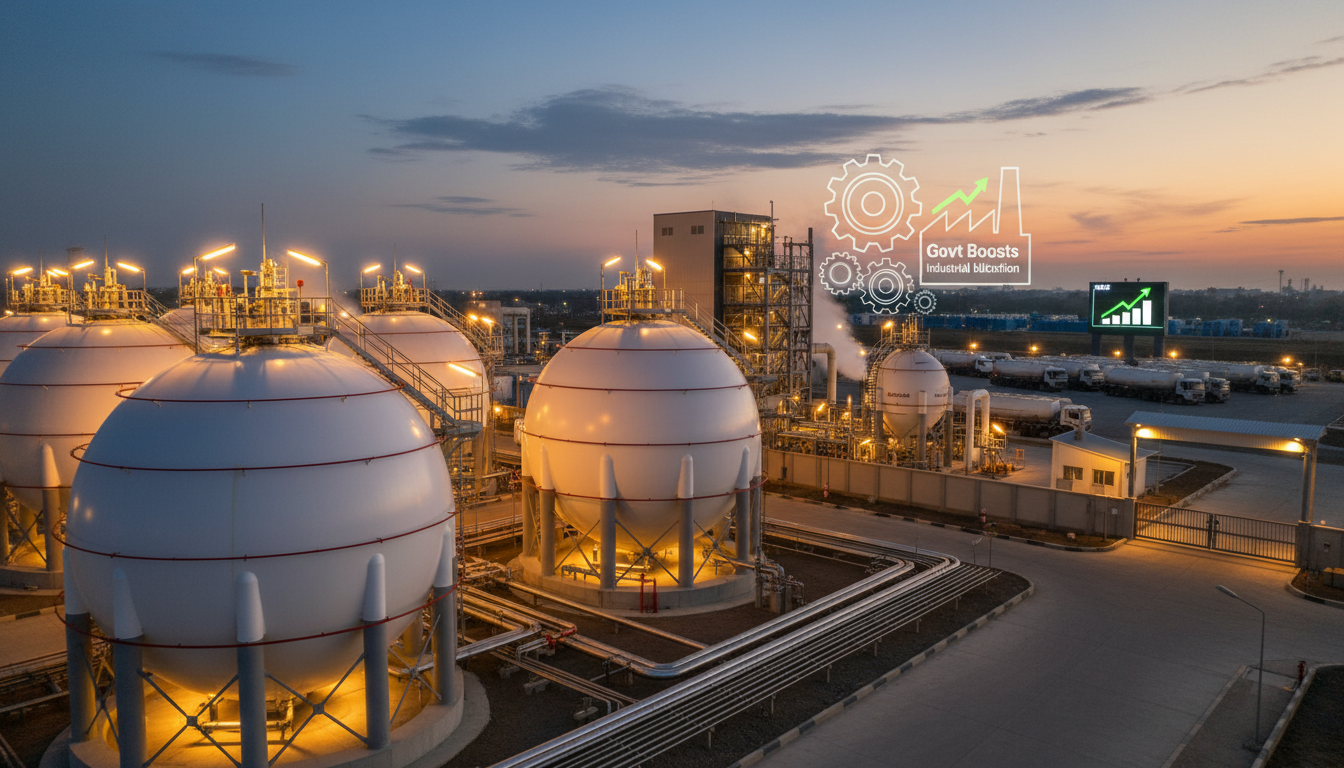
The energy landscape for industrial consumers is undergoing a significant strategic recalibration, presenting both opportunities and challenges for investors closely tracking India’s evolving fuel mix. A recent directive from the Petroleum Secretary, Neeraj Mittal, has expanded the scope of bulk non-domestic LPG allocation to a broader array of industrial sectors. This move, announced on April 8, 2026, aims to bolster industrial growth while subtly guiding the transition towards cleaner energy solutions. For investors, understanding the nuances of this policy shift, its impact on Oil Marketing Companies (OMCs), and the broader energy market dynamics is crucial for identifying long-term value plays.
Expanded LPG Allocation: Fueling Industrial Growth
The government’s decision to widen the eligibility for bulk non-domestic LPG represents a strategic pivot designed to support a diverse set of industrial activities. Sectors now included in this enhanced allocation framework span critical areas such as pharmaceuticals, food processing, polymers, agriculture, packaging, paints, steel, ceramics, glass, foundry, and forging. This expansion acknowledges the varied energy needs across manufacturing and processing industries, providing a more reliable and regulated supply of LPG.
Under the new guidelines, eligible units can receive up to 70% of their pre-March 2026 bulk LPG consumption levels. Importantly, this comes with an overall sectoral cap of 0.2 TMT (thousand metric tons) per day, ensuring a balanced distribution without over-allocating resources. Priority will be given to industries requiring LPG for specialized applications where natural gas is not a viable substitute, highlighting a pragmatic approach to energy policy. Furthermore, while industries are generally encouraged to register with OMCs and apply for Piped Natural Gas (PNG) connections with City Gas Distribution (CGD) companies, a crucial waiver exists for those where LPG is an essential, irreplaceable input in the manufacturing process. This nuanced approach seeks to support industries that genuinely depend on LPG while still promoting a gradual shift towards cleaner fuels where feasible.
Market Dynamics and OMC Investment Horizon
This policy change is poised to significantly impact the demand profile for LPG within the industrial segment, directly benefiting Oil Marketing Companies responsible for its distribution. Increased bulk allocation translates to a more stable and potentially higher volume of sales for OMCs, strengthening their downstream revenue streams. This development occurs against a backdrop of fluctuating global crude prices. As of today, Brent Crude trades at $93.79 per barrel, marking a 0.59% increase within the day’s range of $91.39 to $94.86. This daily uptick comes despite a broader correctional trend, with Brent having declined by approximately 7% from $101.16 on April 1, 2026, to $94.09 on April 21, 2026. Higher crude prices typically translate to higher feedstock costs for LPG, but robust industrial demand under a regulated allocation framework could help OMCs manage profitability through assured volumes.
Investors should closely monitor the financial performance of OMCs with significant LPG infrastructure and market share. The policy’s emphasis on registration and application for PNG connections also suggests a future where OMCs might increasingly play a hybrid role, facilitating both LPG and natural gas transitions. The competitive dynamic between LPG and natural gas will remain critical, with the waiver for specialized applications ensuring LPG’s continued relevance in specific industrial niches. This creates a predictable demand floor for OMCs, mitigating some of the market volatility often seen in the energy sector.
Addressing Investor Questions and Future Outlook
Our proprietary reader intent data reveals a consistent focus on the trajectory of crude prices, with questions like “is WTI going up or down” and “what do you predict the price of oil per barrel will be by end of 2026?” dominating investor queries. While the direct impact of this domestic LPG policy on global crude prices might be marginal, it contributes to the overall demand picture. Increased industrial activity, partly fueled by assured LPG supply, could indirectly support energy demand, albeit with a lag.
Looking ahead, investors should mark their calendars for several key events that will provide further clarity on market direction. The EIA Weekly Petroleum Status Reports, scheduled for April 22nd, April 29th, and May 6th, will offer insights into inventory levels and demand trends. These reports are critical for gauging the health of the broader energy market. Furthermore, the Baker Hughes Rig Count on April 24th and May 1st will indicate future production capacities, while the EIA Short-Term Energy Outlook on May 2nd will provide a macro forecast for global energy markets. Any signs of increased industrial consumption within these reports, potentially spurred by the new LPG allocations, could reinforce a bullish sentiment for downstream energy products.
The strategic intent behind this LPG policy is clear: to ensure energy security for vital industrial sectors while nudging them towards cleaner alternatives where practical. For investors, this creates a nuanced environment. OMCs stand to benefit from stable demand, but their long-term growth will also depend on their ability to adapt to the broader energy transition. Monitoring the implementation of these guidelines, the uptake by industrial units, and the evolving competitive landscape with natural gas will be key to informed investment decisions in the coming quarters. This policy solidifies a segment of energy demand, providing a degree of stability in an otherwise dynamic market.


