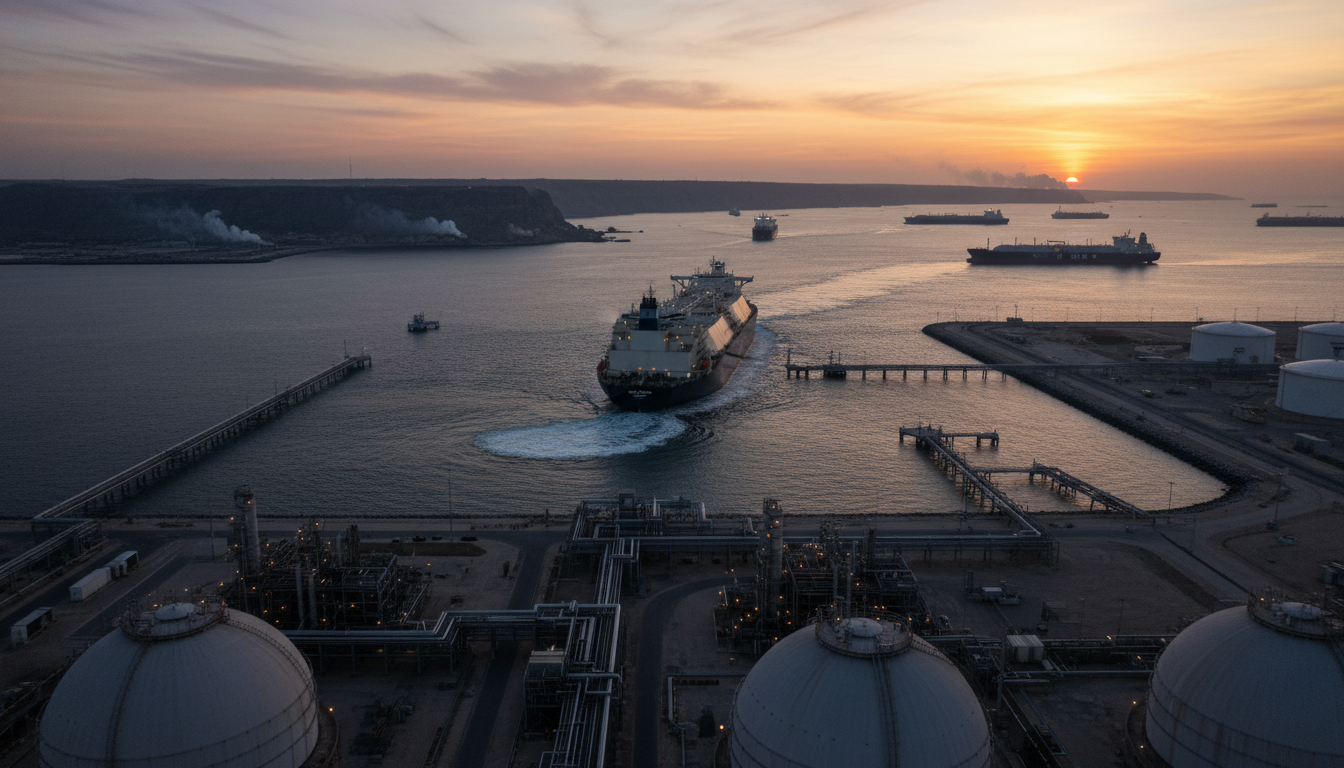
The global energy markets are once again grappling with heightened geopolitical risks, as two liquefied natural gas (LNG) tankers from Qatar were recently compelled to reverse course from an attempt to traverse the Strait of Hormuz. This incident marks a significant development, representing the first thwarted Qatari LNG export endeavor in over a month, underscoring the precarious state of critical maritime chokepoints and their direct implications for international energy supply chains.
The vessels in question, the Al Daayen and the Rasheeda, initiated their transit on Monday, having loaded their valuable cargoes in late February, just prior to the eruption of broader regional hostilities. Ship-tracking intelligence compiled by Bloomberg indicated that these carriers were heading eastward, approaching the Omani side of the Strait. However, at approximately 06:50 UTC, both tankers executed an abrupt U-turn, effectively abandoning their passage. While the Al Daayen still signals China, a key destination and Qatar’s largest LNG purchaser, as its next port of call, the fluid nature of these situations means such declarations can change rapidly, leaving the ultimate destination of these substantial LNG volumes uncertain for now.
Strait of Hormuz: A Bottleneck Under Siege
This forced withdrawal highlights Iran’s increasingly assertive control over the Strait of Hormuz, a maritime corridor through which roughly one-fifth of the world’s total oil consumption and a substantial portion of global LNG flows. Tehran has effectively tightened its grip, permitting only “approved” or “non-hostile” vessels to navigate its waters. This selective access has drastically altered traffic patterns through the vital waterway, creating considerable unease among global energy investors and traders.
The impact on shipping volume is stark and undeniable. Average daily passages through the Strait have plummeted to a mere 5 to 7 ships, a staggering 95% reduction from the pre-conflict average of approximately 130 to 160 vessels. This dramatic decline underscores the severe constriction of a channel vital for global crude oil and natural gas shipments. A significant portion of the traffic that does manage to transit – nearly three-quarters – consists of ships owned by Iran or its affiliated shadow fleet, reinforcing the perception of a heavily controlled environment.
Beyond Iranian vessels, a select few other nations have managed to secure passage. Approximately 10% of recent traffic has been linked to China, a critical economic partner for regional powers, demonstrating the geopolitical leverage at play. Furthermore, specific tankers from India, Pakistan, and Greece have also been granted passage, but only after intricate and often protracted negotiations with Iranian authorities. These exceptions illustrate the high-stakes diplomatic maneuvering required to secure safe passage through this flashpoint.
In a notable development observed last week, the French-owned CMA CGM container ship made headlines as the first Western-linked vessel to successfully navigate the Strait since the regional conflict escalated in late February. This was followed by a Japanese-owned LNG carrier, which also managed to transit the strait last Friday, again after intensive discussions and arrangements with Tehran. While these instances offer a glimmer of hope for some level of commercial continuity, they remain isolated events, underscoring the extraordinary efforts required to bypass the de facto blockade and the inherent risks still pervasive for international shipping.
Qatar’s LNG Export Capacity Severely Impaired
The challenges facing Qatari LNG exports extend beyond the Strait of Hormuz. In March, Iranian missile and drone strikes inflicted substantial damage on Qatar’s Ras Laffan export facility, a cornerstone of its vast natural gas infrastructure. This assault has severely compromised Qatar’s capacity, knocking out an estimated 17% of its total output capabilities. For energy investors, this represents a significant hit to one of the world’s largest LNG producers, creating ripples across the global natural gas market.
In response to the extensive damage, QatarEnergy, the state-owned energy giant, has been forced to declare force majeure on several of its long-term LNG supply contracts. This contractual clause, typically invoked due to unforeseen circumstances beyond a party’s control, effectively suspends obligations, leaving buyers scrambling for alternative supplies. Adding to the long-term uncertainty, initial estimates suggest that repairs to the damaged infrastructure could take up to five years. Such an extended timeline implies a prolonged period of reduced supply from a key global exporter, potentially reshaping international LNG trade flows for half a decade.
Global Market Repercussions: Prices Soar, Supply Chains Strained
The dual impact of the Strait of Hormuz restrictions and the damage to Qatar’s Ras Laffan facility has sent shockwaves through the global natural gas market. With Qatar representing a pivotal supplier, the combined disruptions have effectively halted approximately 20% of the world’s daily LNG flows. This massive reduction in available supply has directly translated into sharply elevated prices for natural gas, particularly in the critical European and Asian markets, where dependence on imported LNG is high. Both regions have seen gas prices climb to multi-year highs, creating inflationary pressures and posing significant energy security challenges for importing nations.
For investors focused on oil and gas, these developments underscore the extreme volatility and geopolitical sensitivity inherent in the energy sector. The reduced availability of Qatari LNG forces buyers to seek alternative, often more expensive, sources, or to increase their reliance on pipeline gas where feasible. This shift can exacerbate existing supply crunches, particularly as the demand for cleaner-burning natural gas continues to grow globally. The long-term repair estimates for Ras Laffan suggest that the market impact of reduced Qatari output is not a short-term blip but a sustained alteration to the global LNG supply landscape.
As investors navigate these turbulent waters, monitoring developments in the Strait of Hormuz and the pace of repairs at Ras Laffan remains paramount. The ongoing geopolitical tensions in the Middle East continue to hold sway over international energy prices and supply stability, making diligent risk assessment and strategic positioning crucial for portfolio protection and growth in the dynamic oil and gas sector.


