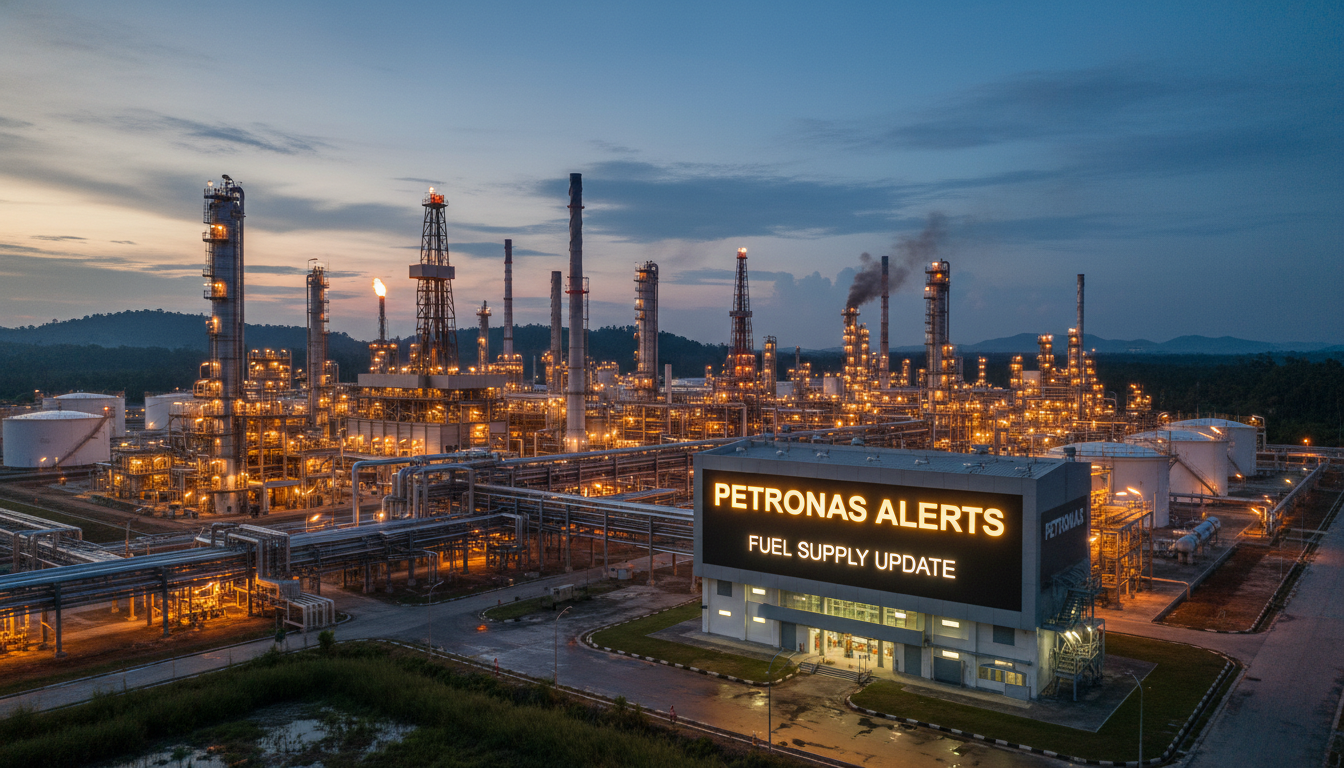
Malaysia’s Energy Crossroads: Navigating Geopolitical Storms and Domestic Imperatives
Malaysia, a key player in Southeast Asia’s energy landscape, finds itself at a critical juncture, facing significant headwinds to its national fuel supply security. The nation’s energy giant, Petroliam Nasional Bhd (Petronas), has issued a clear warning: the repercussions of escalating geopolitical tensions in the Middle East are unavoidable, even as the company diligently monitors domestic supplies. For investors, this scenario presents a complex interplay of international risk, local demand dynamics, and strategic government intervention, necessitating a nuanced understanding of Malaysia’s energy resilience and Petronas’ pivotal role.
Global Volatility and Malaysia’s Strategic Exposure
The global energy market remains highly sensitive to geopolitical flashpoints, and Malaysia is not immune. A substantial 40 percent of Malaysia’s crude oil requirements transit through the Strait of Hormuz, a critical maritime chokepoint whose stability directly impacts the nation’s energy imports and exports. This vulnerability has been underscored by recent market movements. As of today, Brent crude trades at $94.46 per barrel, reflecting a 1.31% gain within the day’s range of $91.39 to $94.86. Similarly, WTI crude sits at $90.71, up 1.16%. While these figures show a daily uptick, they arrive in the context of a broader consolidation trend; over the past two weeks, Brent crude shed approximately $7, or 7%, from its April 1st peak of $101.16. This recent price volatility, coupled with a persistent increase in global shipping costs, insurance premiums, and logistics expenses, directly translates into a more challenging operational environment for Malaysia’s energy sector. Investors must factor in these elevated risks, recognizing that sustained geopolitical instability can erode profit margins and introduce unpredictable supply chain disruptions for companies operating in the region.
Domestic Demand, Subsidies, and Investor Scrutiny
Domestically, Malaysia grapples with a structural imbalance: national demand for refined petroleum products, particularly petrol and diesel, consistently outstrips local production capacity. Petronas, through its integrated value chain and extensive subsidiary network, plays a crucial role in bridging this supply gap, maintaining a significant market share of nearly 50%, a position it aims to hold until at least May 2026. This highlights the robust and consistent demand fundamentals within Malaysia’s downstream sector. However, the affordability of fuel in Malaysia, ranking among the lowest in the Asia-Pacific region, comes at a substantial fiscal cost due to extensive government subsidies. This financial commitment is a focal point for financial analysts and investors. We observe a clear signal from our reader intent data that investors are keenly assessing the sustainability of such fiscal policies, with frequent queries circling around the predicted price trajectory of oil by the end of 2026 and the short-term direction of benchmarks like WTI crude. These questions underscore a broader concern regarding the long-term financial implications of sustained subsidies in a volatile crude price environment. Petronas has proactively urged both industrial consumers and the public to adopt more efficient energy consumption habits and cautioned against panic buying or hoarding, emphasizing that such actions would only exacerbate supply challenges. The company’s primary commitment remains ensuring a reliable and continuous fuel supply for Malaysia’s own needs, prioritizing national energy security above all.
Upstream Performance and Future Catalysts for Growth
Malaysia’s upstream sector presents a mixed but generally robust picture. In 2025, the nation’s natural gas production reached 2,943.8 billion cubic feet. However, this figure represented a 3% decline from the previous year’s output in 2024, signaling areas where strategic investment and operational optimization are critical. For investors, this decline underscores the importance of monitoring future exploration and production (E&P) activities. Key upcoming energy events will provide crucial insights into the broader market conditions influencing Petronas’s upstream strategy. The EIA Weekly Petroleum Status Reports, scheduled for April 22nd, April 29th, and May 6th, will offer essential data on U.S. crude oil and product inventories, influencing global pricing and supply perceptions. Similarly, the Baker Hughes Rig Counts on April 24th and May 1st will indicate North American drilling activity, a bellwether for future supply. Most importantly, the EIA Short-Term Energy Outlook on May 2nd will deliver critical forecasts on global supply, demand, and prices, directly impacting Petronas’s long-term capital expenditure plans and potential for reversing the recent gas production decline. These forward-looking data points will be instrumental in shaping investor sentiment towards Malaysia’s upstream potential and Petronas’s ability to drive future growth in a competitive global landscape.
Investment Outlook: Navigating Risk and Opportunity
For discerning investors, Malaysia’s energy sector, spearheaded by Petronas, offers a compelling yet challenging proposition. The inherent geopolitical risks associated with critical chokepoints and the domestic imperative of managing fuel subsidies against a backdrop of rising global costs demand careful consideration. However, Petronas’s integrated value chain and steadfast commitment to national energy security provide a strong foundational resilience. The consistent domestic demand for refined products, even with supply-side gaps, indicates a stable market. Investors should closely track Petronas’s strategic responses to global price volatility, its long-term E&P investments, particularly following the recent gas production dip, and the government’s evolving stance on fuel subsidies. The confluence of global market signals, policy decisions, and Petronas’s operational agility will ultimately dictate the trajectory of Malaysia’s energy security and the attractiveness of its energy assets in the coming years. Prudent investors will seek to understand these dynamics, identifying opportunities in companies demonstrating strategic foresight and robust operational execution in this intricate environment.


