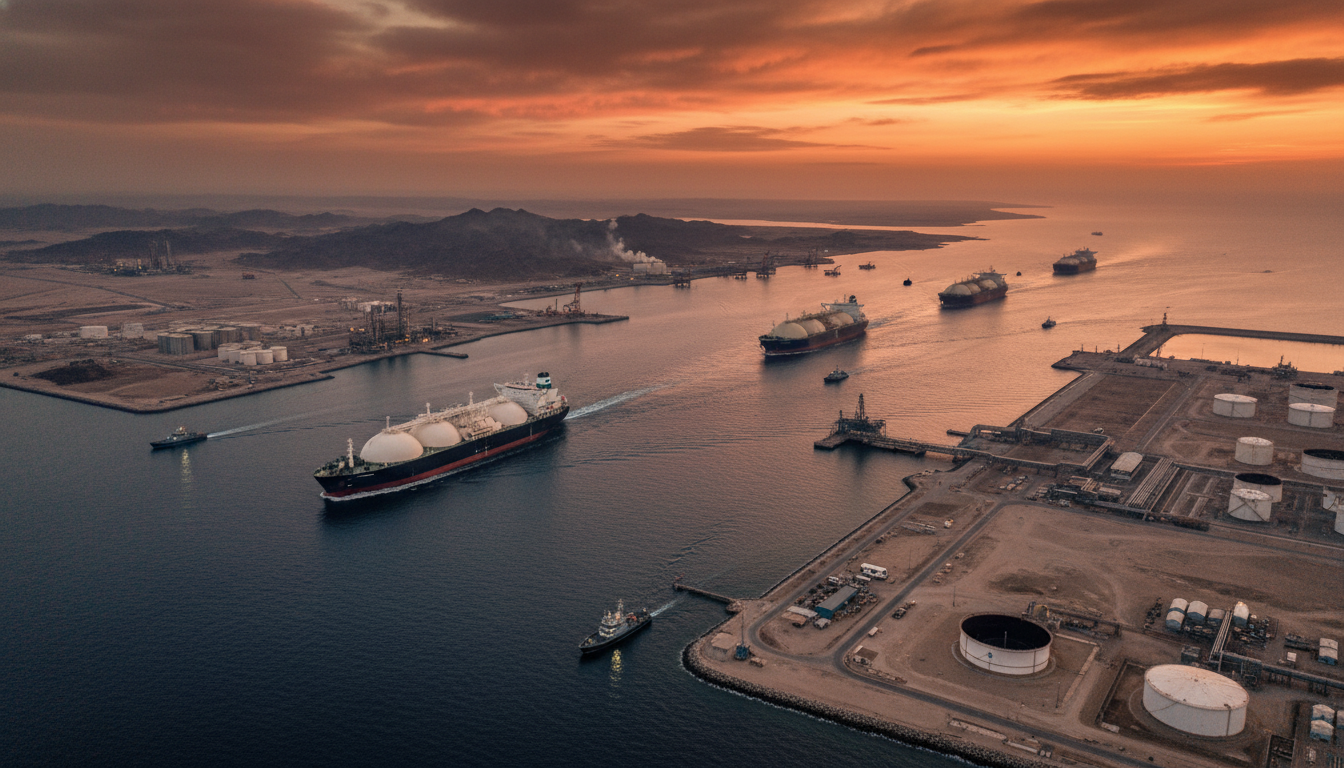
Qatar LNG Tankers Near Hormuz: A Critical Test for Global Energy Flows
Global energy markets are closely monitoring two Qatari liquefied natural gas (LNG) tankers, the Al Daayen and the Rasheeda, as they reportedly navigate towards the critical Strait of Hormuz. This eastward movement from the Persian Gulf could herald the first direct energy exports from the region to international buyers since a prolonged conflict effectively halted commercial maritime traffic through the vital chokepoint. The potential reopening of this conduit carries significant implications for global LNG supply, price stability, and the geopolitical landscape of energy security, factors keenly observed by energy investors worldwide.
Geopolitical Blockade and Market Impact
Both vessels, having loaded their valuable LNG cargoes from Qatar’s advanced export facilities in late February, had been observed idling within the Gulf, a testament to the escalating regional conflict. The de-facto closure of the Strait of Hormuz to commercial energy traffic has had profound consequences for global markets, throttling approximately one-fifth of the world’s total LNG supply. Ship-tracking data indicates the Al Daayen is signaling China, a pivotal market for Qatari LNG, underscoring the potential for a return to normalcy for key trade routes. However, shrewd investors understand the inherent fluidity of maritime declarations; listed destinations can change without notice, making real-time analysis crucial for assessing market movements.
The strategic waterway, nestled between Iran and the Arabian Peninsula, has remained largely inaccessible for loaded energy carriers since the onset of US and Israeli military actions against Iran in late February. This military posture effectively sealed off a crucial artery for global energy flow. Tehran’s response has been to assert control, permitting passage primarily to its own vessels or those explicitly sanctioned by the Iranian authorities. While a single, unladen tanker reportedly transited the strait over the past weekend, the broader blockade has maintained immense pressure on global shipping economics and energy commodity prices, creating a premium driven by supply uncertainty.
Qatar’s Pivotal Role and Operational Headwinds
For Qatar, a global titan in LNG exports, the prospect of its tankers traversing Hormuz represents a critical juncture. Last year, the nation supplied nearly a fifth of the world’s LNG, cementing its indispensable role in the global energy matrix. However, the operational continuity of this giant has faced severe disruptions. The country’s Ras Laffan export plant, the world’s largest LNG facility and operated by QatarEnergy, has reportedly endured a shutdown exceeding a month due to Iranian attacks. This unprecedented cessation has placed immense strain on Qatar’s ability to fulfill its global commitments and leverage its extensive LNG production capacity.
The successful passage of the Al Daayen and Rasheeda would not only clear existing loaded shipments that have been waiting but could also pave the way for a more consistent offloading of fuel from storage, easing immediate supply pressures. This operational flexibility is paramount for Qatar to reaffirm its reliability as a supplier and mitigate the financial impact of sustained export limitations. The market will be closely watching for any official statements from QatarEnergy, as their operational status directly impacts the global LNG balance.
Navigating Complexities: Alternative Routes and Tracking Challenges
In the interim, Qatar has managed to deliver two LNG shipments to Kuwait in recent weeks, as per specialized ship-tracking analytics. These deliveries, however, likely originated from Qatar’s domestic storage tanks, bypassing the need to navigate the perilous Strait of Hormuz. While providing a limited measure of operational flexibility, this alternative underscores the severe constraints imposed by the Hormuz closure on Qatar’s broader export strategy. Investors should also note the inherent challenges in precise vessel tracking around the Persian Gulf. Electronic interference can disrupt ship signals, and the intentional disabling of transponders by pilots in high-risk zones is a recognized practice, adding a layer of uncertainty to real-time maritime intelligence and demanding a cautious approach to market speculation.
Shifting Sands of Diplomacy and Investor Outlook
Recent developments suggest a subtle, yet significant, shift in Tehran’s policy regarding maritime transit. In a move observed by global intelligence, Iran has reportedly granted passage to vessels associated with nations considered close to the United States, including those from France and Japan. This could signal a cautious de-escalation or a tactical concession, potentially opening a narrow window for other non-Iranian affiliated energy vessels, including Qatar-linked carriers, to resume transit. The potential for a sustained, albeit fragile, reopening of the Strait of Hormuz would be a powerful catalyst for stabilizing global LNG markets.
For energy investors, this situation presents a complex calculus of geopolitical risk, supply chain resilience, and commodity price volatility. A successful, albeit gradual, return to regular shipping lanes through Hormuz could alleviate the energy premium currently embedded in global LNG prices, potentially impacting the profitability outlook for producers, shippers, and major utility companies reliant on Qatari gas. Conversely, any renewed escalation or closure would reintroduce severe market tightness and price spikes, demanding swift reevaluation of investment strategies. As of now, market participants keenly await official confirmation regarding the transits of the Al Daayen and Rasheeda, understanding that their journey represents more than just two shipments; it symbolizes a potential turning point for global energy flows and a critical test for energy security in the volatile Middle East.


