Investors across the globe find themselves at a critical juncture, balancing the potential for a swift resolution to the escalating geopolitical conflict against the significant risk of further escalation. This precarious situation could send crude oil prices and bond yields dramatically higher, as market participants navigate a holiday-shortened trading week fraught with uncertainty.
High Stakes in the Persian Gulf
The geopolitical landscape grew more tense following a definitive ultimatum issued by President Donald Trump. On Sunday, he sternly warned Iran that failure to fully reopen the Strait of Hormuz by Tuesday, 8 p.m. ET, would plunge the nation into “Hell,” marking what he termed “Power Plant Day, and Bridge Day, all wrapped up in one.” This aggressive stance, delivered with strong language, underscores the urgency of the situation.
However, adding to market confusion, President Trump also expressed optimism in a Sunday interview, suggesting a “good chance” for a peace agreement to be finalized by Monday. These contradictory signals have compelled investors to position for two dramatically different potential outcomes in the days ahead.
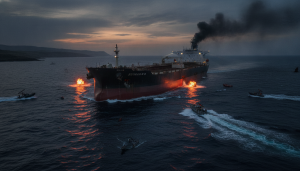
Iran, for its part, has vehemently rejected the latest threats. Tehran maintains that the crucial waterway, vital for global energy transit, will only be fully accessible once the Islamic Republic receives compensation for war-related damages. Over the weekend, Iranian forces continued strikes across the Gulf region, notably targeting Kuwait’s oil headquarters, signaling an unwavering position.
“Financial markets are currently on a knife-edge, as the clock ticks down, presenting a binary choice: either a truce or an escalation,” observed Rob Subbaraman, head of global macro research at Nomura. Subbaraman noted that the President’s intense rhetoric nevertheless indicated a strong desire within the White House to bring the conflict to an end, prompting investors to actively “hedge against the risk of escalation.”
The President’s communication strategy has seen him oscillate between praising ongoing discussions with Iran as productive and signaling an imminent peace deal, to threatening intensified military action. This consistent pattern of extending deadlines for the Strait of Hormuz’s reopening has fueled significant market volatility, leading to erratic oil trading sessions.
Despite the prevailing geopolitical risks, the S&P 500 Index managed to gain 3.4% last week, marking its strongest weekly performance since November. This rebound suggests that some investors capitalized on price dips, anticipating a diplomatic breakthrough. Conversely, the Cboe Volatility Index (VIX), often referred to as the market’s ‘fear gauge,’ surged from pre-war levels below 20 to approximately 24 last week, highlighting the heightened anxiety among market participants.
“President Trump’s escalatory tone over the weekend aligns perfectly with his established playbook: it’s headline-driven, inherently unpredictable, and engineered to apply maximum pressure rapidly,” commented Mohit Mirpuri, an equity fund manager at SGMC Capital. Mirpuri advised that “investors will need to acclimate to this particular policymaking style for the foreseeable future during his administration.”
Stagflationary Pressures Mount as Oil Prices Soar
The month-long conflict, initiated on February 28, combined with the effective blockade of the Strait of Hormuz, now poses an existential threat of plunging the global economy into one of the most severe energy crises in history. Even a diplomatic resolution, experts warn, might not offer immediate relief to energy markets.
Brent crude prices surged to $109.77 per barrel on Monday, representing an approximate 50% increase since the conflict began. Similarly, U.S. West Texas Intermediate (WTI) crude experienced an even sharper rally, soaring 66% to trade at $111.2 per barrel as of 11 p.m. ET. These dramatic price jumps underscore the critical supply disruptions.
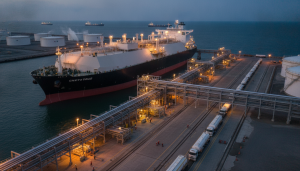
While a marginal uptick in shipping activity has been noted recently, traffic through the Strait of Hormuz remains drastically curtailed, standing at 95% below pre-war levels. Before the conflict, nearly a quarter of the world’s seaborne crude oil and a fifth of its liquefied natural gas (LNG) transited through this vital choke point. The sustained disruption here directly translates into higher energy costs globally, impacting industries and consumers alike.
“Even if the Strait of Hormuz were to fully reopen, the damage inflicted upon global confidence and established supply chains is already substantial; conditions will not simply revert to normal instantaneously,” Mirpuri explained. “Markets are likely to remain highly sensitive to headlines, experiencing sharp swings in both directions as narratives continue to evolve.”
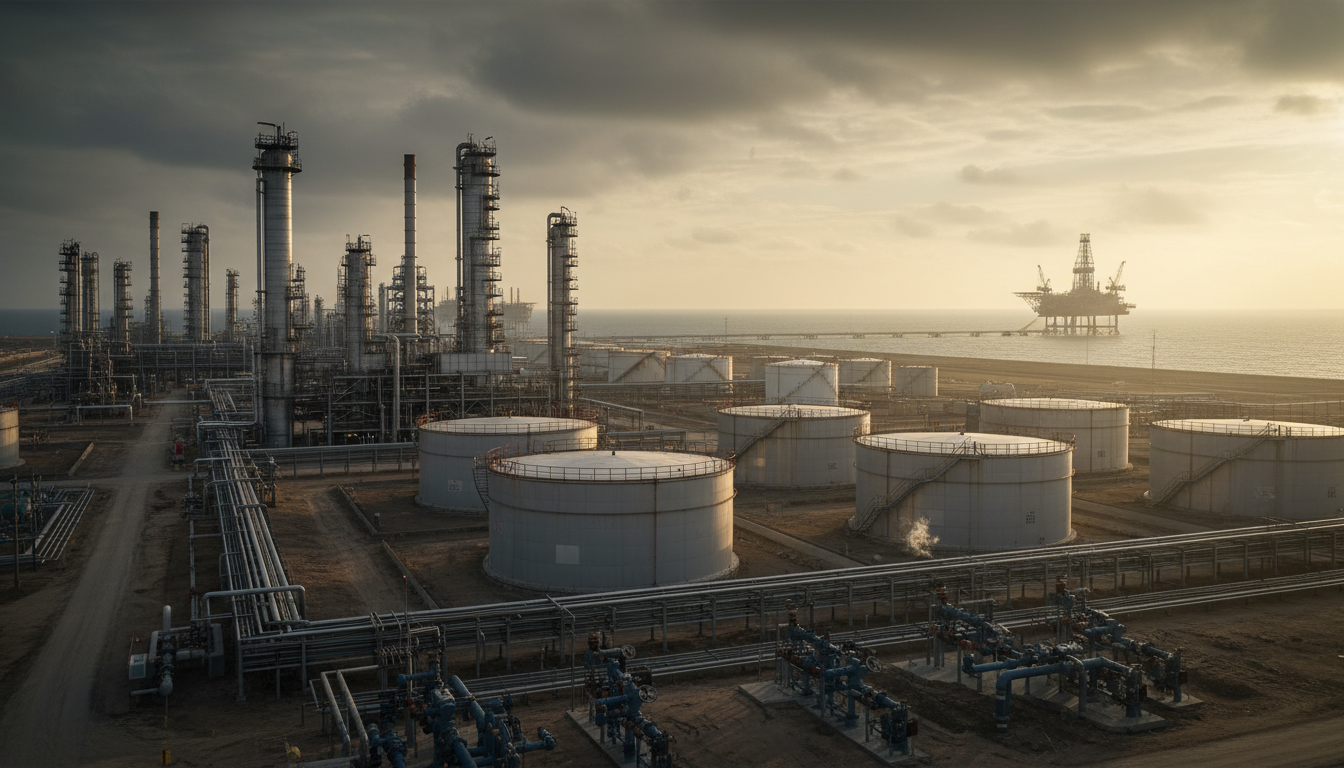
The decision by OPEC+ on Sunday to increase production quotas by 206,000 barrels per day for May is seen as largely insufficient to meaningfully bolster global oil supplies. The ongoing conflict has severely constrained production and shipment capabilities from some of the world’s largest crude producers, rendering the incremental OPEC+ output relatively negligible in addressing the deficit.
Subbaraman further cautioned that the war has “persisted long enough to trigger serious inflationary spikes across the globe.” He warned, “Should the conflict escalate from its current state, the inflationary shock could rapidly evolve into a significant growth shock, characterized by demand destruction and outright stagflation, a scenario where inflation rises while economic growth stalls.”
Bond Yields: An Underestimated Market Risk
Beyond the immediate focus on crude oil, the fixed-income market is quietly undergoing a significant repricing of the global inflation outlook. The 10-year Treasury yield, a key benchmark for borrowing costs, climbed to 4.362% on Monday, up from 3.962% before the conflict erupted. This rise pushes yields close to their highest levels since mid-2025, as investors recalibrate their expectations for interest rate cuts by the Federal Reserve this year, anticipating a more hawkish stance in response to persistent inflation.
“One of the more significant, yet often underappreciated, risks is the pronounced movement in government bond yields,” stated Mirpuri. He emphasized, “If this geopolitical shock translates into sustained inflation expectations, yields could continue their upward trajectory, effectively tightening financial conditions at a time when market stability is already fragile.”
Veteran Wall Street strategist Ed Yardeni pointed out that fixed-income markets have been actively repricing government notes to reflect a rapidly deteriorating inflation forecast. He observed that “bond vigilantes are now taking matters into their own hands, exerting pressure to tighten credit conditions.” Yardeni issued a stark warning: “We cannot now dismiss the possibility of a bear market and even a recession. The ultimate outcome hinges entirely on the duration of the Strait’s closure,” highlighting the deepening economic pain from disrupted global energy flows.
Navigating Headline-Driven Volatility
As investors worldwide anxiously await Tuesday’s deadline, markets are poised for sustained high volatility. Every signal emanating from Washington and Tehran will be meticulously scrutinized and rapidly reflected in intraday trading movements.
On Monday, Asian markets showed mixed reactions. Japan and South Korea saw gains following an Axios report suggesting discussions between the U.S., Iran, and regional mediators regarding a potential 45-day ceasefire, a move that could pave the way for a permanent end to the conflict. However, the report also indicated slim chances of reaching a partial agreement before the imminent deadline. Conversely, Indian benchmark indexes trended lower, reflecting diverse regional interpretations of the complex geopolitical situation.
“We are undeniably in an event-driven market where headline risk exerts dominant influence over intraday price action, necessitating investor positioning that accounts for binary outcomes,” explained Hiroki Shimazu, chief strategist at MCP Asset Management. Shimazu anticipates that both sides will likely lean towards a de-escalation, possibly brokered by Oman, manifesting as “a quiet reduction in strike tempo” rather than a definitive, clean resolution. He suggested that “we are entering a protracted stalemate phase instead of nearing a clear-cut resolution,” forecasting an extended period of market volatility in the coming weeks.
Beyond the geopolitical front, investors will closely monitor a series of key economic data releases from the U.S. this week. Of particular importance is Thursday’s release of the February Personal Consumption Expenditures (PCE) index, the Federal Reserve’s preferred measure of inflation. This data will offer crucial insights into whether the ongoing oil shock is translating into broader price pressures within the world’s largest economy, impacting the Fed’s monetary policy outlook.
Spot gold, which has depreciated approximately 12% since the war’s onset to trade at $4,672.03 per ounce, faces conflicting pressures. While geopolitical uncertainty typically boosts safe-haven demand, gold’s appeal is currently being eroded by a strengthening U.S. dollar and rising Treasury yields. A stronger dollar makes the dollar-denominated bullion more expensive for holders of other currencies, while higher yields increase the opportunity cost of holding the non-yielding metal.
“Near-term uncertainty remains exceptionally high, and for most investors, the current strategy is simply to wait and observe,” concluded Chetan Seth, APAC equity strategist at Nomura, encapsulating the prevailing sentiment across global markets.