

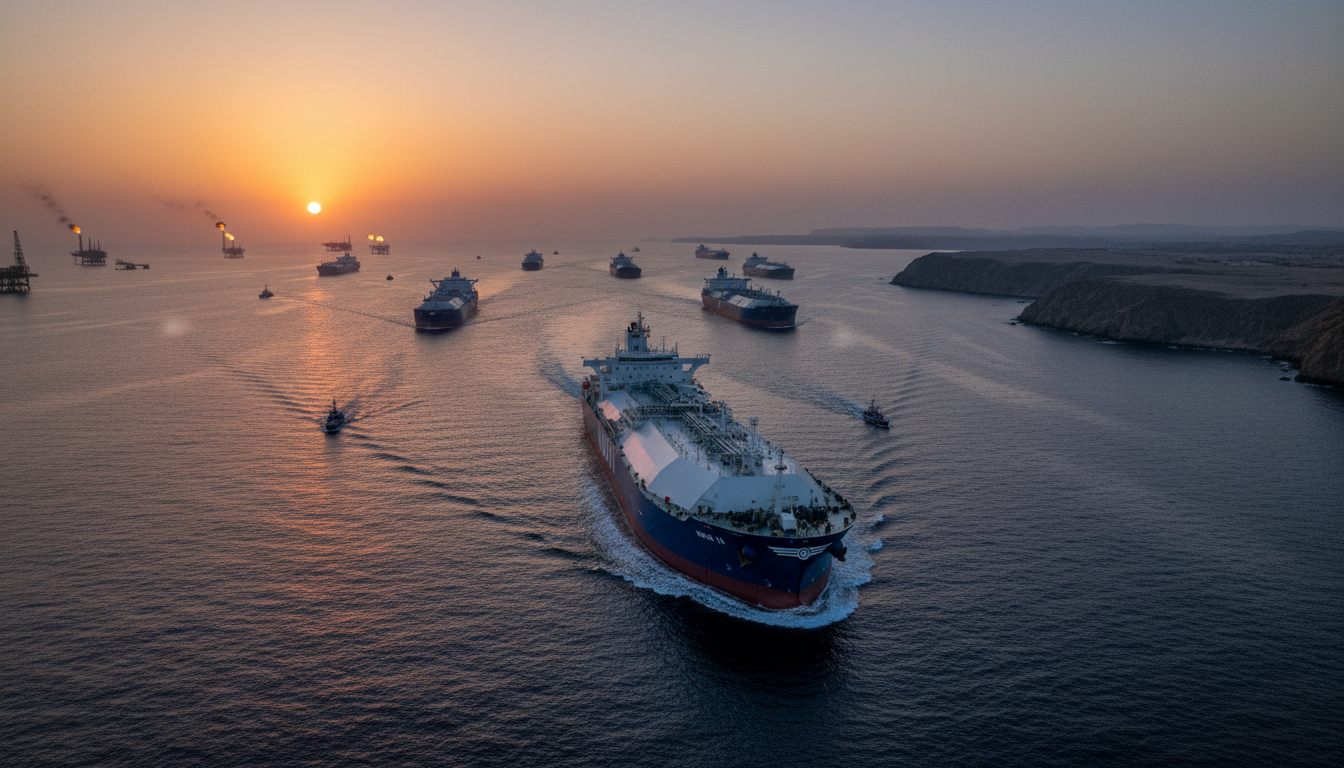
The intricate ballet of global energy trade through the Middle East continues to demand close scrutiny from investors, with recent developments underscoring persistent geopolitical vulnerabilities and evolving commercial dynamics. The crucial Strait of Hormuz, a choke point for a significant portion of the world’s oil and gas flows, remains a focal point as shipping traffic navigates regional tensions.
On the maritime front, India’s energy security demonstrated resilience amidst the volatile West Asian landscape. A seventh India-flagged LPG tanker, the Green Sanvi, successfully traversed the Strait of Hormuz, marking a notable achievement in maintaining vital energy supplies. This vessel follows six other LPG carriers that have already completed their journey through the Strait and reached Indian ports since the onset of intensified regional conflicts. This consistent flow of LPG is critical for India’s burgeoning energy demand, directly impacting industrial operations and household consumption across the subcontinent.
Despite these successes, the broader picture reveals ongoing challenges. Currently, seventeen Indian-flagged vessels remain positioned west of the Strait of Hormuz, a testament to the complex logistical considerations and potential delays inherent in the region. Among these are two additional LPG carriers, the Green Asha and the Jag Vikram, both fully loaded and anticipated to commence their transit towards India in the near future. Industry insiders suggest these ships are meticulously following directives from the Indian Navy, awaiting precise instructions for safe passage through the strategic waterway. This coordinated approach highlights the increasing importance of maritime security protocols for protecting energy assets in conflict-prone areas, a key factor for investors assessing supply chain risk.
Iranian Crude Flows Signal Shifting Financial Landscape
Beyond the immediate concerns of maritime passage, the financial architecture of global oil trade is experiencing significant shifts, particularly concerning Iranian crude. A recent, high-profile incident involving the Eswatini-flagged crude tanker Ping Shun illustrates this evolving environment. The vessel, reportedly carrying approximately 600,000 barrels of Iranian crude, abruptly altered its destination mid-voyage from India to China.
Initially signaling its course for the Vadinar facility at Deendayal Port in Kandla, Gujarat, the tanker’s automatic identification transponder (AIS) data now indicates Dongying, China, as its revised destination. This potential redirection is more than a mere logistical change; it signals deeper tremors within the financing and payment mechanisms governing international crude oil transactions. According to Sumit Ritolia, lead analyst at global analytics firm Kpler, such in-transit destination switches, while not entirely unprecedented for Iranian crude, are increasingly linked to commercial terms rather than purely operational factors.
“The shift appears primarily payment-related,” Ritolia observed. “We are seeing sellers tighten their terms considerably, moving away from the more traditional 30-60 day credit windows towards demanding upfront or near-term settlement.” This strategic adjustment by sellers highlights growing sensitivity to financial risk and counterparty stability, especially when dealing with commodities from jurisdictions under international scrutiny. For investors, this trend suggests a potential increase in transaction costs and a need for greater financial transparency in certain segments of the crude market.
Had the Ping Shun successfully delivered its cargo to Vadinar, it would have marked the first shipment of Iranian crude to India in six years, a significant development that would have redefined regional crude supply dynamics. However, the current rerouting underscores how commercial viability and payment security are now as critical as the physical logistics in determining the flow of Iranian crude to markets outside of China. Experts note that, should the underlying payment issues be satisfactorily resolved, there remains a possibility that the cargo could still ultimately find its way to an Indian refinery, emphasizing the fluid nature of these arrangements.
Investment Implications Amidst Geopolitical & Commercial Flux
These recent events offer several key takeaways for investors in the oil and gas sector. Firstly, the consistent, albeit cautious, transit of LPG tankers through the Strait of Hormuz reinforces the importance of maritime security for nations like India, which are heavily reliant on imported energy. Investors should factor in geopolitical risk premiums and potential shipping insurance hikes when evaluating the profitability of supply chains originating from or passing through the Middle East.
Secondly, the rerouting of the Iranian crude shipment vividly illustrates the increasing complexity of commodity trading under sanction regimes. The move away from extended credit terms towards more immediate settlement mechanisms reflects a broader tightening of financial conditions and heightened risk aversion among crude suppliers and intermediaries. This trend could impact crude pricing, trading liquidity, and the competitive landscape for refineries in regions like India, which seek diversified supply sources.
Finally, the interplay between India and China as major energy consumers, and their respective approaches to sourcing crude, particularly from producers facing sanctions, remains a critical area of observation. China’s role as a consistent buyer of Iranian crude, often under specific commercial arrangements, contrasts with the more sporadic nature of India’s engagements, which are frequently influenced by geopolitical considerations and the need for compliance with international financial frameworks. Understanding these nuanced bilateral relationships and evolving payment dynamics is essential for forecasting global crude oil flows and assessing investment opportunities in both upstream and downstream sectors.
As global energy markets continue to navigate geopolitical flashpoints and a dynamic financial landscape, vigilance over shipping lanes and the fine print of commercial contracts will be paramount for astute investors seeking to capitalize on, or mitigate risks within, the world’s most vital commodity trade.
