

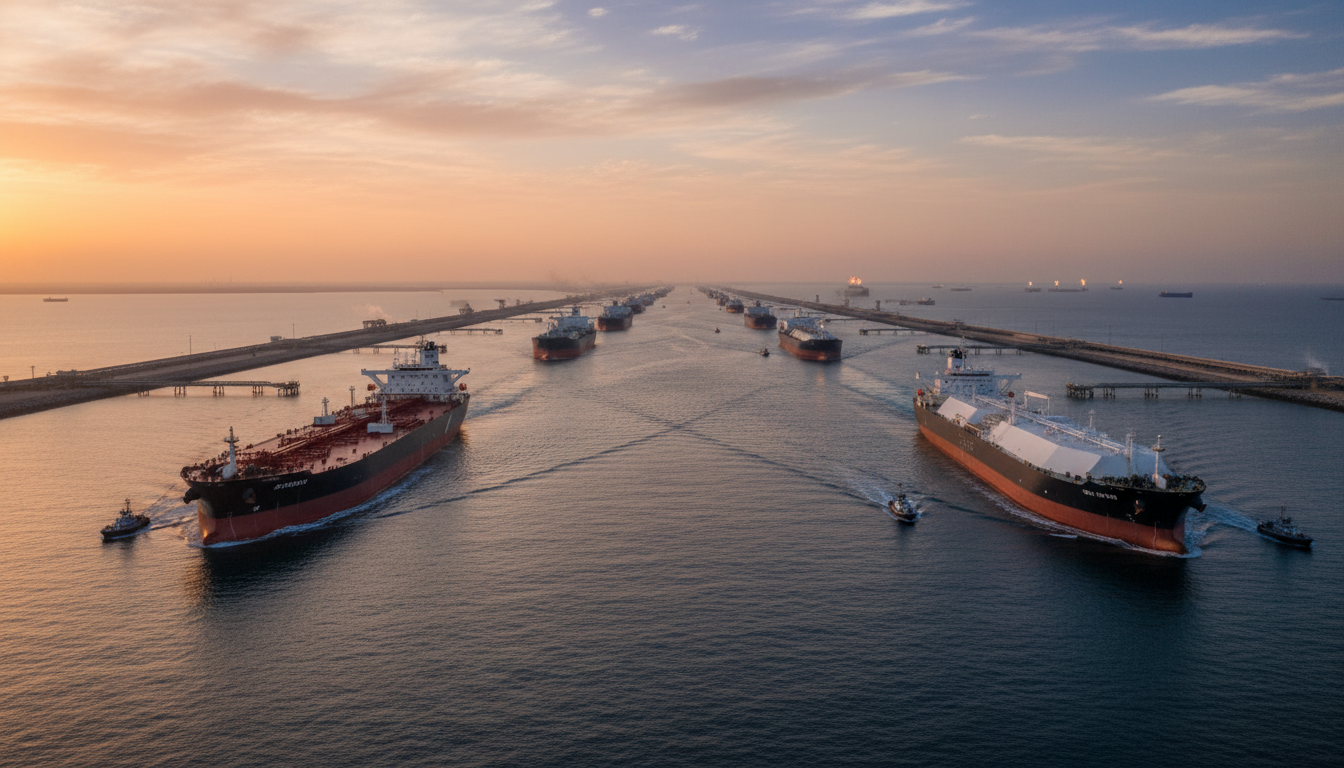
The global energy market breathes a collective, albeit cautious, sigh of relief as critical maritime traffic tentatively resumes through the Strait of Hormuz. Following a period of heightened geopolitical tension and significant disruption, several vessels have successfully navigated the vital waterway since Thursday, signaling a potential, albeit fragile, de-escalation in the region. This development offers a crucial indicator for investors closely monitoring the stability of global oil and liquefied natural gas (LNG) supply chains, which are inherently vulnerable to Middle East tensions.
Resuming Critical Flows: A Glimmer of Stability for Energy Markets
Shipping data confirms the successful transit of three tankers operated by Oman Shipping Management, a French-owned container ship, and a Japanese-owned gas carrier. These movements mark a significant shift after Iran’s earlier policy to restrict passage following late February airstrikes by the United States and Israel against Iranian targets. The initial response from Tehran had seen the Strait, a conduit for approximately one-fifth of the world’s seaborne oil and LNG, effectively shut down, sending shockwaves through commodity markets. Iran later adjusted its stance, indicating it would permit passage for vessels deemed to have no direct links to the U.S. or Israel.
Among the key movements, a container ship belonging to France’s CMA CGM successfully transited the Strait on Thursday. This passage coincided with French President Emmanuel Macron’s statement emphasizing that diplomatic efforts, rather than military operations, were the sole viable path to reopening the crucial maritime lane. Notably, the French vessel altered its Automatic Identification System (AIS) destination to “Owner France” prior to entering Iranian waters, a clear signal of its nationality to Iranian authorities.
Strategic Navigation and Diplomatic Maneuvers Under Scrutiny
The transits by Omani vessels also underscore the complex diplomatic landscape at play. Two Very Large Crude Carriers (VLCCs) and one LNG tanker, all operated by Oman Shipping Management, exited the Gulf on Thursday, according to data from MarineTraffic and LSEG. Oman has played a pivotal role, mediating talks between Iran and the United States even before the recent attacks, and had publicly criticized the timing of the strikes while these sensitive negotiations were ongoing. The ability of Omani-operated vessels to transit suggests a recognition of Oman’s neutral and mediating role by Iranian authorities.
Further demonstrating the delicate balance, Japan’s Mitsui O.S.K. Lines confirmed on Friday that its co-owned LNG tanker, Sohar LNG, had successfully crossed the Strait. This vessel holds particular significance as the first Japan-linked ship and the first dedicated LNG carrier to complete the passage since the conflict erupted. While a Mitsui spokesperson declined to disclose details regarding the timing or any negotiations involved, this transit is a critical indicator for global natural gas investors, given Japan’s immense reliance on LNG imports. Another Mitsui-owned LPG tanker, the Green Sanvi, which is India-flagged, also departed the Gulf via Iranian territorial waters earlier on Friday, signaling its destination as “India ship India crew.” Additionally, the Panama-flagged Very Large Gas Carrier (VLGC) Danisa made the transit via the same route, en route to China.
An interesting pattern observed during these critical transits was the apparent disabling of AIS transponders by several vessels. Their signals disappeared from vessel-tracking data during the crossing, suggesting a deliberate measure possibly aimed at enhancing security or navigating the complex rules of passage under Iranian oversight.
Market Implications and Investor Outlook
For energy investors, these renewed movements, while positive, represent a tentative step rather than a full return to normalcy. The Strait of Hormuz remains a highly sensitive geopolitical choke point. While individual vessels have made successful transits, the broader picture is one of continued fragility. As of early Friday, approximately 45 ships owned or operated by Japanese companies remained stranded in the region, according to Japan’s transport ministry, highlighting that significant hurdles to unimpeded navigation still persist.
The previous weeks saw brief periods where some tankers and container ships managed to break through the blockade, only for activity to swiftly devolve back into days of complete paralysis. This erratic pattern underscores the inherent volatility and unpredictable nature of operating within this critical maritime corridor under current conditions. Investors must remain vigilant, as any further escalation or tightening of restrictions could rapidly drive up crude oil and natural gas prices, impact shipping insurance premiums, and disrupt global supply chains, affecting a broad spectrum of energy-related equities and commodities.
The ongoing situation demands continuous monitoring of geopolitical developments, particularly any shifts in diplomatic efforts involving Oman, France, and other key international players. The energy market’s vulnerability to events in the Middle East is starkly evident, and while the recent transits offer a glimmer of hope, the path to sustained stability for global energy flows through the Strait of Hormuz remains fraught with risk.
