

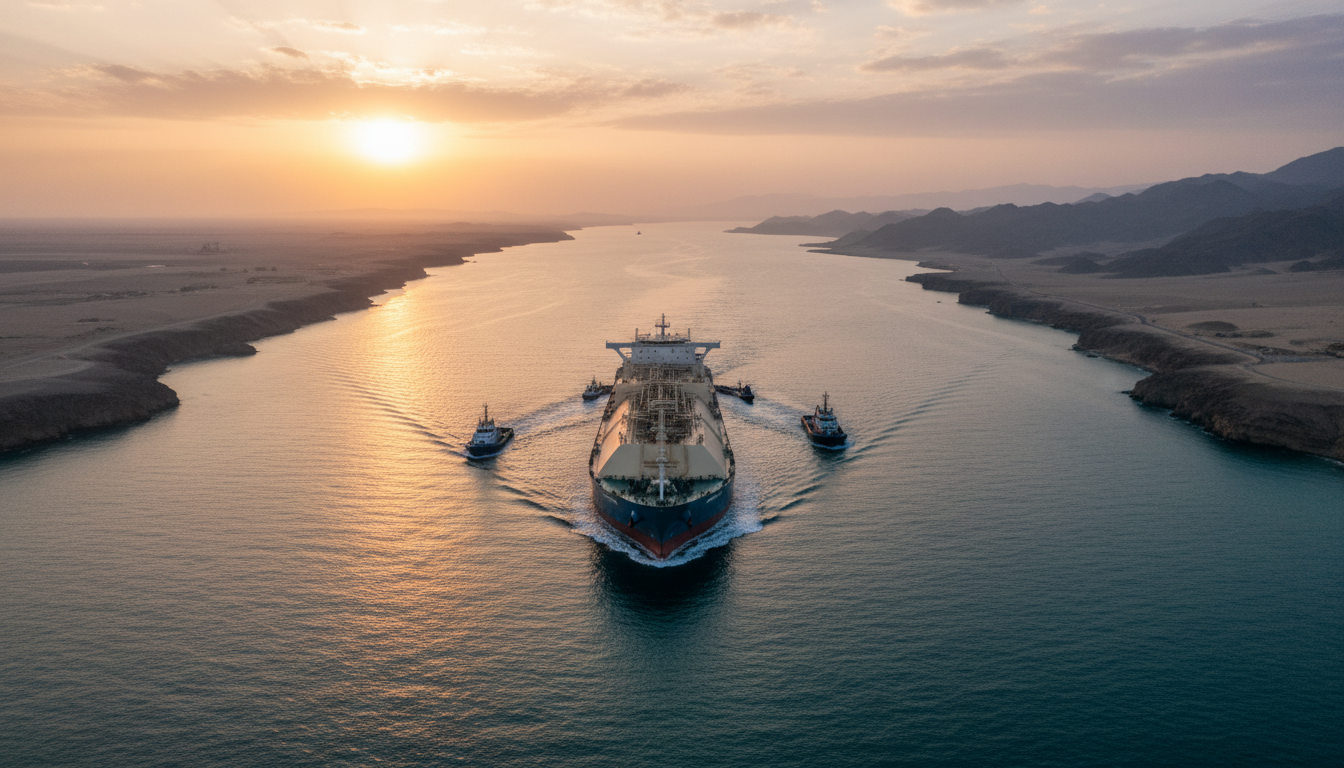
The global energy and shipping markets are closely monitoring a pivotal development in the Middle East: the successful transit of a Western European-linked container ship through the Strait of Hormuz. This event, marking a significant departure from recent patterns, offers a glimpse into potential shifts in maritime security amidst ongoing regional tensions and holds considerable implications for global oil and gas investments, supply chain resilience, and geopolitical stability.
The vessel in question, the CMA CGM Kribi, a Malta-flagged container ship owned by French shipping behemoth CMA CGM, navigated the critical chokepoint between Thursday afternoon and Friday morning. This passage is particularly noteworthy as it represents the first known instance of a ship with clear Western European ownership connections successfully traversing the Strait since the current conflict escalated in the Middle East at the end of February. Investor attention is now firmly fixed on whether this isolated incident signals a broader relaxation of transit restrictions or remains an exception coordinated under specific, non-replicable circumstances.
A Critical Transit Amidst Heightened Tensions
According to comprehensive vessel-tracking data, including insights monitored by Bloomberg and MarineTraffic, the CMA CGM Kribi’s journey was carefully executed. The ship departed from offshore Dubai on Thursday afternoon local time, charting a course toward Iran. Notably, it maintained a proximity to the Iranian coast as it moved through the strategic Iranian islands of Qeshm and Larak within the Strait of Hormuz. Its signal on Friday indicated its position offshore Muscat in the Gulf of Oman, confirming the completion of its transit.
This successful passage was not a mere happenstance. Sources familiar with the situation confirmed the transit, with reports from Euronews suggesting that French shipping giant CMA CGM, predominantly owned by the influential Saade family, engaged in direct coordination with Iranian maritime authorities to facilitate the safe journey. This level of direct engagement underscores the complexity and sensitivity of navigating the Strait of Hormuz under current geopolitical conditions. The French foreign ministry, when approached by reporters from the Financial Times, maintained a discreet stance, declining to comment on whether France played any role in facilitating the CMA CGM Kribi’s passage.
The Geopolitical Calculus of Maritime Access
The Strait of Hormuz stands as one of the world’s most vital maritime chokepoints, a narrow waterway through which an estimated 20% of the world’s daily crude oil consumption and a substantial portion of global LNG shipments flowed before the onset of the current conflict. Its strategic importance for global energy security and international trade cannot be overstated. Restrictions or perceived threats to transit in this region invariably send ripples through crude oil benchmarks, LNG spot prices, and shipping insurance premiums, impacting investment outlooks across the energy value chain.
Since the recent escalation of hostilities, the majority of vessels that have successfully transited the Strait have typically been linked to Asian owners and destined for Asian ports, primarily serving countries such as India, China, Thailand, Pakistan, and other nations across the continent. These transits have often been less scrutinized, suggesting a selective approach by regional powers regarding which vessels are granted safe passage. The CMA CGM Kribi’s transit, therefore, represents a significant deviation from this established pattern, raising questions about diplomatic breakthroughs or shifting power dynamics that could influence future shipping lanes and global energy supply routes.
Implications for Global Energy Markets and Investor Sentiment
For investors in oil and gas, the ability of vessels to transit the Strait of Hormuz freely and predictably is a cornerstone of market stability. Any disruption or heightened risk perception in this region immediately translates into increased volatility in global crude oil prices, potentially impacting the profitability of upstream exploration and production companies, midstream operators, and downstream refiners. Similarly, the flow of liquefied natural gas (LNG) from key Middle Eastern producers to demand centers in Asia and Europe relies heavily on unimpeded access through the Strait. Long-term LNG supply contracts and the economics of new LNG liquefaction and regasification projects are acutely sensitive to transit security.
The CMA CGM Kribi’s successful passage, even if an isolated event, could inject a cautious optimism into segments of the market concerned about supply chain disruptions. However, investors must remain vigilant. The broader context of the Middle East conflict continues to pose significant geopolitical risks, and sustained, unrestricted access for all international shipping, particularly those linked to Western economies, remains a critical requirement for truly stable market conditions. Freight rates, hull insurance premiums, and the operational costs for shipping firms and energy transporters are all subject to the perceived level of security in these waters.
The Diplomatic Front: Pushing for Re-opening
Recognizing the immense economic and strategic implications of a restricted Strait of Hormuz, key international players, most notably France and the United Kingdom, have intensified their diplomatic efforts. They are spearheading an international drive to seek diplomatic and multilateral pressure strategies aimed at fully re-opening the Strait to unfettered vessel traffic. This concerted push underscores the global economic reliance on this waterway and the imperative for its consistent navigability.
As part of these efforts, the United Kingdom recently hosted a virtual meeting that brought together representatives from more than three dozen countries. The primary agenda of this high-level forum was to discuss and strategize pathways to restore open and secure transit through the Strait of Hormuz for all international shipping. Such diplomatic endeavors, while often slow-moving, are crucial for de-escalating tensions and establishing protocols that can ensure the continuous flow of global energy and goods, thereby safeguarding international trade and mitigating risks for energy investors worldwide. The outcome of these diplomatic discussions will be closely watched by those looking to understand the future trajectory of energy security and geopolitical risk in one of the world’s most critical regions.
