

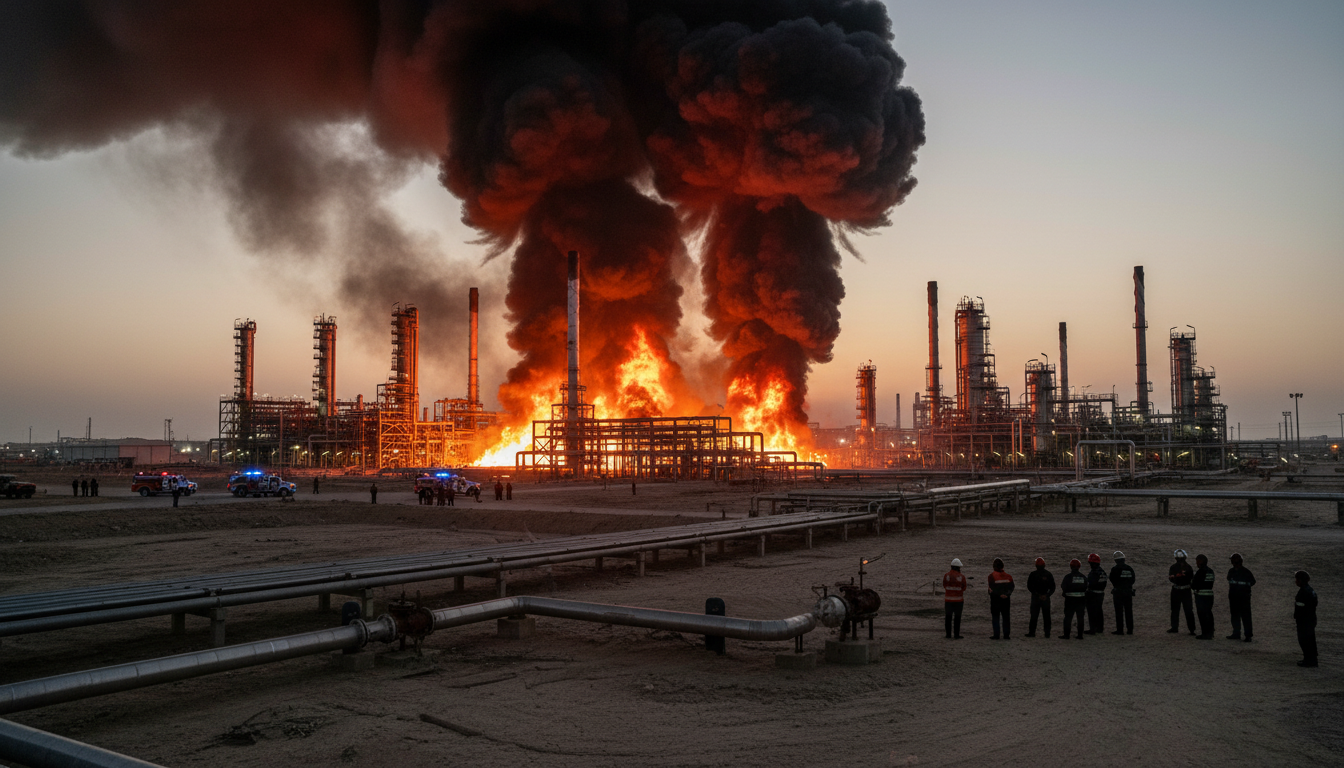
Geopolitical Tensions Ignite Concerns Over Middle East Energy Security After Kuwait Refinery Attack
Investors in the global energy sector are closely monitoring developments in Kuwait after reports confirmed a drone attack targeted the nation’s critical Mina Al-Ahmadi oil refining complex. Early Friday witnessed significant fires breaking out at operational units within the facility, a stark reminder of the escalating geopolitical risks impacting vital hydrocarbon infrastructure across the Middle East. While initial reports from the Kuwait Petroleum Corporation (KPC) indicated no injuries, the incident immediately raised fresh concerns about the resilience of global oil supply chains and the security premiums embedded in crude prices.
The assault on Mina Al-Ahmadi, a cornerstone of Kuwait’s energy export capabilities, underscores a persistent threat landscape that energy companies and their shareholders must increasingly factor into their strategic planning. This isn’t merely an isolated event; it contributes to a troubling pattern of aggression against energy assets in the region, compelling a re-evaluation of security protocols and operational continuity plans. For those invested in upstream production, midstream logistics, or downstream refining, understanding the broader context of such attacks is paramount to navigating market volatility.
Mina Al-Ahmadi: A Strategic Pillar in Global Refining
The Mina Al-Ahmadi refinery holds immense strategic importance, not only for Kuwait but for the wider international energy market. As one of Kuwait’s largest and most significant oil processing facilities, it plays a pivotal role in converting crude oil into a range of refined products, including gasoline, diesel, and jet fuel, for both domestic consumption and lucrative export markets. Any disruption, even if temporary, to a facility of this scale can send ripples through global product markets, affecting prices and regional supply dynamics. Investors with exposure to refining margins or product futures will be particularly attuned to the operational status and potential repair timelines for the affected units.
Kuwait, a key member of OPEC+, relies heavily on its refining capacity to maximize the value of its crude output. The ability to process raw crude into higher-value products is crucial for national revenue generation and economic stability. Therefore, safeguarding facilities like Mina Al-Ahmadi is not just about physical security but also about protecting national economic interests and maintaining a reliable presence in competitive global energy markets. The immediate assessment of damage and the timeline for restoration will be critical data points for analysts evaluating the short-to-medium term impact on Kuwait’s refined product exports and its contribution to global supply.
Geopolitical Risk and the Investor Landscape
The drone attack on Mina Al-Ahmadi serves as a potent illustration of the heightened geopolitical risks that continue to define the Middle East energy sector. Incidents of this nature introduce an unpredictable element into oil market fundamentals, creating periods of elevated volatility that savvy investors must anticipate. While crude oil prices might see an initial spike on fears of supply disruption, the longer-term impact depends heavily on the extent of damage, the speed of repairs, and any retaliatory actions or escalations that might follow.
For energy investors, this event necessitates a deeper dive into risk assessments for assets located in politically sensitive regions. Considerations now extend beyond conventional market forces to include the potential for asymmetric warfare tactics, such as drone and missile attacks, impacting critical infrastructure. This evolving threat profile has direct implications for insurance premiums for energy facilities, operational expenditures on security, and the overall cost of doing business in these vital oil-producing regions. Funds and individual investors with significant exposure to Middle Eastern energy companies or refining assets should factor these elevated security costs and potential disruption risks into their valuation models.
Market Implications and Future Outlook for Oil & Gas Investments
The immediate market reaction to such events often manifests in a “fear premium” added to oil prices, as traders price in the potential for reduced supply. However, the sustained impact hinges on the actual volume of oil or refined products removed from the market. Even without immediate, drastic supply cuts, the psychological effect of these attacks can influence sentiment, encouraging speculative buying and contributing to price upward pressure. Furthermore, concerns about the reliability of supply from a major exporter like Kuwait can prompt importers to seek alternative sources or build inventories, further tightening the market.
Looking ahead, the incident at Mina Al-Ahmadi reinforces the imperative for robust energy security strategies globally. Nations reliant on Middle Eastern oil and gas are likely to intensify efforts to diversify supply, invest in strategic reserves, and enhance the resilience of their own energy infrastructure. For investors, this translates into potential opportunities in regions perceived as more stable, as well as in technologies designed to enhance security and operational efficiency for existing assets. The long-term outlook for oil and gas investing will increasingly integrate geopolitical analysis alongside traditional supply and demand fundamentals, making informed risk assessment more crucial than ever.
As the situation unfolds, market participants will be closely watching for updates from KPC regarding the operational status of the refinery units, as well as any official statements from Kuwaiti authorities detailing the perpetrators and potential responses. These details will be crucial in shaping investor sentiment and determining the lasting impact on global oil and refined product markets. The April 3, 2026 incident at Mina Al-Ahmadi stands as a salient reminder of the interconnectedness of geopolitics, energy security, and financial markets in the modern era.
